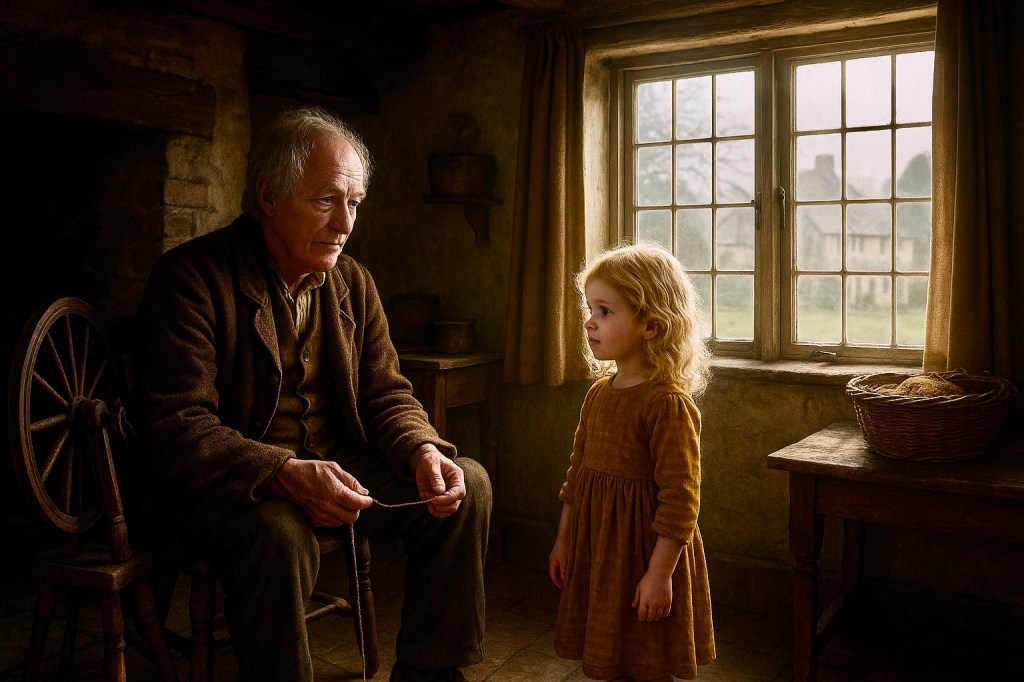
There are times when, especially on my Kindle, I can be reading four or five novels at once; flitting backward and forward as the mood takes me. For a couple of weeks now, I’ve had this one single novel in my head. I don’t know why? It’s possibly around two or so years since I last read it but for some reason, a couple of weeks ago the novel just popped into my head. One particular day I’d been thinking about it, and a little later on while having a quick browse on ‘X’ – formerly Twitter – I came across a post by a classic lit account; and there was the cover staring right back at me. Then, just a week or so ago, I was wandering through an indoor market in the city of Durham, here in the UK, and stopping at a small second-hand book stall that I always have a quick look at, on a shelf precisely at my eye-height, cover facing forward, Silas Marner! Something, or someone, is telling me to re-read this novel, I’m convinced. So, I gave it some thought, and promptly read it again. It’s a wonderful novel, with a somewhat redemptive theme but below is my analysis. And, as always, it’s simply my subjective thoughts. I do have one issue with the cover art used by Penguin, which is claimed to be detail from Isolation, a painting by Albert Anker, 1865. Trouble is, I’ve looked at all 113 pieces of Anker’s works that I could find but nowhere could I find the piece used on the front cover? Anyway, it’s not important and I’ll do a little more digging, if I can be bothered. Okay, back to the purpose of this post.
Silas Marner by George Eliot, published in 1861, is a timeless classic that explores themes of redemption, community, and the transformative power of love. Set in the fictional English village of Raveloe, the novel follows the life of Silas Marner, a reclusive weaver whose life is changed dramatically by a series of events.
The story begins with Silas Marner living in Lantern Yard, a devout religious community where he’s falsely accused of theft by his best friend, William Dane. Devastated by this betrayal and the loss of his faith, Marner leaves Lantern Yard and settles in Raveloe, where he becomes a solitary weaver obsessed with accumulating wealth. His only companions are his loom and the gold coins he hoards.
Marner’s life takes a dramatic turn when his gold is stolen one night while he’s in a trance-like state. Desperate and devastated, he discovers a small orphaned girl, whom he names Eppie, wandering near his cottage. Marner adopts Eppie and raises her as his own, finding in her the love and companionship he’d lost.
As Eppie grows up, she brings joy and purpose to Marner’s life, transforming him from a bitter recluse into a beloved member of the community. Meanwhile, the consequences of Marner’s past actions come back to haunt him when Godfrey Cass, a wealthy landowner from a neighbouring village, learns that Eppie is his illegitimate daughter.
Themes:
Redemption: Silas Marner’s journey is one of redemption. Through his love for Eppie, he finds a renewed sense of purpose and connection to humanity. His transformation from a lonely miser to a caring father figure demonstrates the possibility of redemption and the power of love to heal past wounds.
Community: The novel explores the importance of community and belonging. In Raveloe, Marner finds acceptance and support from his neighbours, who rally around him in times of need. Through his interactions with the villagers and his role in Eppie’s life, Marner learns the value of human connection and the strength that comes from belonging to a community.
Wealth vs. Poverty: George Eliot contrasts the material wealth pursued by characters like Silas Marner and Godfrey Cass with the richness of human relationships and moral integrity. Marner’s loss of wealth ultimately leads to his spiritual enrichment, while Godfrey’s wealth brings him little happiness in the absence of love and family.
Fate and Chance: The novel explores the role of fate and chance in shaping human lives. Marner’s encounter with Eppie is a chance occurrence that profoundly alters the course of his life, highlighting the unpredictable nature of destiny.
Character Analysis:
Silas Marner: Initially portrayed as a solitary and embittered figure, Silas Marner undergoes a profound transformation over the course of the novel. Through his love for Eppie, he learns to open his heart to others and finds fulfilment in relationships rather than material possessions.
Eppie: Eppie represents innocence, purity, and the redeeming power of love. Despite her humble origins, she brings joy and warmth to everyone she encounters, becoming a beloved figure in the community.
Godfrey Cass: Godfrey is a complex character torn between his desire for social respectability and his guilt over his past mistakes. Despite his wealth and status, he is ultimately unhappy due to his lack of integrity and failure to take responsibility for his actions.
Nancy Lammeter: Nancy is Godfrey’s wife and a symbol of moral rectitude and domestic stability. She serves as a foil to Godfrey, highlighting his moral shortcomings and the contrast between appearances and reality.
Eliot’s prose is characterised by its depth, complexity, and psychological insight. She delves into the inner lives of her characters, exploring their motivations, fears, and desires with empathy and nuance. Eliot’s vivid descriptions of rural life and keen observations of human behaviour bring the fictional world of Raveloe to life, immersing readers in its sights, sounds, and atmosphere.
Silas Marner is a poignant and timeless novel. Through its richly drawn characters, thought-provoking themes, and compelling narrative, it explores the transformative power of love, the importance of community, and the possibility of redemption. George Eliot’s masterful storytelling and profound insights into the human condition make Silas Marner a classic work of literature that remains relevant and compelling over a century after its publication.
If you haven’t yet read the novel, please do, you’ll be richer for it. And I still can’t work out why this novel has been aggravating me? I can see the themes of the novel clearly. However, the penny’s still not dropped as yet. Oh, and apologies for any spoilers.

 Wording