A poem today; a short bio, a breakdown of the poem, then the poem itself.
Christopher Marlowe was a renowned Elizabethan playwright, poet, and translator, born in Canterbury, England, in 1564. He was the son of a shoemaker and received a scholarship to attend the King’s School in Canterbury. Marlowe later attended Corpus Christi College, Cambridge, where he studied classics and earned his Bachelor of Arts degree in 1584.
Marlowe’s literary career flourished in the vibrant cultural and intellectual atmosphere of Elizabethan England. He is best known for his dramatic works, including “Tamburlaine the Great,” “Doctor Faustus,” “The Jew of Malta,” and “Edward II.” These plays, characterised by their bold themes, vivid language, and complex characters, established Marlowe as a pioneering figure in English Renaissance drama.
In addition to his plays, Marlowe was a prolific poet and translator. His poetry, though less well-known than his dramatic works, demonstrates his mastery of language and his exploration of themes such as love, desire, and the human condition. Marlowe’s translations of classical works, such as Ovid’s “Amores” and Lucan’s “Pharsalia,” also contributed to his literary legacy.
Despite his literary success, Marlowe’s life was marked by controversy and intrigue. He was rumoured to be involved in espionage and was arrested on charges of heresy in 1593. Tragically, Marlowe died under mysterious circumstances in 1593 at the age of 29, after a tavern brawl in Deptford, London – it’s said he was stabbed in the eye! His untimely death cut short a promising career, but his influence on English literature endured, paving the way for future generations of playwrights and poets. Today, Marlowe is celebrated as one of the towering figures of the Elizabethan era, remembered for his groundbreaking contributions to literature and drama.
The Poem – Analysis
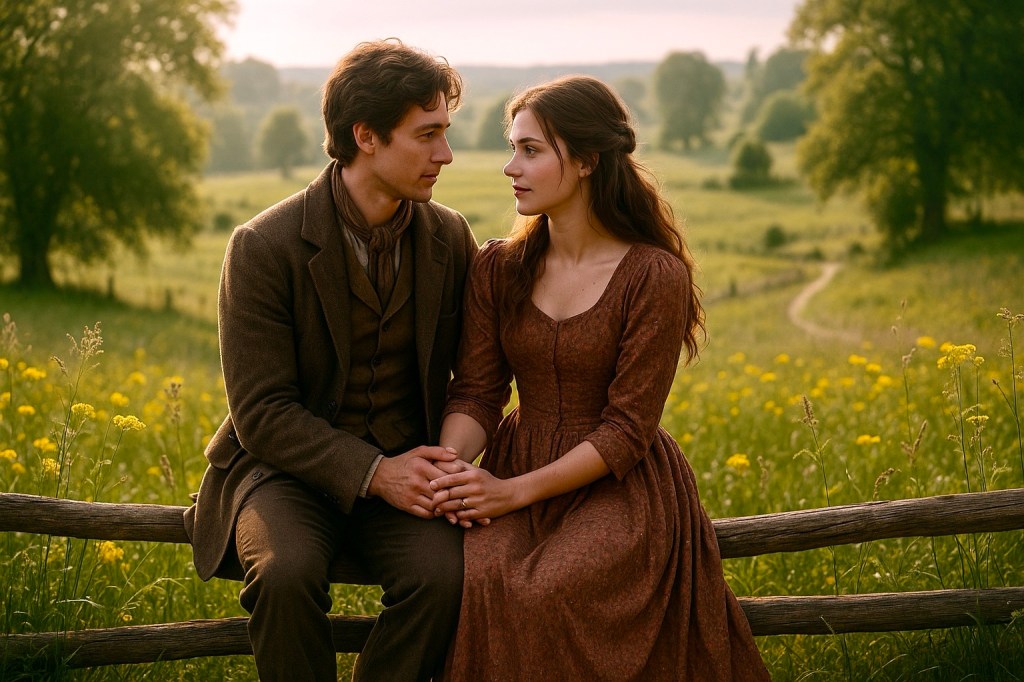
Marlowe’s poem is a passionate plea for intimacy and companionship. Through vivid imagery and evocative language, Marlowe captures the urgency and intensity of desire. The poem begins with an invitation to the beloved to abandon the constraints of society and come live with the speaker in a secluded, idyllic setting. The speaker paints a picture of a tranquil haven where they can escape the hustle and bustle of the outside world and enjoy each other’s company in peace. Marlowe employs a variety of poetic devices to convey the depth of his longing, including metaphor, alliteration, and personification. The imagery of the “fields adorned with flowers” and the “sweet smelling herbs” conjures a sense of natural beauty and abundance, inviting the beloved to share in the delights of the countryside with the speaker. Throughout the poem, Marlowe emphasises the fleeting nature of life and the importance of seizing the moment. The repeated refrain of “Now” underscores the urgency of the speaker’s entreaty, urging the beloved to act before it is too late. This sense of immediacy heightens the emotional intensity of the poem and underscores the speaker’s desperation to be united with their beloved. In the final stanza, Marlowe shifts from the pastoral imagery of the preceding verses to a more introspective tone, reflecting on the passage of time and the inevitability of death. The speaker implores the beloved to seize the opportunity for love and companionship while they still can, acknowledging the transience of life and the importance of making the most of the time they have together.
Overall, Marlowe’s “Come Live with Me” is a powerful meditation on love, longing, and the fleeting nature of human existence. Through its vivid imagery and emotive language, the poem captures the essence of desire and the timeless quest for connection and intimacy.
And now the poem.
“Come live with me and be my love”
By Christopher Marlowe
Come live with me and be my love,
And we will all the pleasures prove
That valleys, groves, hills, and fields,
Woods or steepy mountain yields.
And we will sit upon the rocks,
Seeing the shepherds feed their flocks,
By shallow rivers to whose falls
Melodious birds sing madrigals.
And I will make thee beds of roses
And a thousand fragrant posies,
A cap of flowers, and a kirtle
Embroidered all with leaves of myrtle;
A gown made of the finest wool
Which from our pretty lambs we pull;
Fair lined slippers for the cold,
With buckles of the purest gold;
A belt of straw and ivy buds,
With coral clasps and amber studs:
And if these pleasures may thee move,
Come live with me and be my love.
The shepherds’ swains shall dance and sing
For thy delight each May morning:
If these delights thy mind may move,
Then live with me and be my love.

 Wording
One thought on “Marlowe’s Plea”