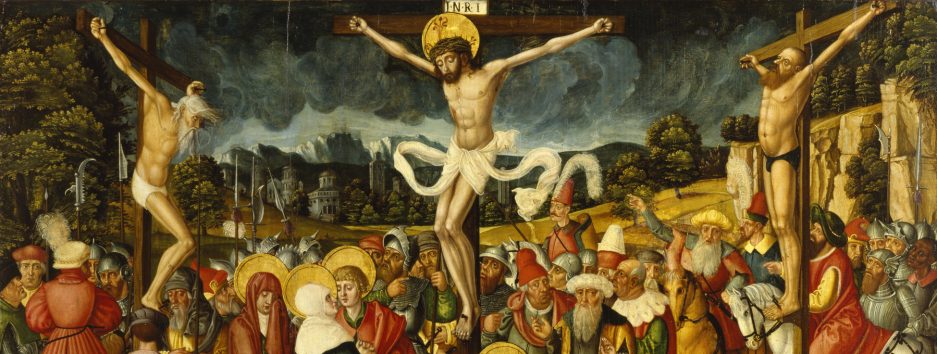

Strap yourself in, this is a long one.
Henry Fuseli’s The Nightmare, first exhibited in 1782 (produced 1781), is a painting that delves deep into the uncanny and the bizarre, managing to be both unsettling and darkly intriguing. This masterpiece explores themes of terror, sexuality, and the supernatural, wrapped up in a visual package that could make even the bravest art critic sleep with the lights on. Through its dramatic imagery and expert use of light and shadow, Fuseli’s work invites viewers to question the boundaries between reality and the subconscious.
The Nightmare depicts a woman in deep sleep sprawled across a bed, her limbs dramatically draped as if she’s auditioning for a horror-themed ballet. She’s dressed in white, radiating innocence – or so it seems until you notice the grotesque imp sitting on her chest. This imp, an incubus, looks out at the viewer with an expression that suggests he’s very pleased with himself. Adding to the surreal scene is a spectral horse peeking through the curtains, its glowing eyes making it look like it’s just stumbled into the wrong part of a Halloween party.
Fuseli’s composition is masterfully executed to lead the viewer’s eye across the painting. He uses a stark contrast between light and dark, with the woman illuminated in an eerie, almost otherworldly glow. This light highlights her vulnerable position, in sharp contrast to the shadowy incubus and the horse, both cloaked in darkness. This chiaroscuro technique not only creates a visually dramatic effect but also symbolises the struggle between the conscious and unconscious mind, with the woman embodying innocence and the nightmarish creatures representing repressed fears and desires.
The Nightmare is rich with symbolism, much of it tapping into 18th-century superstitions and psychological theories. The incubus, a demon reputed to prey on sleeping women, represents repressed sexual desires and fears. Its malevolent presence suggests an invasion of the mind by forbidden thoughts and anxieties that surface during sleep. The spectral horse, while a bit of a visual pun on the word “nightmare,” adds to the painting’s eerie and surreal atmosphere.
Themes of sexual repression and the unconscious mind are central to the painting. The woman’s suggestive pose and the incubus’s intrusive proximity hint at an uncomfortable blend of fear and desire, reflecting the 18th-century anxieties about female sexuality and autonomy. This tension between what is hidden and what is revealed contributes to the painting’s unsettling yet captivating nature.
From a psychological standpoint, The Nightmare can be seen as a window into the subconscious mind. The stark contrast between the serene, sleeping woman and the monstrous creatures suggests a clash between the rational, waking self and the irrational, darker aspects of the psyche. This aligns with later psychoanalytic theories, such as those proposed by Sigmund Freud, who argued that dreams expose our deepest, often repressed, desires and conflicts.
Fuseli’s fascination with dreams and the supernatural mirrors the broader Romantic interest in the irrational and the sublime. The painting embodies the Romantic ideal of probing the unknown and the inexplicable, inviting viewers to confront their own inner demons – albeit with a slightly mischievous twinkle.
The Nightmare emerged during a time of significant social and intellectual change. The late 18th century saw the rise of the Gothic novel, a genre teeming with horror, the supernatural, and psychological intrigue. Fuseli’s painting resonates with this cultural movement, echoing the themes found in the works of authors like Mary Shelley and Edgar Allan Poe, who explored the darker facets of human nature and the unknown.
The painting also reflects Enlightenment anxieties about the limits of reason and the persistence of superstition. By depicting a nightmare as a vivid, almost tangible experience, Fuseli seems to critique the Enlightenment’s emphasis on rationality, suggesting that some aspects of human experience remain beyond the grasp of logic. It’s as if Fuseli is playfully reminding his contemporaries, “You might be enlightened, but your nightmares are still pretty dark!”
Henry Fuseli’s The Nightmare is a compelling exploration of the human psyche, blending themes of terror, sexuality, and the supernatural in a visually striking composition. Its lasting impact lies in its ability to evoke deep-seated fears and desires, tapping into the universal experience of dreams and the subconscious. As a product of the Romantic era, the painting challenges viewers to confront the irrational and the unknown, reflecting the complexities of the human mind and the mysteries that lie within. And while it may make you think twice about what’s lurking in the shadows, it does so with a knowing, almost cheeky grin.
Further Reading
Books
- Riding, C. & Llewellyn, N. (2013). The Art of the Sublime. London: Tate Publishing.
- Stewart, J. (2004). The Gothic Tradition in Fiction. Edinburgh: Edinburgh University Press.
- Wood, C. (2006). The Gothic in Western Culture: 2010 and Beyond. Cambridge: Cambridge University Press.
Articles
- Ellis, M. (2003). “Fuseli’s The Nightmare: The Iconography of Horror.” Art History Journal, 26(1), pp. 84-102.
- Lemon, R. (2006). “Dreams and Nightmares: The Psychological Art of Henry Fuseli.” Journal of Romanticism, 12(3), pp. 55-72.
Websites
A little something on one of my own nightmares.
In the depths of a forgotten mill town, nestled within the mist-laden moors of Yorkshire, lies a sinister tapestry woven with threads of despair and whispered secrets. A place where the shadows dance to a haunting melody, conducted by the ghosts of an industrial past. It was there, in a cottage ensnared by time’s cruel embrace, that I found myself ensnared in a web of inexplicable dread.
The town, a nameless spectre of decay, exhaled a sombre lament upon the wind, drawing in Godless, promiscuous wanderers with promises of liberation, only to ensnare them in its malevolent embrace. Beneath the veneer of quaintness and bohemian allure lurked an unsettling truth, a truth whispered by the cold breath of the night.
As evening approached, a pall of unease settled upon my soul, weaving tendrils of apprehension around my senses. Within the confines of our picturesque refuge, I felt the weight of unseen eyes, their gaze piercing the veil between worlds. The air grew thick with a palpable malevolence, an ominous prelude to the horrors that awaited in the witching hour.
As an aside, I don’t believe in ghosts, but I am firmly convinced of the existence of unclean spirits, tirelessly executing the devil’s nefarious deeds. These dark entities focus their torment on those of us with faith, leaving the Godless unbelievers relatively unscathed. There is little need for demonic spirits to bother with them, as their souls are already firmly ensnared by the father of lies, paraded before us daily in their lost state.
It seems that the faithful bear the brunt of these torments. We, the believers, are seen as fair game, prime targets for these vile spiritual tormentors. Their relentless mission is to reap and harvest our souls, leaving a trail of destruction in their wake. Certain church buildings, steeped in history and sanctity, can sometimes exude a sinister presence that perceptive individuals can palpably feel. I have personally encountered this malevolent aura in numerous places.
Matthew 7:2-3 resonates profoundly in this context. In many church congregations, you will find some of the most judgmental, hypocritical, and cynical individuals, likely influenced by darker forces. Indeed, the church is a battleground where the devil and his minions strive to gain a foothold. This might be a bold statement, but I stand by it resolutely.
Now, back to the story…
In the dead of night, as the witching hour beckoned, I found myself ensnared in a waking nightmare, trapped within the confines of my own paralysis. Through eyes wide with terror, I beheld a figure shrouded in darkness, its form a mere silhouette against the ebony void. With silent malice, it advanced upon my slumbering companion, its visage a grotesque mockery of humanity, bearing witness to the abyss that lurked within. As it moved around the bottom of the bed, towards the side where my wife was sleeping, it raised an arm, and in its grasp, a large knife, ready to plunge.
In the cold grip of fear, I struggled against the invisible chains that bound me, my voice lost amidst the cacophony of whispered horrors. With a final gasp of defiance, I shattered the shackles of my paralysis, banishing the spectre back into the shadows from whence it came.
But the scars of that fateful night lingered, etched upon the fabric of my being like a stain upon the soul. For in the heart of that cursed town, where the boundary between worlds grows thin, I glimpsed the true nature of the darkness that prowls in the unseen corners of existence.
Though I may not believe in ghosts, I admit to a sense of the fragile balance between light and shadow. And as I continue my journey, I carry with me the knowledge that even in the darkest of nights, the flicker of faith can illuminate even the deepest abyss.
Many people have sworn that they’ve received visits and signs from lost loved ones. Those practising mediumship, in the many spiritualist churches, and those performing in their homes, or visiting clients’ homes, call on those whom have passed over, attempting to comfort the bereaved. This is dangerous. It’s an insidious practice, and if you think for one single moment that you’ve been comforted by a sign from lost loved one, then you’ve been cheated and preyed upon. In fact, I’ll do some reading and extend this post concerning Mediumship and spiritualism.
After World War One, the widespread grief and loss experienced by millions of families created fertile ground for the rise of spiritualism and the popularity of mediums. The war had caused unprecedented casualties, leaving countless individuals grappling with the deaths of loved ones. This context provided a backdrop for mediums who claimed to communicate with the dead, offering a semblance of solace to the bereaved. Here’s what I think, having done some digging.
Historical Context and Appeal
- Massive Casualties and Social Impact: The First World War resulted in an estimated 20 million deaths and even more injuries. Families were often left without closure, as many soldiers’ bodies were never recovered. This profound sense of loss and the abruptness of death on such a large scale led many to seek comfort in the possibility of contacting their deceased loved ones.
- Psychological and Emotional Vulnerability: The emotional devastation caused by the war created a heightened state of psychological vulnerability. People desperately wanted to believe that their loved ones had not entirely vanished, and that there was a way to reach them beyond the grave. This desire made them susceptible to the claims of mediums.
Rise of Spiritualism and Mediums
- Mediums and Their Practices: Mediums, individuals who claimed to possess the ability to communicate with the dead, saw a significant increase in their following post-war. Practices often involved séances, automatic writing, and other forms of supposed spirit communication. Famous mediums like Arthur Conan Doyle and Sir Oliver Lodge lent credibility to the movement, attracting attention and followers.
- Commercialisation and Exploitation: As demand grew, so did the commercialisation of spiritualism. Many mediums capitalised on the grief-stricken populace, offering their services for a fee. The line between genuine belief and opportunistic exploitation often blurred, with numerous fraudulent mediums preying on the emotional and financial vulnerabilities of the bereaved.
Societal and Cultural Factors
- Scientific and Technological Advances: The early 20th century was a period of rapid scientific and technological progress. Ironically, while this era saw advancements in understanding the natural world, it also saw a parallel rise in interest in the supernatural. Some mediums even used technological innovations like photography to produce “spirit photographs,” which purportedly captured images of the dead.
- Media and Public Perception: The burgeoning mass media of the time played a crucial role in popularising mediums. Newspapers, books, and public lectures spread stories of successful séances and spirit communications. This media coverage both reflected and fueled public interest, creating a feedback loop that further entrenched the trend.
Ethical and Societal Reactions
- Skepticism and Debunking: Alongside the growth of spiritualism, there was also a significant rise in skepticism and efforts to debunk fraudulent practices. Prominent figures such as Harry Houdini dedicated themselves to exposing fraudulent mediums, often demonstrating how supposed supernatural feats were achieved through trickery and illusion.
- Impact on Grieving Processes: The involvement of mediums in the grieving process had complex implications. For some, the belief in communication with the dead provided comfort and a sense of continued connection. For others, it led to prolonged grieving and dependency on mediums, sometimes exacerbating emotional distress rather than alleviating it.
Conclusion
The post-World War One era saw a marked increase in the popularity of mediums and spiritualism, driven by widespread grief and the human need for solace and connection with lost loved ones. This trend reflected broader societal dynamics, including psychological vulnerability, technological influence, and media proliferation. While it provided comfort to some, it also highlighted ethical concerns and the potential for exploitation, illustrating the complex interplay between belief, emotion, and commerce in times of widespread sorrow.
Leviticus 19:31
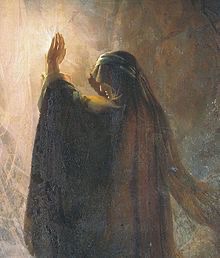
The Witch of Endor is a mysterious and intriguing figure from the Hebrew Bible, specifically mentioned in the First Book of Samuel, Chapter 28. Her story unfolds during a critical moment in the reign of King Saul, the first king of Israel.
Biblical Account
In the biblical narrative, King Saul, facing a dire situation with the Philistine army massed against him, seeks guidance as he is gripped by fear and uncertainty. At this point, Samuel, the prophet who had previously guided him, has died. Saul has already expelled all necromancers and magicians from the land in adherence to Israelite laws forbidding such practices.
Desperate for counsel, Saul decides to seek out a medium, someone who can communicate with the dead. Disguising himself, he visits the Witch of Endor, a woman known for her abilities to summon spirits. Initially, the witch is wary, fearing a trap, as necromancy was outlawed by Saul himself. However, Saul assures her that she will not be punished.
Upon his request, she summons the spirit of Samuel. The apparition of Samuel, according to the narrative, chastises Saul for disturbing him and delivers a grim prophecy: Saul and his sons will fall in battle the next day, and the Israelites will be defeated by the Philistines. This prophecy devastates Saul, who returns to face his fate.
Interpretations and Themes
The story of the Witch of Endor is often discussed for its complex themes and its reflection on the desperate measures taken in times of distress. The narrative raises several points of theological and ethical consideration:
- Necromancy and Forbidden Practices: The story underscores the biblical prohibition against necromancy and other occult practices, which were common in the ancient Near Eastern context. Saul’s resort to a medium highlights his desperation and the extent of his departure from divine commandments.
- The Role of Prophets: Samuel’s posthumous appearance reinforces the authority of prophets in the biblical tradition. Even in death, Samuel’s words carry weight and divine authority, emphasising the continuity of divine will beyond mortal life.
- Fate and Divine Judgment: The prophecy given to Saul signifies the inevitability of divine judgment. It suggests that Saul’s previous disobedience to God’s commands has led to an inescapable fate, adding a layer of tragic inevitability to the narrative.
- Psychological Complexity: Saul’s psychological state is a significant element of the story. His fear, paranoia, and ultimate submission to forbidden practices depict a leader in profound crisis, offering a humanising glimpse into his character.
Cultural Impact
The Witch of Endor has transcended her biblical origins, becoming a figure of interest in various cultural, literary, and artistic contexts. She appears in works ranging from medieval literature to modern fiction, often symbolising themes of forbidden knowledge and the supernatural.
In literature, she has been referenced by Shakespeare in “Henry VI,” and in more contemporary settings, she appears in novels and films that explore the mystical and the occult. Her story also prompts discussions about gender and power, as she is one of the few women in the Bible with a significant, albeit controversial, role.
Conclusion
The Witch of Endor remains a compelling figure in biblical literature, symbolising the intersection of fear, power, and the supernatural. Her narrative serves as a poignant reminder of the ancient world’s struggles with divine will, human frailty, and the allure of forbidden knowledge. Her story, filled with dramatic tension and moral ambiguity, continues to captivate and provoke thought among readers and scholars alike.
So there you have it. Long-winded, I know, but I enjoyed the research and the writing. Hopefully, if you have any desire to consult a medium or a spiritist, you’ll think twice.
References below
Winter, J. (1998). Sites of Memory, Sites of Mourning: The Great War in European Cultural History. Cambridge: Cambridge University Press.
Lachapelle, S. (2011). Investigating the Supernatural: From Spiritism and Occultism to Psychical Research and Metapsychics in France, 1853–1931. Baltimore: Johns Hopkins University Press.
Oppenheim, J. (1985). The Other World: Spiritualism and Psychical Research in England, 1850-1914. Cambridge: Cambridge University Press.
Hazelgrove, J. (2000). Spiritualism and British Society between the Wars. Manchester: Manchester University Press.
Doyle, A. C. (1926). The History of Spiritualism. London: Cassell & Company, Ltd.
- Books:
- Frymer-Kensky, T. (2002). Reading the Women of the Bible: A New Interpretation of Their Stories. New York: Schocken Books.
- Niditch, S. (2008). Mythic Israel: The Bible as Literature. Baltimore: Johns Hopkins University Press.
- Smith, M.S. (2002). The Early History of God: Yahweh and the Other Deities in Ancient Israel. Grand Rapids, MI: Eerdmans Publishing Company.
- Journal Articles:
- Brown, W.P. (1999). ‘Saul and the Witch of Endor: The Role of Narration in 1 Samuel 28’, Journal for the Study of the Old Testament, 24(1), pp. 27-46.
- Levenson, J.D. (1985). ‘1 Samuel 28 in the Light of Jewish Tradition’, Catholic Biblical Quarterly, 47(1), pp. 601-616.
- Encyclopedia Entries:
- Freedman, D.N. (ed.) (1992). Anchor Bible Dictionary. New York: Doubleday. (See entry on “Endor, Witch of”).
- Niditch, S. (2008):
- Niditch, S. (2008). Mythic Israel: The Bible as Literature. Baltimore: Johns Hopkins University Press.
- Smith, M.S. (2002):
- Smith, M.S. (2002). The Early History of God: Yahweh and the Other Deities in Ancient Israel. Grand Rapids, MI: Eerdmans Publishing Company.
- Brown, W.P. (1999):
- Brown, W.P. (1999). ‘Saul and the Witch of Endor: The Role of Narration in 1 Samuel 28’, Journal for the Study of the Old Testament, 24(1), pp. 27-46.
- Levenson, J.D. (1985):
- Levenson, J.D. (1985). ‘1 Samuel 28 in the Light of Jewish Tradition’, Catholic Biblical Quarterly, 47(1), pp. 601-616.
- Freedman, D.N. (ed.) (1992):
- Freedman, D.N. (ed.) (1992). Anchor Bible Dictionary. New York: Doubleday. (See entry on “Endor, Witch of”).

 Wording
One thought on “The Nightmare!”