Apologies for the glaringly obvious alliteration in the title of this post; I couldn’t resist.
Marie Corelli’s The Sorrows of Satan is a literary paradox: a work so earnestly didactic that it wraps around to become almost devilishly entertaining. First published in 1895, this novel treads the murky waters of morality with the finesse of a Victorian tightrope walker teetering on the edge of melodrama and morality play. At its heart, it is a Faustian tale, an examination of human folly, and a critique of societal decadence – all delivered with a grandiloquence that could make even the most stoic reader smirk.
The novel opens with Geoffrey Tempest, an author whose name seems more suited for a weather report than a protagonist, wallowing in the mire of destitution. His sudden inheritance of an immense fortune, however, catapults him into the upper echelons of society, where he encounters the enigmatic Prince Lucio Rimânez. As subtle as a sledgehammer, it is immediately apparent that Rimânez is none other than Satan himself, though Tempest remains blissfully oblivious – a testament to the sharpness of his literary acumen.
Corelli’s narrative is drenched in irony, much like a Victorian tea sponge is in sherry. Rimânez, as Satan, is the quintessential gentleman: charming, cultured, and fabulously wealthy. This portrayal, dripping with sarcasm, underscores Corelli’s critique of society’s conflation of wealth and virtue. Satan, it seems, is less of a fallen angel and more of a social climber, his hellish attributes manifesting not in fiery damnation but in the insidious corruption of the soul through material excess.
Tempest, now a puppet to Rimânez’s infernal strings, embarks on a journey of hedonistic indulgence. Here, Corelli’s prose becomes a playground of hyperbole. Mansions are opulent to the point of absurdity, banquets decadent beyond measure, and socialites as vacuous as they are vainglorious. Corelli’s vivid descriptions of high society are both an indulgence and a condemnation, painting a picture so lavish that it borders on the ridiculous.
The wit in The Sorrows of Satan is razor-sharp, often concealed beneath layers of Victorian propriety. Take, for instance, Tempest’s foray into the world of literature post-inheritance. His sudden critical acclaim, despite his unchanged literary prowess, is a delicious jab at the mercenary nature of the publishing industry. Corelli’s own turbulent relationship with literary critics no doubt informs this scathing satire, as she slyly suggests that fortune, rather than talent, is the true arbiter of success.
As Tempest’s tale unfolds, the novel shifts from farce to tragedy with a seamlessness that speaks to Corelli’s narrative dexterity. His marriage to the beautiful but morally bankrupt Lady Sibyl Elton – who, it must be said, has all the warmth of a marble statue – serves as the crux of his downfall. Corelli’s portrayal of Sibyl is scathingly comedic; she is the epitome of aristocratic ennui, her beauty matched only by her utter disdain for anything of substance.
Rimânez’s manipulation of Tempest, steering him towards moral ruin while maintaining an air of benevolent mentorship, is a masterclass in dramatic irony. The reader, fully aware of Rimânez’s true nature, can only watch as Tempest stumbles deeper into the abyss of his own making. It’s like watching a Victorian soap opera directed by Dante.
However, Corelli’s novel is not without its moments of genuine pathos. The climax, wherein Tempest finally confronts the emptiness of his hedonistic pursuits and the hollowness of his wealth, is a poignant denouement. His ultimate realisation – that true happiness cannot be bought, and that spiritual salvation lies in humility and self-awareness – is Corelli’s moral thesis laid bare. The conversion from sinner to penitent is swift, almost alarmingly so, but in the moral universe of Corelli, redemption is but a revelation away.
The Sorrows of Satan is a novel that wears its intentions on its sleeve, yet does so with a panache that is undeniably engaging. Its blend of satire, social commentary, and gothic melodrama creates a reading experience that is as thought-provoking as it is amusing. Corelli’s heavy-handed moralism, far from detracting from the narrative, adds a layer of theatricality that transforms the novel into a vibrant critique of fin-de-siècle decadence.
In the end, The Sorrows of Satan is a devilishly delightful read. Corelli’s wit and humour shine through her moral posturing, offering a sardonic smile to accompany her stern lecture. It is a novel that revels in its own excesses, much like its characters, and in doing so, it provides a richly layered exploration of the eternal struggle between good and evil, wealth and virtue, and, perhaps most importantly, between sincerity and satire.
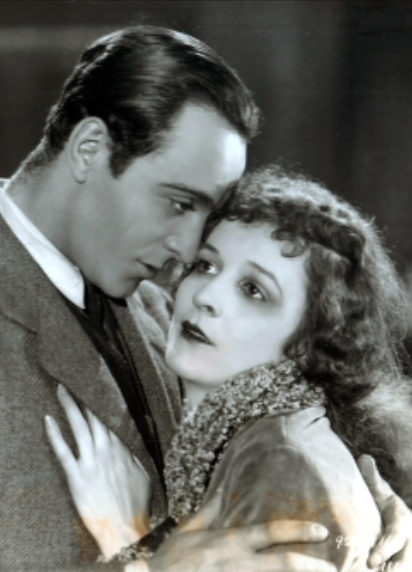
Image from: imdb.com

 Wording