
I’ve devoured this novel at least three times, the most recent being just a few months back, yet I find myself compelled to dive into its pages once more. There’s something about it that clings like a cheap raincoat, gnawing at me insistently, making it impossible to resist another read.
Gustave Flaubert’s Madame Bovary stands as a seminal work in the canon of literary realism, a narrative that meticulously dissects the delusions and ultimate demise of its eponymous protagonist, Emma Bovary. Far from being a sympathetic character, Emma epitomises the dangers of unchecked romanticism and narcissism. Her tragic trajectory is not merely a consequence of societal constraints but rather a testament to her insatiable vanity, reckless selfishness, and pathological escapism.
Narcissism fills the heart with a void that consumes all joy.
From the onset, Emma Bovary is portrayed as an individual suffocated by her grandiose dreams, which are starkly at odds with her mundane reality. Her dissatisfaction with her life as the wife of a provincial doctor, Charles Bovary, is palpable. While one might initially sympathise with her yearning for excitement and passion, it soon becomes evident that Emma’s desires are rooted not in a search for genuine fulfillment but in a shallow craving for the trappings of romance and luxury. Her infatuation with romantic novels fuels a corrosive idealism, rendering her incapable of appreciating the value of her quotidian life.
Emma’s disdain for her husband, Charles, is particularly telling. Charles is depicted as a kind but uninspiring figure, wholly devoted to Emma. Yet, Emma perceives his unwavering affection and modest ambitions as contemptible, illustrating her inherent narcissism. Her scorn for his simple pleasures and her relentless quest for sophistication highlight her superficiality. Emma’s disillusionment with her marriage is less about Charles’ deficiencies and more about her inflated sense of self-worth and entitlement.
The most damning aspect of Emma Bovary’s character is her relentless pursuit of extramarital affairs. Her relationships with Rodolphe Boulanger and Léon Dupuis are marked by the same pattern of initial infatuation followed by disillusionment. Emma’s inability to maintain a sustained emotional connection reveals her incapacity for true intimacy and commitment. Her lovers are mere instruments in her quest for the fantastical life she envisions for herself. When reality inevitably intrudes upon her fantasies, Emma’s fickleness and capriciousness become glaringly apparent.
Emma’s financial recklessness serves as a further testament to her irresponsible and self-indulgent nature. Her extravagant spending, driven by a desire to emulate the opulent lifestyles she reads about, leads to her family’s financial ruin. Emma’s complete disregard for the consequences of her actions underscores her profound selfishness. She is willing to jeopardise not only her well-being but also that of her husband and daughter, Berthe, to satisfy her whims. This financial folly is a microcosm of her larger moral bankruptcy.
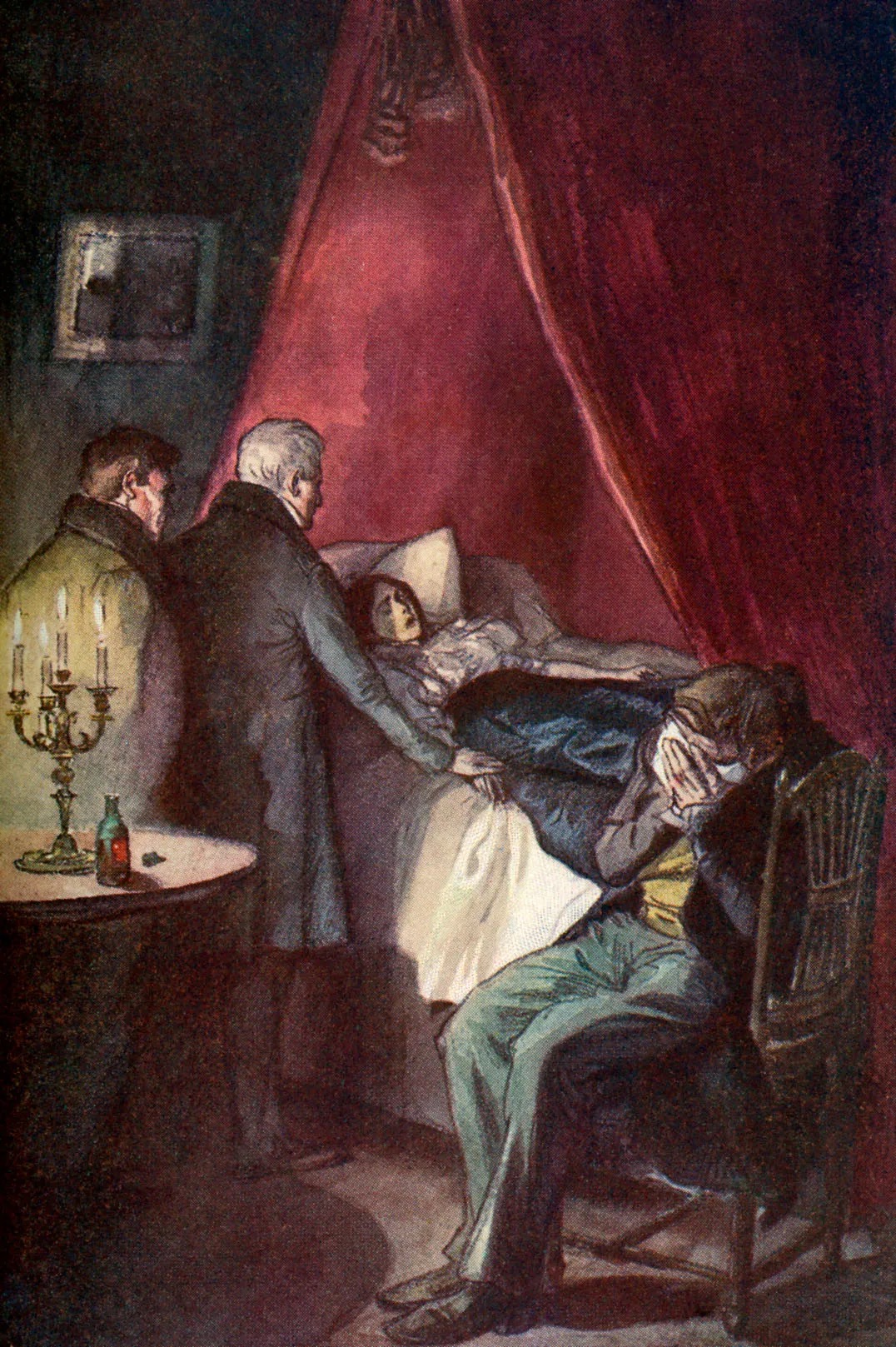
In her final act of desperation, Emma’s decision to commit suicide is imbued with the same melodramatic sensibility that defines her life. Her dramatic and painful death by arsenic poisoning is emblematic of her penchant for theatricality. Even in death, Emma is unable to confront the reality of her situation with any degree of honesty or dignity. Instead, she chooses a grandiose exit, one last bid for the kind of tragic romanticism that she so fervently idolises.
Emma Bovary’s downfall is, ultimately, a self-inflicted wound. Her relentless pursuit of an unattainable ideal leads her to squander every opportunity for genuine happiness. Flaubert’s masterful narrative exposes the hollowness of her aspirations and the destructiveness of her delusions. In the end, Emma is not a victim of her circumstances but rather a casualty of her own flawed character. Her life serves as a cautionary tale about the perils of living in a perpetual state of dissatisfaction and fantasy.
Madame Bovary remains a powerful indictment of the romantic idealism that Emma embodies. Flaubert’s unflinching portrayal of her character strips away any veneer of glamour, revealing the stark ugliness of her inner world. Emma Bovary is a tragic figure, not because of the fate that befalls her, but because of her relentless pursuit of a hollow and unattainable dream. Her story is a sobering reminder of the destructive power of vanity, selfishness, and the inability to reconcile dreams with reality.
Image: The New Yorker

 Wording