Matthew Gregory Lewis’ The Monk is a Gothic novel that, upon its publication in 1796, caused such a ruckus that it made the scandals of 18th-century high society look like polite tea parties. Picture this: a book that combines lust, murder, and demonic pacts, all wrapped up in the not-so-holy setting of a monastery – monks behaving badly. It’s as if Lewis took the sacred, threw in a dash of Satan, and stirred vigorously. The result was a concoction so potent that it left readers gasping and clutching their pearls – or more accurately, their rosaries.
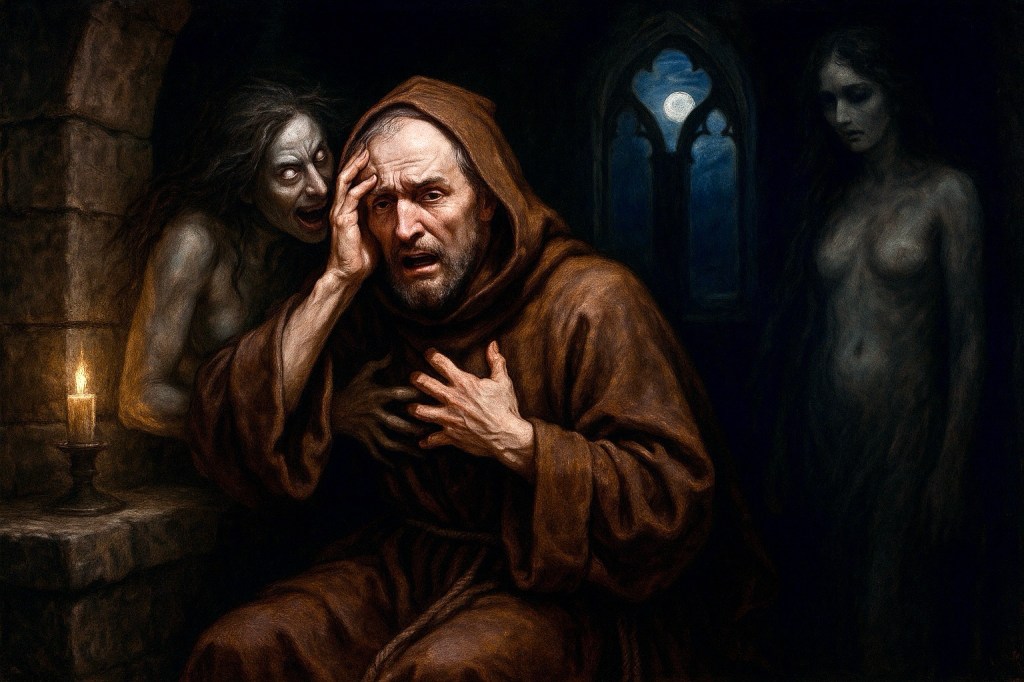
At the heart of this melodramatic masterpiece isThe Monk, Ambrosio, a monk with a name that suggests he should be nibbling on biscotti rather than orchestrating evil deeds. Initially the epitome of piety, Ambrosio’s downfall begins when he encounters Matilda, a novice who reveals herself to be a woman disguised as a monk. If that weren’t scandalous enough, Matilda turns out to be a sorceress in cahoots with the devil. Cue the dramatic organ music.
As Ambrosio descends into a moral abyss, he engages in acts that would make even the most hardened sinner blush. There’s seduction, murder, and an unhealthy obsession with a maiden named Antonia. The plot thickens with every chapter, resembling a soap opera written by Edgar Allan Poe on a particularly gloomy day.
To say The Monk was controversial is like saying the ocean is slightly damp. Upon its release, stirring up the hornet’s nest, it was met with outrage from critics and clergy alike. One might imagine Reverend Joseph Stock, a contemporary critic, reading it and promptly having a fit of apoplexy. The novel’s explicit content and blasphemous themes were seen as a direct affront to morality and religion. It was as if Lewis had taken a holy relic and used it as a prop in a burlesque show.
The uproar was not entirely unfounded. Consider the era: a time when even showing an ankle could send one to the fainting couch. The Monk didn’t just show an ankle; it ripped off the entire habit and danced a jig. Lewis was accused of corrupting youth and undermining the very fabric of society. The fact that Lewis was only 19 when he wrote it added fuel to the fire – imagine a teenager today writing a bestseller that combines Fifty Shades of Grey with The Exorcist.
At its core, is gothic excess and moral lessons,The Monk is a gothic novel on steroids. It embraces all the genre’s tropes – dark, foreboding settings, supernatural occurrences, and a protagonist’s tragic fall from grace. But Lewis turns the volume up to eleven. The monastery, usually a symbol of sanctuary, becomes a labyrinth of vice. Ambrosio, initially depicted as a paragon of virtue, becomes a cautionary tale of unchecked ambition and desire.
One could argue that The Monk serves as a moral lesson wrapped in a sensationalist package. Ambrosio’s downfall is precipitated by his inability to adhere to his vows, succumbing instead to his baser instincts. It’s as if Lewis is wagging a finger, warning readers about the dangers of hypocrisy and the slippery slope of moral compromise. Yet, the tale is told with such lurid detail that one might suspect Lewis enjoyed writing the debauchery a tad too much.
In the midst of all this darkness and depravity, are Aunt Leonalla’s romantic delusions, and Lewis provides a delightful dose of comic relief through the character of Antonia’s aunt. Leonella is convinced that Don Lorenzo, a young and dashing nobleman, is madly in love with her. This subplot is a masterpiece of unintentional humour. Imagine an ageing, self-assured aunt, strutting around with the confidence of a peacock in mating season, completely oblivious to the reality that Lorenzo’s affections are directed elsewhere – specifically towards her niece, Antonia.
Leonella’s romantic delusions are not only a source of humour but also a satirical jab at vanity and self-deception. She interprets Lorenzo’s every polite gesture as a declaration of undying love. When he smiles, she sees a marriage proposal; when he speaks, she hears wedding bells. It’s the literary equivalent of someone mistaking a friendly wave for a marriage proposal.
While The Monk is undeniably dark, it also possesses an element of unintentional comedy. The sheer extravagance of the plot twists can provoke giggles rather than gasps. Ambrosio’s transformation from saint to sinner is so rapid and extreme that it’s almost cartoonish. Matilda’s revelation as a devil-worshipper feels like the medieval equivalent of a reality TV shocker. One can almost hear the gasps and see the dramatic cutaways.
Then there’s the dialogue, filled with melodramatic exclamations and over-the-top declarations. When Ambrosio speaks of his torments, it’s in the kind of florid prose that would make even Shakespearean villains tell him to tone it down. It’s as if Lewis took every gothic cliché and turned the dial to the maximum, creating a narrative that’s as amusing as it is horrifying.
In the end, The Monk stands as a testament to the power of scandal in literature. Its initial controversy only fueled its popularity, ensuring its place in the Gothic canon. Lewis’ tale of Ambrosio’s fall from grace is a wild ride through the darker recesses of human nature, told with a flair that’s as much vaudeville as it is Victorian.
So, the next time you encounter a book that ruffles a few feathers, remember The Monk. It’s proof that sometimes, a bit of controversy is just what the doctor ordered – unless that doctor happens to be Ambrosio, in which case, run the other way.
Another Monk you might be interested in, goes by the name of Ambrosius: check him out.

 Wording
One thought on “The Monstrous Monk: Lewis’ Controversial Masterpiece”