There’s no shortage of fools wandering the earth, and I’ll freely admit, I’ve had my share of bumbling moments as well.
The Idiot by Fyodor Dostoevsky, despite its formidable reputation in the canon of Russian literature, is essentially the literary equivalent of that one friend who shows up to the party in mismatched socks and an unironed shirt, yet somehow manages to be the most interesting person in the room. Let’s dive into the novel with a dash of whimsy, and try to unpack its delightful eccentricities.
Imagine you’re trying to tell a joke that takes you 700 pages to deliver, and halfway through, you forget the punchline. That’s the plot of The Idiot. Dostoevsky weaves a tale as tangled as a bowl of spaghetti, introducing us to Prince Myshkin, whose saintly simplicity and kindness are thrown into the chaotic mix of Russian high society. It’s a bit like tossing a golden retriever into a wolf den and expecting everyone to get along. Myshkin’s adventures (or misadventures) are less about coherent narrative progression and more about an experiment in social chemistry.
Prince Myshkin is a fascinating protagonist who can be summed up as a lovable space cadet. He’s the idiot in question, though his idiocy is more a function of his unworldly innocence. Imagine a character who combines the naive optimism of Forrest Gump with the saintliness of Mother Teresa, and you’ll get a rough idea. His encounters with the other characters are what drive the novel, each interaction more bizarre and awkward than the last.
Then there’s Nastasya Filippovna, the femme fatale whose every move seems designed to elicit gasps from the audience. She’s like a soap opera star with an existential crisis, dragging everyone around her into a whirlpool of drama. Rogozhin, on the other hand, is that friend who shows up at every event, drinks too much, and makes a scene. If brooding intensity were an Olympic sport, Rogozhin would have a mantelpiece full of gold medals.
Dostoevsky tackles themes of innocence, corruption, love, and redemption with the subtlety of a sledgehammer. The novel feels like an extended thought experiment on what would happen if you dropped a truly good person into the snake pit of human society. Spoiler alert: it doesn’t go well. Myshkin’s saintliness is constantly tested, and the results are both tragic and darkly comic. The juxtaposition of his purity with the sordidness of those around him is like watching a blind man navigate a minefield.
Reading Dostoevsky can sometimes feel like being cornered at a party by a very intense philosophy student who’s had a few too many cups of coffee. He’ll talk your ear off about existentialism, morality, and the human condition, and before you know it, you’re knee-deep in a discussion about the meaning of life. The Idiot is no exception. The prose is rich, dense, and often veers into monologues that would make Hamlet look concise.
Despite its heavy themes, the novel is sprinkled with moments of absurdity that would make a sitcom writer proud. There’s a dinner party scene where Myshkin passionately defends capital punishment, and the reactions of the other guests are pure comedy gold. Dostoevsky’s keen observations on the ridiculousness of social pretensions are a highlight, making you chuckle even as you ponder deep philosophical questions.
This is a novel that defies easy categorisation. It’s part social critique, part philosophical treatise, and part soap opera, all rolled into one. Reading it is like attending a surreal party where every guest is a character study in madness and virtue. Dostoevsky’s ability to blend tragedy and comedy, innocence and corruption, makes for a reading experience that’s as bewildering as it is enlightening.
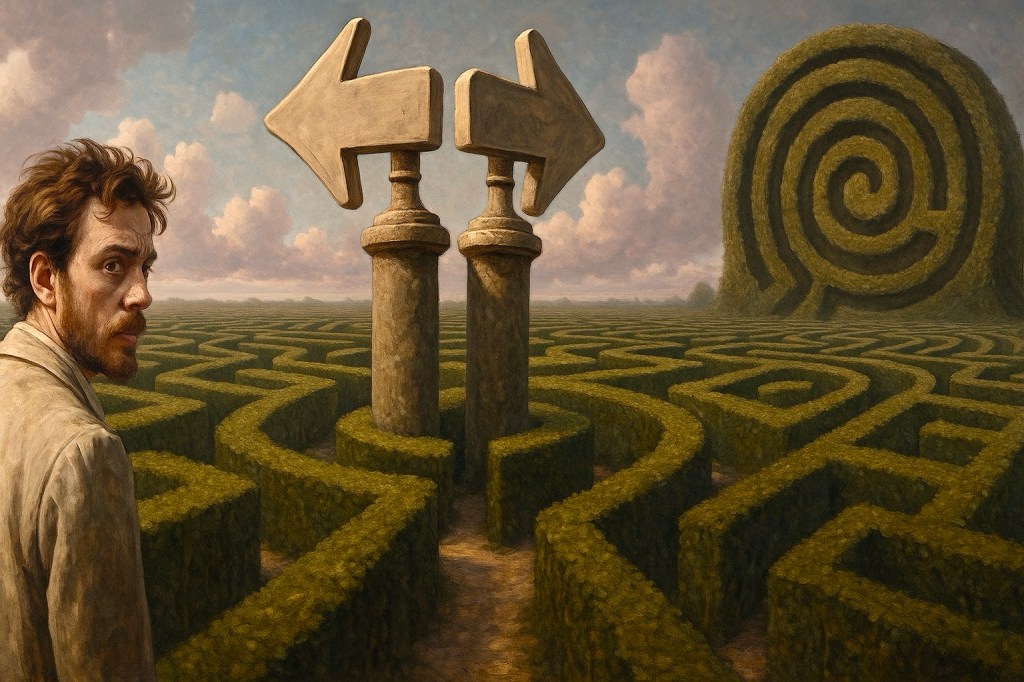
In short, this novel is a classic for a reason. It’s a grand, messy, beautiful examination of what it means to be human, viewed through the lens of a protagonist who is anything but ordinary. So, grab a cup of tea (or vodka), settle in, and prepare for a journey through the labyrinthine corridors of the human soul, where every twist and turn is as unpredictable as it is profound.

 Wording