After a brief and reluctant pause, I return, though my steps feel heavier, my spirit a bit more subdued. In the last month, I lost my father, and though time has continued its relentless march, it feels like a blurred stretch of restless nights and days that blend together. The weight of this loss is not just the absence of a parent, but of my closest confidant, my dearest friend, and the one who understood me without words.
There are no words that can truly capture the depth of this grief, nor the gaping void it has left in my life. I understand that time will bring change, and I’ll learn to live with this absence, though life will never feel quite the same. Things won’t get better in the way we’re often promised, but they will shift, adjust, and somehow, I will too. But even as time numbs the sharpness of the pain, there remains a vacancy in my world – one that no one else could ever fill. The position, once held by the irreplaceable, will remain forever unoccupied. In a future post, I’ll be exploring Claudius’ remarks to Prince Hamlet on the subject of losing fathers, although under different circumstances to my own loss, however, loss is loss.
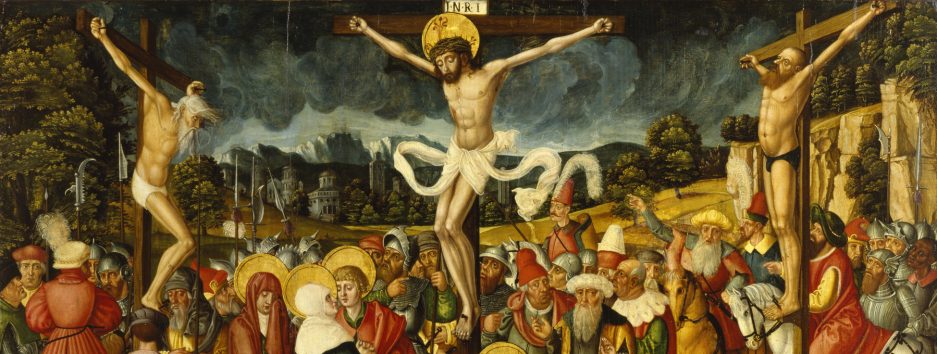
We’re all suffering one way or another: “the tears of the world are a quantity”: Beckett’s Waiting for Godot. The line from the play suggests a cyclical nature of suffering, where the emotional pain of one person might be balanced by the pain of another. It implies that while individual sorrows may ebb and flow, the overall quantity of suffering remains constant in the world.
The idea that suffering is a constant part of the world is a theme found in various philosophical and religious traditions, including the Bible. In Christianity, for example, suffering is acknowledged as a significant aspect of human existence, often framed as a part of the fallen nature of the World and a test of faith. This perspective aligns with the notion expressed in Waiting for Godot that suffering is a persistent, unchanging aspect of human experience.
Many philosophies and religious traditions advocate bearing suffering with grace as a way to find meaning and maintain dignity despite hardship. In Christianity suffering is often seen as a way to grow in faith and character. Bearing suffering with grace can involve accepting one’s situation, maintaining hope, and responding to adversity with patience and compassion. It doesn’t mean ignoring or minimising pain but rather dealing with it in a way that reflects resilience and inner strength. I’ve always had a problem with the word hope, and often feel guilty as it’s a core tenet of the Christian faith. More on that another time.
The aforementioned quote is a poetic way of suggesting that the world’s suffering is tangible and measurable, even if it’s difficult to quantify. It reflects the idea that the pain and sorrow experienced by people across the globe can be seen as a significant, collective burden. Again, I’m waffling, so please excuse me, as once I start, I find it difficult to stop. Let’s get on – who doesn’t like a wordy preamble (a rhetorical question, so not inviting comments).
In my absence, reading has taken a back seat. My mind has been preoccupied, turning over countless thoughts while I lie restless at night. Yet, in those quiet hours, paper and pencil have found their purpose. This time, grief has nudged me toward seeking meaning – something deeper than the comfort of familiar scripture. I find myself compelled to dig beneath the surface, searching for answers that resonate more profoundly with where I am right now.
The posts to come will inevitably reflect a more sombre tone as I explore the shadowed corners of my thoughts. Catharsis, after all, has long been a crucial ingredient in the unfolding narrative of this blog, shaping its past and present with the raw, unfiltered moments of life.
Getting back on to my writing bike has been difficult, and after nineteen revisions of this post, I decided it was time to draw a line under it and get the thing posted.
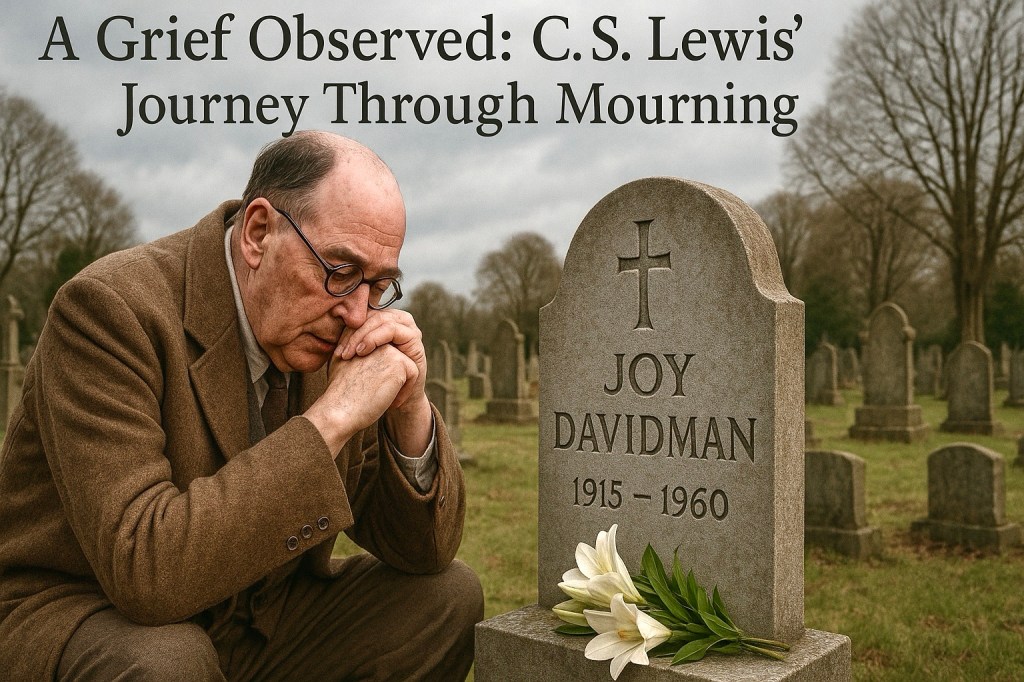
C.S. Lewis, renowned for his contributions to Christian apologetics and literature, offers a profoundly intimate exploration of grief in his work A Grief Observed. Published in 1961, this book is a collection of reflections Lewis wrote after the death of his wife, Joy Davidman, in 1960. Unlike his other works, which often provide theological insights from a place of intellectual detachment, A Grief Observed is raw and personal, documenting the unfiltered emotional turmoil and spiritual questioning that Lewis experienced. Let’s look at it, focusing on its thematic elements, its portrayal of the grieving process, its existential and theological questioning, and its contribution to both literature and the understanding of human suffering.
Lewis structured this work as a series of journal entries, a choice that lends it a fragmented and unpolished quality. This reflects the chaotic and non-linear nature of grief itself. The book is divided into four chapters, each capturing different stages of Lewis’ mourning process. The entries are written in a stream-of-consciousness style, allowing readers to experience the immediacy of his emotions. This style is crucial for conveying the authenticity of his grief; the reader is not presented with a polished, retrospective account but rather a direct window into the turmoil of his mind.
The fragmented nature of the text mirrors the fragmentation of Lewis’ own sense of self and reality in the wake of his wife’s death. He oscillates between despair, anger, doubt, and moments of fleeting peace, capturing the unpredictable and often contradictory emotions that characterise mourning. The stylistic approach also underscores the notion that grief is not something that can be neatly categorised or resolved; it is an ongoing, evolving process.
One of the central themes of the book is the relationship between loss and identity. Lewis grapples with the way Joy’s death forces him to reevaluate his sense of self. He acknowledges how intertwined his identity had become with hers, stating, “her absence is like the sky, spread over everything.” – I can relate to that. The loss of his wife leads to a loss of the person he was when he was with her. This fragmentation of self is a crucial aspect of the grieving process, as the bereaved must reconstruct their identity in the absence of their loved one. It’s interesting too that with every chapter of our lives, we find ourselves adapting our identities, and so I don’t believe that we’re always the same person continuously; perhaps the kernel remains fundamentally the same, but the shell changes.
Lewis’ reflections on identity extend beyond his personal experience to a broader existential inquiry. He questions the nature of love and its capacity to define and transform the self. Love, in Lewis’ account, is not merely an emotion but a force that shapes identity and gives life meaning. With Joy’s death, Lewis finds himself questioning whether love is truly eternal or if it is subject to the same decay and impermanence that afflicts all human experiences. This struggle reflects the tension between his intellectual understanding of Christian doctrine and the visceral reality of his suffering.
Theodicy – the question of why a benevolent and omnipotent God permits suffering – is a recurring theme in A Grief Observed. Lewis was no stranger to this issue, having addressed it in his earlier work, The Problem of Pain. However, in A Grief Observed, the question is no longer abstract but deeply personal. The death of his wife forces him to confront the seeming incongruity between his belief in a loving God and the intense pain he is experiencing.
Lewis writes with brutal honesty about his doubts and anger towards God. He describes feeling as if God were a “Cosmic Sadist” or a “veteran vivisector” experimenting on him for some inscrutable purpose. This language is striking, especially given Lewis’ reputation as a Christian apologist. His willingness to voice such raw and unsettling thoughts speaks to the depth of his anguish and the sincerity of his inquiry. It also highlights a key aspect of the work: its refusal to offer easy answers or platitudes in the face of suffering.
Despite his anger and doubt, Lewis ultimately reaffirms his faith, though it is a faith that has been profoundly shaken and transformed by his experience of grief. He comes to accept that his understanding of God and the nature of suffering was incomplete. The God he thought he knew was, in his words, an “idol” that had to be shattered in order for him to encounter the true God, who is beyond human comprehension and control. This realisation does not eliminate his pain but allows him to approach it from a place of greater humility and trust.
Memory plays a complex and dual role in this book. On one hand, memory serves as a source of pain, as Lewis is constantly reminded of Joy’s absence through the recollection of their life together. He notes how even happy memories become tinged with sorrow because they underscore what has been lost. On the other hand, memory is also a means of preserving Joy’s presence and keeping her alive in some form. Lewis struggles with the fear that his memories of Joy will fade over time, leaving him with only a vague and distorted image of the woman he loved.
This tension reflects a broader existential concern: the fear that death erases not only the physical presence of the loved one but also the essence of who they were. Lewis grapples with the idea that memory, while imperfect and prone to distortion, is the only means by which the dead can continue to exist in the minds of the living. This leads him to a deeper reflection on the nature of memory and its relationship to identity. He realises that his memories of Joy are not static but evolve as he continues to live and grow, and this evolution is a part of his ongoing relationship with her, even after death.
One of the most striking aspects of A Grief Observed is its portrayal of the interplay between faith and doubt. Lewis’ faith is not presented as a shield that protects him from suffering; rather, it is something that is tested and refined through the experience of grief. His initial reaction to Joy’s death is one of doubt and despair, leading him to question the very foundations of his belief. However, as he continues to wrestle with his grief, he finds that his faith, though shaken, is not destroyed. Instead, it emerges as something more complex and nuanced.
Lewis’ journey through grief is marked by a series of oscillations between belief and doubt. He experiences moments of clarity and peace, where he feels a sense of God’s presence and comfort, but these are often followed by periods of intense questioning and spiritual desolation. This cyclical pattern reflects the broader human experience of faith, which is often marked by uncertainty and struggle rather than unbroken certainty. Lewis’ willingness to acknowledge his doubts and confront them head-on is one of the most compelling aspects of the book, as it offers a more realistic portrayal of the challenges of maintaining faith in the face of suffering.
The book stands as a significant contribution to both literature and the understanding of human grief. In terms of literary achievement, the book is remarkable for its honesty, emotional depth, and philosophical inquiry. Unlike many works on grief that offer prescriptive advice or aim to provide closure, Lewis’ work remains open-ended, reflecting the ongoing nature of mourning. His prose is both eloquent and raw, capturing the complexity of grief in a way that resonates with readers from diverse backgrounds.
In terms of its contribution to the understanding of grief, it offers valuable insights into the psychological and emotional processes that accompany loss. Lewis’ reflections on the interplay of memory, identity, and faith provide a nuanced perspective on how individuals navigate the challenges of mourning. His willingness to explore the darker aspects of grief, including anger, doubt, and despair, offers a more comprehensive view of the mourning process than works that focus solely on acceptance and healing.
Moreover, Lewis’ work has had a lasting impact on how grief is understood within a Christian context. His exploration of theodicy, faith, and doubt in the midst of suffering challenges simplistic notions of divine providence and offers a more complex and compassionate understanding of how believers might wrestle with their faith in times of profound loss. By refusing to offer easy answers, Lewis invites readers to engage in their own process of questioning and reflection, making A Grief Observed a work of enduring relevance.
This work is a profound exploration of the complexities of grief, identity, and faith. Through its unflinching honesty and philosophical depth, it offers a unique and valuable perspective on the mourning process. Lewis’ journey through grief is marked by a series of oscillations between despair and hope, doubt and faith, reflecting the non-linear and often contradictory nature of human suffering. In documenting his personal experience of loss, Lewis not only provides readers with a deeply moving account of his own grief but also offers timeless insights into the universal challenges of mourning and the search for meaning in the face of death.
For me, reading this incredibly short piece of work, yields much progress in my own journey through loss…of every kind.

 Wording