Two new posts today – I’ve been stacking them while I’ve been poorly. I’m on the mend now, I think, so I have a lot more to share.
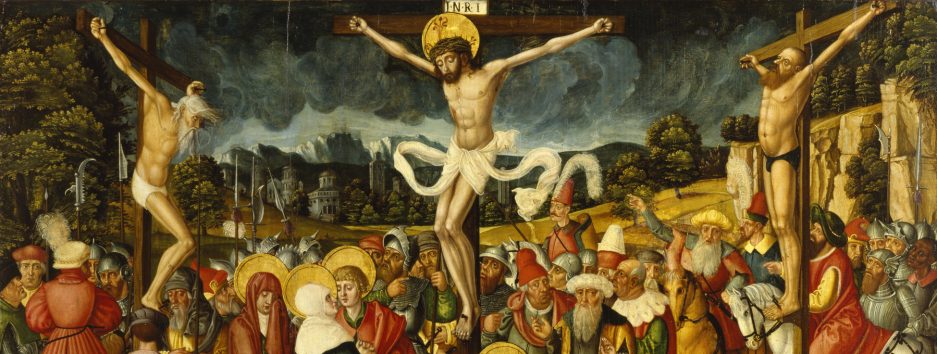
When Mary Hayley Bell’s novel Whistle Down the Wind was published in 1958, it came wrapped in an intriguing premise: what happens when a group of naïve children stumble across a fugitive and mistake him for Jesus Christ? It’s a story that treads precariously between innocence and absurdity, morality and misunderstanding. The resulting tale, both in novel form and its celebrated 1961 film adaptation, is a slice of English life rendered through a lens of quaint charm, with just a whisper of existential dread.
Let’s step into the merits and quirks of the novel first, before putting the kettle on to discuss its cinematic cousin – I love a cuppa.
The Novel: A Theological Comedy of Errors
Mary Hayley Bell’s novel is a deceptively simple narrative. Set in rural Lancashire, it follows three siblings – Kathy, Charles, and Nan – who discover a mysterious man hiding in their barn. For reasons that can only be described as theologically bold, the children conclude he must be Jesus, back from the dead and in dire need of a warm cuppa and some quiet contemplation.
What makes the novel tick is its commitment to the children’s perspective. Bell’s writing is steeped in a childlike sense of wonder and solemnity, which works both for and against the story. On the one hand, it’s a charming portrayal of how children might interpret a world they don’t fully understand. On the other, the whole affair teeters dangerously close to unintentional farce. Kathy, the eldest and most devout of the lot, approaches the fugitive (who is very much a standard-issue criminal) with the sort of reverence one might reserve for a guest preacher or, perhaps, a slightly damp angel. Meanwhile, the younger siblings are more concerned with sneaking him snacks than considering the theological implications.
The humour of the novel is often subtle, arising from the children’s earnest misinterpretations of adult behaviour. At times, though, Bell veers into outright whimsy that feels a little too pleased with itself. The charm is undeniable, but so is the thinness of the plot. The novel doesn’t so much explore its themes of faith and redemption as hold them up like a child’s crayon drawing: sweet, endearing, but not exactly profound.
The Film: Alan Bates, Hayley Mills, and the Grim Charm of Lancashire
Enter the 1961 film adaptation, directed by Bryan Forbes and featuring the ever-dashing Alan Bates as the fugitive and Hayley Mills as Kathy. The transition from page to screen is surprisingly seamless, with Forbes making the wise decision to tone down some of the novel’s more saccharine elements and lean into its naturalistic setting.
Visually, the film is a masterpiece of post-war British cinema. Shot in black and white, the cinematography captures the bleak yet beautiful Lancashire countryside with a starkness that complements the story’s moral ambiguities. The barren landscapes and grey skies lend an almost spiritual quality to the children’s misplaced faith, making it feel both ridiculous and oddly poignant. If the novel is a charming but slightly clumsy sermon, the film is the hymn sung by a choir of coal miners: rough around the edges but undeniably affecting.
Alan Bates, as the unnamed convict, gives a restrained and layered performance. His character is neither a saint nor a devil, which makes the children’s reverence all the more tragic – and occasionally amusing. He’s clearly baffled by their belief that he’s the Messiah but is pragmatic enough to go along with it if it means a warm barn and a bit of food. Hayley Mills, meanwhile, brings her usual blend of wide-eyed sincerity and steel to the role of Kathy, making her less of a caricature than her literary counterpart.
The film is also notable for its nuanced exploration of the adult world. While the children see things in stark terms of good and evil, the grown-ups operate in shades of grey. Bernard Lee, as the children’s father, exudes a quiet, weary pragmatism that feels utterly authentic, while the local police’s pursuit of the fugitive is portrayed with just enough humanity to avoid turning them into villains.
Themes: Faith, Innocence, and the Trouble with Assumptions
Both the novel and the film grapple with questions of faith, though they approach the subject in different ways. The novel treats faith as something pure but fragile, prone to crumbling under the weight of adult reality. The film, on the other hand, seems more interested in the consequences of faith – both its power to inspire and its potential to mislead.
The story’s central conceit – that the children mistake a criminal for Christ – works as both a narrative device and a broader commentary on the human tendency to see what we want to see. It’s no accident that the adults, with their hardened cynicism, see only a fugitive, while the children, armed with their unshakable innocence, see a saviour. The tragedy, of course, is that neither perspective is entirely correct or entirely wrong.
There’s also a darker undercurrent to the tale. The children’s belief in the fugitive’s divinity blinds them to his flaws and, ultimately, his humanity. This raises uncomfortable questions about the nature of worship and the line between faith and fanaticism. Is it better to believe in something false than to believe in nothing at all? Or is faith without understanding a dangerous thing? The story leaves these questions tantalisingly unanswered, which is perhaps why it has endured.
A Humorous Observation or Two
It’s hard to read Whistle Down the Wind or watch the film without occasionally wanting to shout, “Really, Kathy? REALLY?” The children’s gullibility is both endearing and maddening, and there are moments when the fugitive himself seems on the verge of asking if they’ve got their heads screwed on properly. One imagines him lying awake in the barn at night, wondering if he should tell them the truth or just run for it before they start organising a Sunday service.
And let’s not forget the absurd logistics of the situation. The children manage to keep the fugitive hidden for an impressively long time, considering they’re essentially smuggling bread rolls and milk past a houseful of adults. One can only assume the parents are too busy with their own existential crises to notice the growing pile of crumbs leading to the barn.
Final Thoughts: A Whistle Worth Hearing
Whistle Down the Wind is, in both its literary and cinematic forms, a unique exploration of faith, innocence, and the peculiarities of human nature. The novel is charming but slight, while the film elevates the material with its stark realism and nuanced performances. Together, they form a fascinating study in contrasts: a tale of rural England told through the eyes of children, yet layered with themes that resonate far beyond their simple understanding.
It’s a story that invites laughter, tears, and just a touch of exasperation. After all, who among us hasn’t mistaken a fugitive for the Son of God at least once?

 Wording
The plot sounds familiar. I think I might have seen the film a very long time ago. I like the idea that neither the children or the adults are completely right or wrong in their perspectives.
Sorry to hear you’ve been unwell.
Thank you, Rose. I think the most realistic adult was the grandmother! She’s a right old battle axe! 😊
Oh, I had a flu-like thing, with Covid, very much better now, thank you.