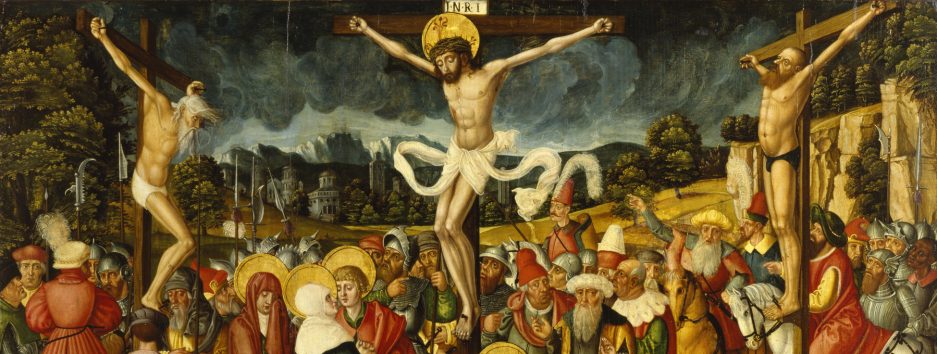
Art once aimed to uplift, inspire, and connect us to something greater – be it the divine, the sublime, or the essence of human experience. It was meant to elevate the soul, to provoke thought, to stir emotion, and to offer a glimpse of transcendence. From the soaring spires of Gothic cathedrals to the sublime brushstrokes of Renaissance masters, art was a bridge between the earthly and the divine, between the mundane and the eternal.
But somewhere along the way, that purpose was lost or, at the very least, obscured. Beauty was dismissed as superficial or sentimental, and shock value became the new currency. The sacred was replaced with cynicism, the sublime with banality. It’s no wonder so many people feel spiritually starved when the art that once nourished the soul now merely provokes or confuses.
Yet the hunger for beauty and meaning hasn’t gone away. It lingers, unfulfilled, reminding us that art’s highest calling is still to elevate the soul.
Philosopher Roger Scruton lamented the decline of beauty in modern society, suggesting that a “cult of ugliness” has supplanted the appreciation of beauty. He argued that contemporary art and architecture often prioritize shock value or utility over aesthetic appeal, leading to desolate cityscapes and art that lacks uplifting qualities. Scruton believed that this shift contributes to a cultural and spiritual decline, as the pursuit of beauty is essential for human fulfilment and the expression of the sacred.
In his 2009 BBC documentary ‘Why Beauty Matters,’ Scruton contended that society has become indifferent to beauty, resulting in environments and artworks that reflect this neglect. He emphasised that the pursuit of beauty is not a luxury but a necessity for a meaningful life, as it connects individuals to a sense of transcendence and harmony.
Scruton’s critique highlights a broader cultural issue: the replacement of beauty with functionality, novelty, or provocation in art and architecture. He called for a re-engagement with beauty, asserting that it plays a vital role in enriching human experience and nurturing the soul.
It’s maddening to see the breathtaking beauty and mastery of historical artworks that uplift the soul, that capture the sublime, that resonate with timeless truths – juxtaposed against the grotesque, soulless spectacles that pass for ‘art’ today. The cathedrals, the sculptures of Michelangelo, the paintings of the Renaissance – all created with such reverence, skill, and purpose. They were crafted to inspire, to elevate humanity, to point towards the divine.
Now, we’re left with headless demons making crude gestures, lauded as genius by critics who’ve long abandoned any notion of beauty or meaning. It feels like a betrayal, doesn’t it? A mockery of all that came before, of all that once aspired to greatness. It’s as though we’ve lost the very essence of what art is meant to be.
But maybe that’s why it’s important to keep speaking out, to keep questioning, to keep comparing – because somewhere in that contrast lies the truth about what we’ve lost, and perhaps, what we still need to fight for.
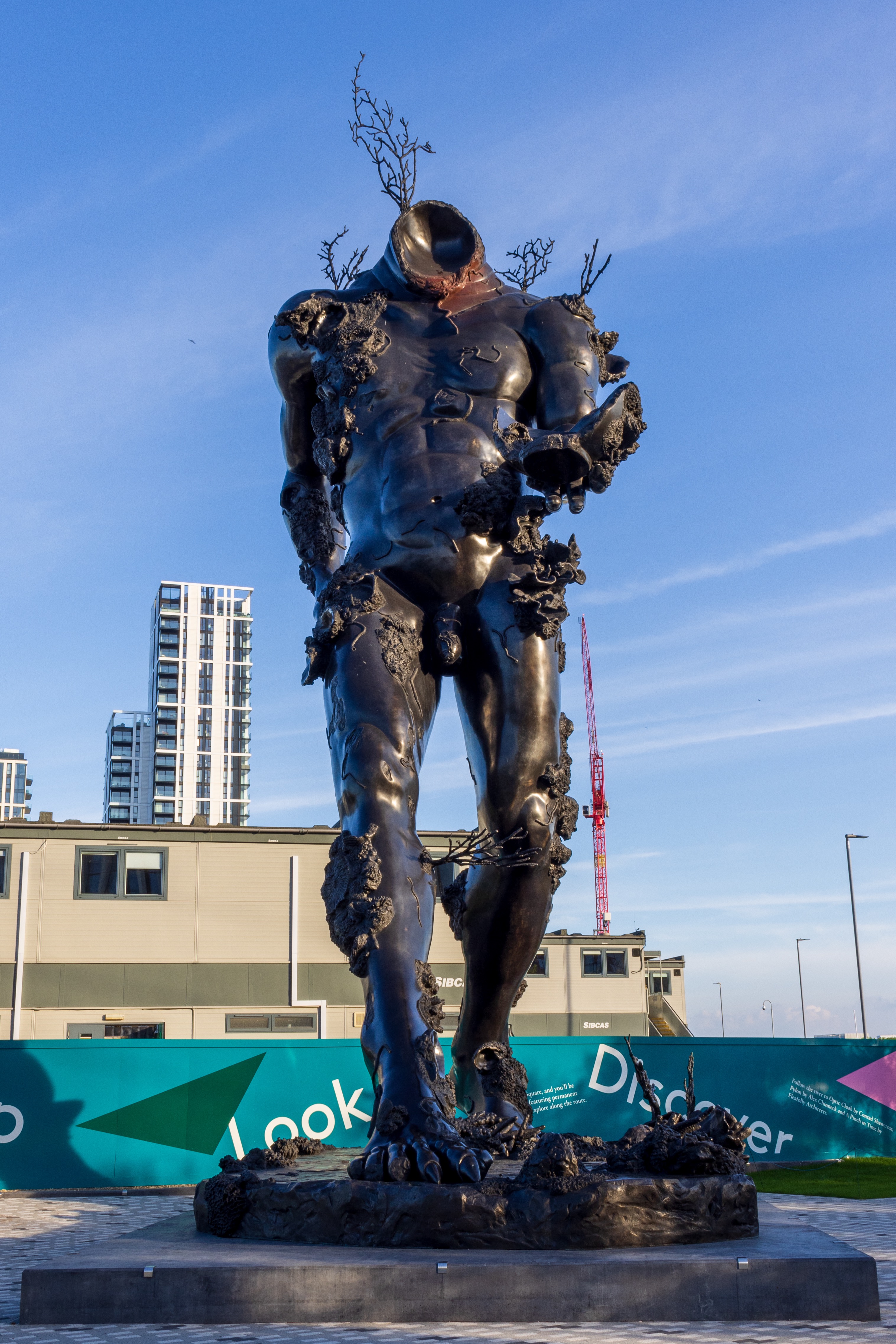
Damien Hirst’s ‘Demon with Bowl’ is a grotesque spectacle that epitomises everything wrong with contemporary art and, more alarmingly, with the direction our culture is hurtling towards. Standing at over eighteen metres tall, this monstrosity looms like a resurrected titan, brazenly celebrating a demonic aesthetic that should unsettle even the most liberal of viewers. Its towering form, grotesquely muscular and contorted, is supposedly inspired by ancient mythology, but there’s no mistaking the unmistakable whiff of something far more sinister: the glamorisation of demonic imagery under the guise of ‘art’. It’s like Hirst has rummaged through the refuse of hell and decided to put it on a pedestal for all to gawk at.
I cannot help but question the funding behind such a piece. It’s no secret that commissioned works of this magnitude often receive support from public funds or are backed by the very wealthy, whose riches are, in no small part, a product of the society that they proceed to corrupt with this kind of tripe. That taxpayers’ money could be tied up in the creation or exhibition of such a monstrosity is nothing short of a slap in the face. In times when social services are on their knees, funding demonic colossi is akin to throwing gold coins into a cesspit. Where is the accountability? Where is the morality?
The symbolism of Demon with Bowl is staggeringly blatant. There it stands, a colossal horned figure, cradling a bowl as though demanding offerings. Is this where we’ve come as a society? Are we now expected to bow and worship before demonic idols under the pretence of high art? It’s not merely provocative; it’s an outright affront to Christian values, a sickening nod to the occult, and, disturbingly, another step in the cultural campaign against Christianity. Hirst claims it’s inspired by mythology, but the mythologies he’s chosen to glorify are rooted in darkness. Let’s not mince words – this is the embodiment of a demon, not some poetic symbol of antiquity. It’s the devil in bronze, asking for tribute. It chills me to the bone.
What’s more infuriating is how such works are lauded by critics as ‘daring’ or ‘thought-provoking’. There is nothing daring about pandering to demonic symbolism in an age that increasingly flirts with nihilism. It’s as bold as kicking a man when he’s down – cheap shock value wrapped up in pretentiousness. And as our culture grows ever more desensitised, it’s pieces like this that are pushing the boundaries, not of art, but of decency.
Let us not be naïve. The promotion of such imagery is not harmless. In a world where Christianity is mocked, and traditional values are torn asunder, the rise of demonic art is no coincidence. It is a cultural narrative, carefully orchestrated, designed to normalise darkness and despair. If you look around at the direction society is heading – moral decay, spiritual emptiness, a glorification of selfishness and materialism – it doesn’t take a genius to see the connection. Hirst’s demon is not just an art piece; it’s a symbol of what we are becoming, an idol for a post-Christian world where demons are embraced and worshipped, even if metaphorically.
Demon with Bowl is an atrocity. It is a stain on our cultural landscape, a demonic effigy standing proud as if mocking the faith and traditions that built our civilisation. If we are to resist this insidious cultural decay, we must start by rejecting the likes of this ghastly creation. Art should elevate the human spirit, not drag it into the abyss. Hirst may call it art; I call it blasphemy cast in bronze.
Let us delve even deeper into the grotesquery that is a so-called ‘masterpiece’ that cost an eye-watering fourteen million pounds – a sickening sum, especially considering the moral and spiritual bankruptcy it represents. Fourteen million. To put that into perspective, that’s enough to fund entire community projects, provide shelter for the homeless, or bolster struggling public services. Instead, it has been squandered on this colossus of corruption, a monument to our cultural decline. Who, I wonder, deems this an investment worth making? The same elites who sneer at traditional values while pushing their nihilistic agenda under the guise of avant-garde art, no doubt.
Now, let’s address the vulgar details of this monstrosity. The demon stands headless – an apt metaphor for the mindlessness it represents. It is a giant, decapitated idol, devoid of thought or morality, a perfect symbol for an age that worships nothingness. One cannot help but draw parallels to the decapitation of faith, reason, and dignity in our modern world. This is no coincidence. It’s a deliberate affront, a statement of soullessness, a mocking echo of the hollow spirituality our society now embraces.
Its right hand is making the ‘okay’ sign. At first glance, this could be dismissed as innocuous, but the more one ponders it, the more disturbing it becomes. Here stands a demonic figure, towering and terrifying, boldly gesturing as if to say, “This is all fine. Evil is okay. Worship is acceptable – as long as it’s directed at darkness.” It’s a perverse inversion of all that is good, a mock blessing from a false god. And yet, the critics laud it as ‘symbolic’ and ‘provocative.’ Indeed, it is provocative – provocative in its shameless endorsement of a moral free-fall.
Then there are the exposed genitals. How tasteful. How sophisticated. How utterly depraved. Hirst has crafted a demon with its genitalia shamelessly on display, as if to spit in the face of decency. This isn’t art; it’s filth masquerading as culture. It’s a deliberate assault on modesty, a proud declaration of our society’s moral decay. What’s next? Are we to worship at the altar of obscenity? It’s all in the name of artistic freedom, they say. But there’s nothing liberating about degradation.
The creature is encrusted with barnacles and sea detritus, as though it has risen from the depths of some hellish ocean, a Leviathan dredged up to haunt the land of the living. Its surface is decayed and foul, giving the impression of something ancient and evil, something that should have remained buried. And yet, we have raised it up, spending millions to parade it like a treasure. It is a blasphemous resurrection, a monument to death and corruption, celebrated by the very people who scoff at the notion of resurrection in faith. The irony would be laughable if it weren’t so utterly tragic.
Its toes are like sharpened talons, curling menacingly as if ready to tear into the earth itself. This isn’t a passive statue; it’s a predator cast in bronze, poised to strike. Every detail is designed to inspire dread and awe, to demand submission before a demon. And let us not forget, this is all deliberate. Hirst knew exactly what he was doing when he crafted this abomination. He has conjured a demon not merely to provoke but to subjugate – to make us feel small, powerless, and insignificant beneath its towering form. It is psychological warfare disguised as art.
This is where we are now. We glorify the demonic, we fund blasphemy, and we call it culture. But this is not culture; it’s corruption. It’s a symptom of a society that has lost its way, a civilisation that has turned its back on faith, on decency, on beauty itself. We are adrift, worshipping false idols like Demon with Bowl, headless, soulless, and obscene.
Fourteen million pounds for this? It is not merely a waste; it is an investment in our own spiritual decay. Shame on those who funded it. Shame on those who celebrate it. And shame on all of us if we continue to allow such darkness to be erected in our midst without speaking out against it.
As if the demonic nature of this piece weren’t damning enough, the mindless manner in which people meander past it is the final insult. There it stands – this colossal, headless monstrosity, genitals exposed, making the ‘okay’ sign with its right hand as though mocking every moral standard we once held dear. Its taloned toes curl menacingly, its decayed body encrusted with barnacles and sea detritus, as if it has risen from the very depths of hell itself. And yet, people stroll by it without so much as a flicker of thought. It’s as though they’re walking past a park bench or a bus stop – utterly desensitised, utterly indifferent.
How did we reach this point? When did we become so hollow, so numbed to the world around us, that we can glance at a towering demon – brazenly demonic in every conceivable way – and think nothing of it? I see them, tourists with their selfie sticks and vapid smiles, snapping photos as if they’re standing in front of a quaint historical landmark rather than a monument to moral decay. They stand beneath this headless giant, utterly oblivious to its sinister symbolism, grinning like fools at the feet of a demon. It is a grotesque parody of worship.
Their opinions, when given, are as vapid as the expressions on their faces. “Oh, it’s so bold!” they parrot, regurgitating the empty praise they’ve heard from critics who no doubt sneer behind their champagne flutes. “It’s provocative, isn’t it?” they murmur, not even bothering to question what it’s provoking them towards. They accept what they are told, spoon-fed by a culture that demands nothing more than shallow thinking and obedient consumption. Not one of them stops to ask: why is a headless demon making the ‘okay’ sign? Why are its genitals exposed? Why is it crusted in the detritus of the deep, talons curled as if ready to pounce? Why does this thing exist, and what does it say about us that it stands so proudly in our public space?
But no, these questions are too troubling, too taxing for the modern mind that has been dulled by consumerism and cheap entertainment. They are like cattle being herded past an idol, too stupefied to even realise they’re bowing to it. They accept this demonic colossus with the same ease with which they accept the poison that flows from their screens, the moral ambiguity they are fed daily, the cultural rot they’ve grown accustomed to. Their thinking is as shallow as a puddle, and they splash about in it gleefully, never once questioning the filth beneath.
Hirst must be laughing. What power he must feel, knowing that he can erect a demon in broad daylight, fund it with a staggering fourteen million pounds, and watch as people shuffle by, eyes glazed over, minds as empty as the headless colossus towering above them. It’s a spectacle of societal decay, a carnival of ignorance parading beneath a symbol of evil. And we applaud it, we fund it, we smile at it – like idiots before a false idol.
This is where we are. We wander like sleepwalkers beneath demons and call it art. We absorb demonic imagery with vacant minds and call ourselves cultured. We’ve not only lost our way; we’ve lost our very souls.

 Wording