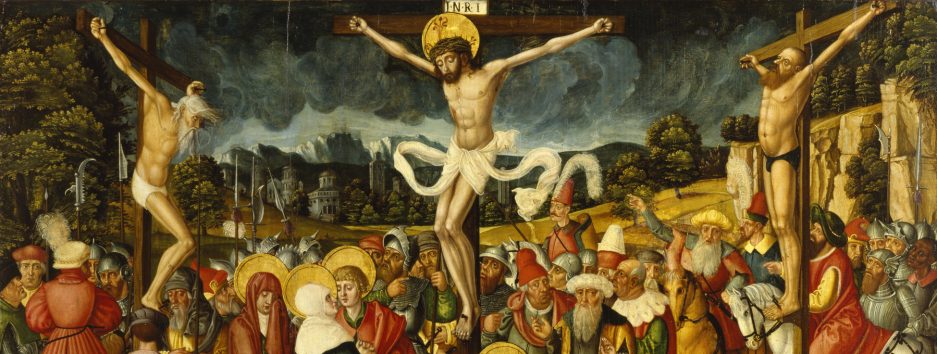
“But whosoever drinketh of the water that I shall give him shall never thirst…” – John 4:14

There’s a strange modern heresy creeping through the cathedrals of culture – a sort of secular iconoclasm, not content with smashing statues, now turns its withering gaze toward oil on canvas. I found myself reflecting on this the other day as I stood, hands behind back in reverent dismay, before the famously restored Hylas and the Nymphs by John William Waterhouse, that scandalously well-brushed shrine to pagan seduction and mythical doom. It’s a painting that manages to be both tranquil and terrifying: a youthful boy, Hylas, leans toward a pool from which seven near-identical water nymphs beckon with unblinking siren-eyes. The stillness of the water is the stillness before drowning.
For the uninitiated, the story comes courtesy of the ancient Greeks – those tireless conjurors of myth, philosophy, and politically incorrect sculptures. Hylas, a companion of Hercules, goes to fetch water and is never seen again, presumably pulled beneath the surface by naiads with more allure than ethical restraint. It’s a tale of enchantment, loss, and beauty’s peril. But none of that, apparently, is the issue these days.
No. The problem, dear reader, is that the painting made someone at Manchester Art Gallery feel uncomfortable.
In 2018, the curators, in what can only be described as a woke frenzy of postmodern self-flagellation, removed the painting from display. Their rationale? Something about ‘challenging Victorian fantasies’ and ‘provoking conversation’ around the ‘male gaze.’ Yes, that old chestnut. Not content with misreading the artwork, they replaced it with Post-it notes inviting the public to weigh in – as though millennia of classical mythology and centuries of academic art training could be fruitfully replaced with Janet from HR’s thoughts on Instagram feminism.
It would be laughable if it weren’t so pathetic. The gallery’s gesture reeked not of genuine moral concern but of performative rectitude – a symbolic bonfire lit by those who think nuance is a micro-aggression. One could almost imagine the nymphs themselves rising from the canvas, not to seduce Hylas, but to slap the clipboard out of a curator’s hand and drag her into the water for an impromptu baptism in classical literacy.
Let’s pause to consider what was really being censored here. Waterhouse’s brush strokes are soft, yes – but they carry weight. The women, though nude, are neither vulgar nor pornographic. They are archetypes – Eternal Feminine, both angelic and monstrous. What frightened the gallery wasn’t flesh; it was myth. They mistook the dangerous vitality of classical art for a threat to modern sensitivities, as though Hermes himself had breached their safe space.
But the real tragedy here is existential. The painting captures something deeply human: the lure of beauty that undoes us. The silence before the plunge. Hylas does not struggle. He leans in willingly. We are him. Sartre might have called it mauvaise foi – the bad faith of pretending we are not drawn to our own ruin. The story of Hylas is not about sexual politics – it’s about human helplessness before the sublime. Kierkegaard might say it is the aesthetic stage of life, where the pursuit of beauty inevitably leads to despair. St. Augustine, always the party-pooper, would’ve warned that the nymphs are but shadows of the divine, leading Hylas not to ecstasy but to error.
And let us not forget Scripture. In the Gospel of John, Christ speaks of living water -eternal, soul-quenching. But Hylas sought water elsewhere, and look where it got him. Pulled beneath by echoes of Edenic temptation. It’s not misogyny; it’s allegory. Art’s great power lies in metaphor, and these self-righteous meddlers wouldn’t recognise a symbol if it dangled them upside-down and painted their toenails.
The real irony, of course, is that while claiming to critique the ‘male gaze,’ these modern Philistines ended up demonstrating it perfectly: reducing the nymphs to mere flesh, robbing them of their mystery, their mythic agency, their narrative function. In other words, they did exactly what they accused the Victorians of doing – except without the decency to paint well.
Waterhouse’s Hylas and the Nymphs has since been returned to its place in the gallery, following public outcry – proof, if you like, that not all is lost. But the episode remains an emblem of the times: a society so bereft of meaning, so spiritually dehydrated, that it sees offence in metaphor and oppression in myth.
We no longer drown in pools of mythic water, but in tepid puddles of self-importance.
As for me, I’ll keep visiting the painting, time and again – whenever the opportunity arises. I’ll look at those beckoning figures – not with lust, nor guilt, but with that strange reverence one feels before a thunderstorm or a cathedral ceiling. I’ll see Hylas leaning in, and I’ll think: there goes every man who ever mistook beauty for safety. And every fool who mistook art for propaganda.
If you enjoyed this, why not support me and Buy Me a Coffee

 Wording