Theology, gambling, and a horse named after a dandy – what could possibly go wrong?
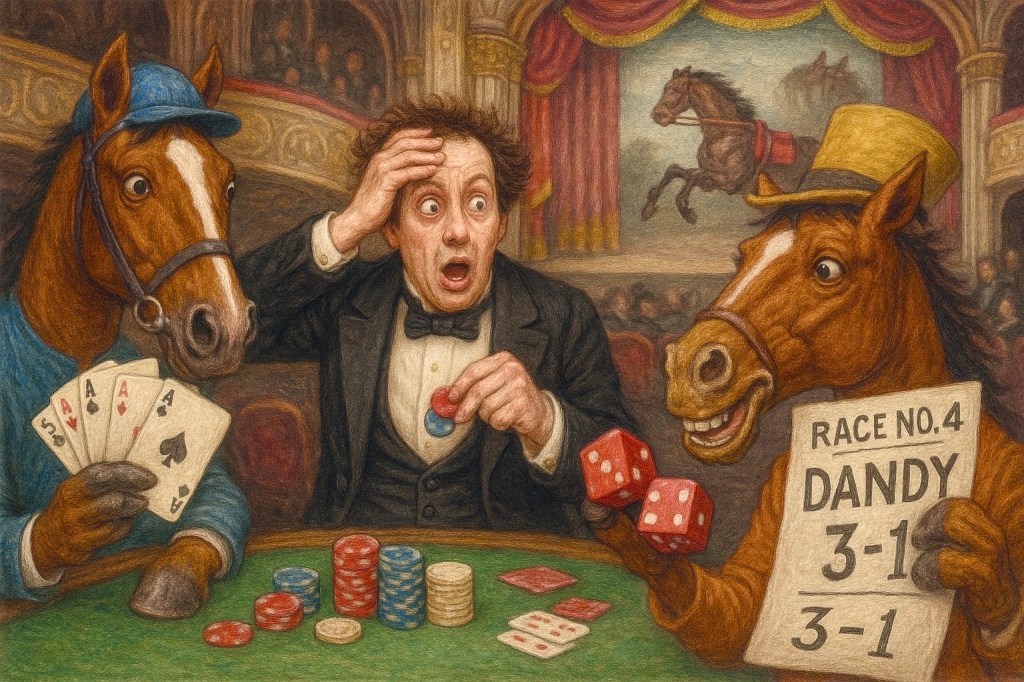
There are some things that should never mix: vicars and vodka, bishops and betting shops, or indeed, the very Reverend Augustin Jedd and anything with hooves. And yet in Arthur Wing Pinero’s frothy 1887 farce Dandy Dick, all these taboos are cheerfully trotted over like a Shire horse through a Victorian parlour.
This is ecclesiastical comedy with its cassock tucked firmly into its bloomers.
The play is a fine example of what happens when moral rigidity meets the giddy irreverence of farce: think The Importance of Being Earnest rewritten by a theologically literate jockey, or a lost episode of Father Ted performed by the Church of England Synod after too many sherries. The plot pivots around a clergyman who, for reasons financial rather than demonic, finds himself in cahoots with his racy (in every sense) sister and her very literal dark horse, Dandy Dick.
We begin with the Dean – a model of rectitude, a man whose idea of debauchery is likely reading Song of Songs without a bookmark – pledging a thousand pounds for a new cathedral spire. A noble gesture, until it becomes evident that he doesn’t have the money. Much like the rest of us pledging allegiance to the gym in January, the Dean quickly finds himself out of his depth and gasping for financial breath.
Enter his sister Georgiana – a formidable woman with all the refinement of a Derby Day riot and the sort of matriarchal charm that could bring a man to heel with a single glance. She owns a racehorse. Of course she does. And in the great tradition of disreputable relatives, she suggests that her dear brother might like to “invest” a little something on said horse in the upcoming race. “For the good of the spire,” you understand. This is like St Paul taking a punt on a camel race to fund missionary work.
It’s at this point the moral compass of the play takes a delightful nosedive.
The Dean, to his horror and then gradual delight, begins to dabble in the gambling arts. Farce, naturally, ensues: the butler, poisoned oats, a mistaken arrest, and more dramatic turns than the Gospel of Mark. All the ingredients of a proper Victorian comedy are here – high stakes, low humour, and the glorious undoing of a man too upright for his own good. If the Parable of the Prodigal Son had a sequel involving horse doping and police interference, it would look something like this.
But don’t be fooled into thinking Dandy Dick is merely fluff. Beneath its fluttering petticoats and galloping punchlines lies a pointed jab at the self-seriousness of Victorian moralism. Like many of Pinero’s works (The Magistrate, The Schoolmistress), the play skewers the hypocrisy of public virtue with all the subtlety of a custard pie in the face of respectability. The Dean is not a villain, nor even a fool – just a man who finds that virtue, when starved of cash, starts to eye the racecourse with a suspiciously keen interest.
What makes the play enduringly funny is that it exposes a truth we British know in our bones: that righteousness without humour is just repression in a fancy hat. The Dean’s slow descent into absurdity is not a fall from grace – it’s an awakening, a gentle nudge toward that most Anglican of revelations: sometimes it’s perfectly holy to laugh at yourself, especially when you’re wearing ecclesiastical robes and hiding betting slips under the Bible.
There’s something almost Tantalus-like in the poor Dean’s journey – forever reaching for decency, only to have circumstance whip it away with a carrot on a stick. And yet, unlike our mythological sufferer, he is redeemed not through suffering but through farce. The moral of the story? Occasionally, it’s all right if the Church has a flutter – so long as it’s on a winner and nobody drops the chalice.
And so we toast dear Dandy Dick – not the horse, but the play. A farce of fine breeding, a thoroughbred of theatrical cheek, and a timely reminder that even the most pious of us are only ever one sermon away from the bookies.
To be continued…
I’m thirsty. Why not Buy Me a Coffee?

 Wording