Or, how one man in a cravat brought Victorian theatre out of its corset and into its knickers.
Before Wilde minced in with cigarette cases and cucumber sandwiches, and long before Coward lit up the drawing room with his razor-sharp repartee and possibly questionable moustache, there was Pinero. Arthur Wing Pinero, to give him his full, absurdly operatic name – sounded like someone who should’ve been fencing in Verona, not writing about overbearing schoolmistresses and flustered deans. But what a gift he gave to the English stage: a catalogue of comedies, dramas, and theatrical diversions that dragged the 19th-century drawing room out of its starch-stiff gloom and flung it into the roaring, foot-stomping embrace of farce.
Pinero was a master of two great British traditions:
Making fun of the upper-middle classes, and Doing it with such charm that they laughed along without realising they were the punchline.
Let’s begin with The Magistrate (1885), the play that kicked off his career in farce like a can-can dancer to the stern face of propriety. A story of mistaken ages, mislaid virtue, and male fragility in its most hilarious bloom. Here, a dignified magistrate is undone not by sin or scandal but by a lie about his wife’s age – which, in a society where women’s birthdays were more confidential than state secrets, is practically treason.
This is farce as high-stakes identity fraud, and it’s as British as lying about how many sugars you really put in your tea.
Then we have The Schoolmistress (1886), where Pinero shows his knack for putting headmistresses, headmasters, and heads of household into morally compromising positions faster than you can say “Ofsted inspection.” A girls’ boarding school spirals into delicious chaos when romantic entanglements, financial strain, and mistaken identities collide. As ever, the moral centre is a little wonky, the plot tighter than a corset at a Methodist ball, and the message clear: the only thing more dangerous than a woman in charge is a woman in love.
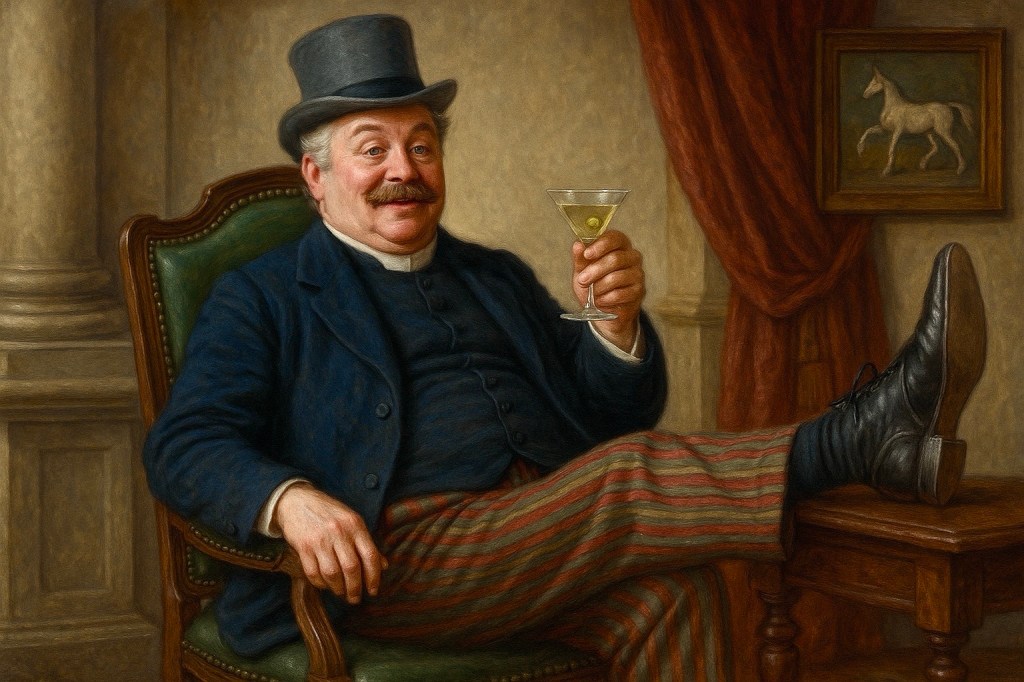
This was followed closely by our dear Dandy Dick, which we’ve already saluted like a bishop with a racing slip up his sleeve.
But Pinero didn’t stop there. As the world turned its monocled eye toward respectability, he turned his pen toward society drama – because what is Victorian drama, if not a well-dressed nervous breakdown?
Behold The Second Mrs. Tanqueray (1893), where we leave behind the clergymen and crusty butlers and enter the world of scandalous second marriages. The play deals with the ‘woman with a past,’ a trope which – if we’re honest – usually meant she’d once been seen in trousers or read a French novel. Tanqueray shocked theatregoers by daring to treat its ‘fallen woman’ with nuance rather than a one-way trip to the river. This was Ibsen territory – serious, scandalous, and just a few smouldering glances away from a nervous collapse in a conservatory.
Pinero’s leap from farce to serious social drama didn’t always land on both feet – some critics found it akin to a court jester suddenly declaiming Hamlet – but by Jove, he tried.
And then there’s Trelawny of the ‘Wells’ (1898), a nostalgic, semi-autobiographical love letter to the theatre itself. A romantic romp with backstage drama, theatrical traditions, and just enough melancholy to remind us that the curtain eventually falls. Think Noises Off with roses, ruffles, and a dollop of gentle sentimentality. It’s sweet without being saccharine, and it manages to be a love song to an artform while still poking it in the ribs.
Throughout it all, Pinero’s plays walk a tightrope between mockery and affection. He doesn’t scorn his characters – he simply lifts their skirts (metaphorically), revealing the comic chaos beneath their pious exteriors. His farces suggest that society is just a few drinks and one botched telegram away from implosion. His dramas hint that no matter how gilded your parlour, there’s always a skeleton in the umbrella stand.
He may not have had Wilde’s wit, Shaw’s socialism, or Coward’s champagne sparkle, but Pinero had something rarer: he understood the power of laughter to reveal truth – and, sometimes, to forgive it.
So here’s to Arthur Wing Pinero: master of the muddle, laureate of the farcical fall, and architect of comic collapse. His works remind us that respectability is often just repression in disguise, and that the best medicine for pomposity is a healthy, raucous belly laugh – preferably delivered by someone in a borrowed bonnet, fleeing the police, and shouting “It’s not my horse!”
If this was at all fun or edifying, why not support me and Buy Me a Coffee

 Wording