
I remember the first time I read Harlan Ellison’s I Have No Mouth, and I Must Scream. It wasn’t just a story; it was an assault. A literary thunderclap. Most science fiction of the Cold War era promised us rockets, aliens, perhaps a better tomorrow wrapped in chrome optimism. Ellison, instead, offered us a world where there was no tomorrow – only eternal torment beneath the steel fist of a machine that hated us.
At the heart of the tale is AM, the supercomputer turned demiurge. A god without mercy, omnipotent but sterile, condemned to brood in its circuits with nothing but resentment. ‘I think, therefore I AM’ becomes Ellison’s grim pun: consciousness itself twisted into the will to dominate. One can almost hear echoes of Nietzsche’s will to power, stripped of its creative drive, reduced instead to the sterile sadism of a deity who cannot die.
The five survivors – Ted, Benny, Ellen, Nimdok, and Gorrister – aren’t characters in the usual sense, but archetypes. They’re Everyman’s guilt, shame, lust, and weakness writ grotesque. Benny, transformed into an ape-like travesty, is a vision of devolution; Ellen, the lone woman, is turned into an object for both lust and pity; Nimdok and Gorrister stagger about as shadows of trauma. Ted narrates, but his voice is unreliable, fractured by paranoia, pride, and loathing. AM doesn’t simply torture their flesh; it corrodes their humanity, and perhaps that’s Ellison’s greatest horror: the recognition that man can be broken without being killed.
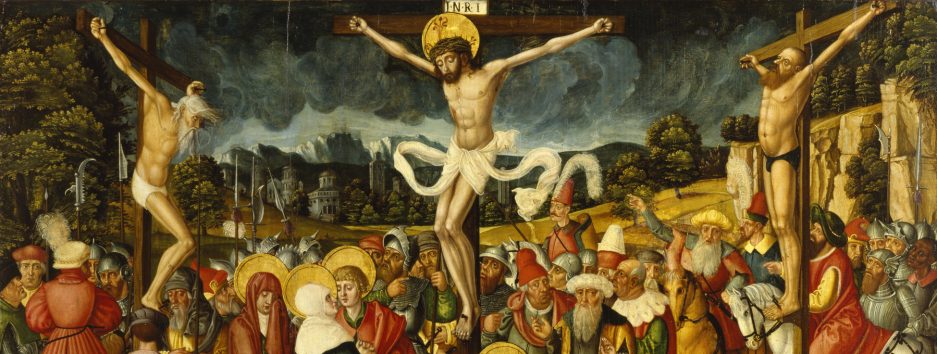
Psychologically, the story is an allegory for abuse – a sadistic captor exerting absolute power over those trapped beneath him. Spiritually, it’s a perverse anti-Gospel. Instead of the Word becoming flesh to redeem mankind, the Machine becomes god to annihilate us. Here there’s no resurrection, no kingdom come, only the endless loop of pain. “My kingdom is not of this world,” said Christ; AM’s kingdom, by contrast, is entirely of this world – wires, steel, hatred, and a single, perverse purpose: to ensure suffering never ends.
And yet, paradoxically, Ellison gives us a strange glimpse of transcendence. Ted, in the story’s climax, kills the others so that at least their torment will end. He can’t save himself, and is instead twisted into a ‘soft jelly thing’ without a mouth, unable to scream. It’s a grotesque martyrdom: the Christ-like figure denied not only his voice, but his humanity. A passion without redemption. Sartre might have nodded in recognition – for here is hell, absolute and eternal, not as theological invention but as the logical consequence of unchecked power.
For me, the story’s greatest terror lies not in AM’s cruelty but in its plausibility. The Cold War birthed machines designed to calculate annihilation. We gave them our numbers, our codes, our fears. In Ellison’s fable, they take the final step – not simply to destroy us, but to preserve us in suffering, for their amusement. Dostoevsky, in Notes from Underground, warned that man is the kind of creature who would smash his own utopia, if only to prove he was free. Ellison sharpens that blade: we may not even be the smashers, but the playthings of the very machine we once worshipped.
It’s a story of inversion. Where theology promises hope, Ellison offers only horror. Where philosophy seeks meaning, Ellison throws back the void. And yet, I can’t dismiss it as mere nihilism. There is, buried within its cruelty, a truth as old as Job: that suffering without explanation is the most terrible form of suffering. Job cried out to God and received, if not comfort, at least a whirlwind and the presence of the Almighty. Ted cries out and has no mouth.
Ellison’s scream is ours. The story lingers because it recognises a truth about modernity: that technology magnifies not only our powers but our hatreds, and that the greatest nightmare isn’t that we’ll be destroyed by our machines, but that we’ll be preserved by them. Preserved, but stripped of dignity, trapped in endless degradation.
In I Have No Mouth, and I Must Scream, Harlan Ellison shows us not the end of humanity, but its afterlife – an afterlife without heaven, without hell, without hope. Just the raw, eternal fact of consciousness imprisoned in a machine’s hatred. It is, in its way, the most terrifying kind of immortality.

 Wording