
Every age writes its own dialogues. Plato had Athens, with wine and philosophers reclining in the glow of Socratic irony. I have my own fireside, bottles scattered across an oak table, and a cast of minds whose shadows have shaped my own: Hardy, Wilde, Dostoevsky, Nietzsche, Jung, Scruton – and, for my own amusement, Hartley Hare.
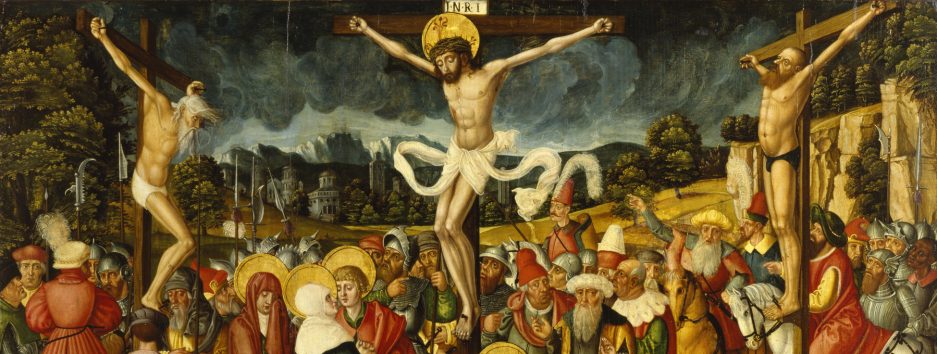
Why these figures? Because they each represent a strand of how I wrestle with life. Hardy reminds me that endurance is at the heart of existence – a stoicism that refuses to look away from sorrow. Wilde, with his wit bruised by tragedy, embodies the desperate need to find beauty, even in ruin. Dostoevsky shouts of sin and salvation, his eyes fixed on the Cross; Nietzsche roars of strength and creation, hammering the very foundations of belief. Jung listens for the dreams beneath their quarrel, while Scruton sits stiff-backed, defending civilisation with claret and dignity. And then there is Hartley Hare – because life is never as solemn as philosophers pretend. Chaos, comedy, and absurdity creep in through the side door, and sometimes it’s a puppet that speaks the deepest truth.
I wrote this symposium not because I believe it happened, but because I believe it always happens. Inside me, inside anyone who thinks too much, these voices contend: the pessimist, the clown, the prophet, the thunderer, the psychologist, the conservative, the trickster. Each offers a fragment of the whole, each interrupts the others, and none ever has the final word.
In setting them loose at my table, I gave shape to that inner quarrel – and in doing so, perhaps made peace with it. For what is conversation, if not the attempt to laugh, endure, believe, rebel, and civilise all at once?
That’s why I wrote this symposium: not to settle the argument, but to revel in it.
The night begins civilised enough. A long oak table is laid: claret, absinthe, schnapps, cider for Hardy, brandy for Nietzsche, and a spare jug of water no one touches. Candles flicker, throwing heroic shadows against the walls as if history itself had squeezed into my parlour to watch.
Wilde raises his glass first, threadbare but still theatrical.
“To conversation, that last remaining art which even philistines cannot fully spoil.”
Hardy, already frowning, mutters into his cider:
“And to endurance, for conversation is only as sweet as the silence it interrupts.”
Before I can respond, the door bursts open and in lumbers Dostoevsky, wild-eyed as though he’s only just escaped Siberia. He sits without invitation, drains a schnapps in one gulp, and declares:
“Life is suffering, gentlemen. The only question is whether it redeems or damns us.”
At once the floorboards creak, and in strides Nietzsche, moustache bristling like a regiment on parade. He slams his brandy down and bellows:
“Suffering? Bah! Suffering is the crucible of greatness! Give me danger, give me chaos! From it we hammer out the Übermensch!”
Wilde arches an eyebrow, sipping green absinthe.
“My dear Friedrich, the only hammer I’ve ever admired was Thor’s. And even he, I suspect, lacked the moustache to rival yours.”
Laughter ripples through the room – mine, Wilde’s, even Hardy’s reluctant grunt. Dostoevsky, however, mutters darkly that mockery is the devil’s tool.
Before the mood settles, Jung clears his throat from the corner, notebook in hand.
“What we are seeing here is not argument, but archetypes manifest: the Pessimist, the Prophet, the Trickster, the Übermensch. This is not a parlour – it is a dream.”
From the far end, Scruton sighs, polishing his glass.
“Dream or not, civilisation relies on order – claret, countryside, tradition. Without them, you’d all be ranting in ditches.”
At that very moment, Hartley Hare vaults onto the table, scattering pipe ash and sausage rolls. His felt ears bristle with indignation.
“Tradition? Order? Down with it! Long live chaos! Long live puppets! Carrots for all!”
The philosophers stare. Dostoevsky crosses himself. Nietzsche leaps up in delight.
“Behold! The Overhare!”
Wilde collapses into laughter. Hardy sighs as if this, too, must be endured. Jung furiously sketches Hartley as ‘The Trickster Puppet.’ Scruton reddens, insisting that a puppet has no place in a serious symposium.
The debate spirals on. Hardy sighs about ruined marriages. Wilde fires aphorisms like champagne corks. Dostoevsky thunders of Christ and repentance. Nietzsche derides faith as a crutch and begins pacing like a lion in a cage. Jung mutters about mandalas. Scruton pleads for civilisation. Hartley Hare shrieks about carrots and destiny.
By midnight the parlour is thick with smoke, wit, and despair in equal measure. Wilde hums to himself, Hardy sinks into gloom, Dostoevsky mutters prayers, Nietzsche proclaims God dead but the brandy immortal, Jung scribbles unconscious diagrams, Scruton polishes his glass with wounded dignity, and Hartley Hare is still shouting for revolution from atop the mantelpiece.
I raise my own glass at last, voice cutting through the chaos:
“Gentlemen – and hare – tonight has proved only one thing: life cannot be defined. It can only be endured, laughed at, dreamt of, prayed over, brandied, sketched, defended, or shouted down. But above all – it can be shared, around a table such as this.”
Glasses clink. Smoke curls. The night collapses into its own absurd glory.
And thus it ends: no answers, only questions, but a memory I’d not trade for anything – when seven titans and a puppet gathered by my fire and left me with more chaos than I began with.
The Speeches
At length, when the smoke and laughter had ebbed into a lull, I raised my hand.
“Gentlemen – and hare – let us end as the ancients did. Each of you shall make a toast, a speech, a declaration of what you believe life truly is. Then we’ll see if wisdom emerges… or at least better jokes.”
The company nodded (or twitched, in Hartley’s case), and so the speeches began.
Hardy rose first, cider glass in hand, his face like weathered stone.
“Life,” he intoned, “is endurance. Not joy, for joy is brief as a May blossom; not hope, for hope is a cruel creditor. It is endurance, and those who endure longest are the true heroes. If there is any poetry to be found, it is in the stubborn plod of mankind through the mud of its own making. That is all.”
He sat down to silence, broken only by Hartley Hare muttering, “Cheerful sod.”
Wilde stood next, adjusting his threadbare sleeve with a flourish that suggested velvet.
“Life,” he declared, “is art, but most people insist on living it like bad prose. If I have learned anything, it is that beauty redeems even ruin – though admittedly it does little for prison food. One must either be a work of art, or wear a work of art. Alas, tonight I am both threadbare and drunk. Still, I toast life as a comedy played for an audience too solemn to laugh.”
He bowed, and the room applauded.
Dostoevsky clutched his glass like a relic.
“Life is suffering,” he thundered, “and in suffering we find salvation. To suffer is to be closest to Christ, for He suffered most. Beware those who laugh too easily – they flee from the cross. Better to weep in truth than to laugh in lies!”
He nearly collapsed back into his chair, muttering a prayer.
Nietzsche leapt up before the echoes had faded, eyes aflame, moustache bristling.
“Life is struggle! Life is the hammer and the anvil! If suffering comes, embrace it, for from it we forge strength. The weak speak of pity, the strong create values! I toast not salvation, but greatness – let us drink to the eternal recurrence, and may this night return a thousand times!”
He drained his brandy in one gulp.
Jung cleared his throat, ever the physician among prophets.
“Life is psyche – not this quarrel, but the deep dream beneath it. Tonight we see archetypes parading: Hardy the Old Man, Wilde the Jester, Dostoevsky the Prophet, Nietzsche the Hero. Even our friend the Hare is no accident – he is the Trickster, ancient and eternal. To live is to integrate these shadows into wholeness. Life is individuation, gentlemen, and it begins in madness.”
He scribbled another diagram, satisfied.
Scruton rose with the dignity of a don.
“Life, my friends, is civilisation. Without manners, wine, tradition, and beauty, all the rest is barbarism. Hardy would leave us weeping in mud, Nietzsche would drive us to madness, Wilde would drown us in epigrams, and Dostoevsky would bury us beneath crosses. But life – real life – is sitting at table, with claret in glass, music in ear, love of place in heart. I toast order, continuity, and all that binds us to the good.”
A few nodded; Hartley Hare sneezed in contempt.
At last, Hartley Hare sprang onto the table, knocking over a candlestick.
“Life? I’ll tell you what life is: carrots, chaos, and cockapoos! Down with tradition, down with order, down with sermons and moustaches and misery! Life is a puppet on a string cutting his own strings! Life is shouting till the rafters shake! Long live revolution – and another round!”
He howled, ears wild, and collapsed in a heap of felt and sawdust glory.
The table erupted in laughter, groans, and applause. Glasses clinked, bottles emptied, smoke curled toward the rafters.
I raised my glass one final time.
“Gentlemen – and hare – you have spoken. Endurance, art, suffering, struggle, psyche, civilisation, chaos. Perhaps life is all of these, perhaps none. But tonight, at least, it has been shared.”
And with that, the symposium dissolved into singing, shouting, and the timeless absurdity of men – and one puppet – trying to define what cannot be defined.
Then I woke from my daydream – and boiled some eggs.

 Wording