Ghosts, we are told, ought to terrify. They ought to shuffle about in winding sheets, rattle chains, and mutter warnings about imminent doom. In the long Gothic tradition – from Horace Walpole’s Otranto to the shadowy corridors of Mrs Radcliffe – apparitions exist to unsettle our digestion and our theology in equal measure. Yet Oscar Wilde, with his usual irreverence, refused to let the ghost remain a dignified revenant. In The Canterville Ghost (1887), the phantom of Canterville Chase finds himself less an awe-inspiring spectre than a put-upon tenant whose only real haunt is the irritation of modernity.
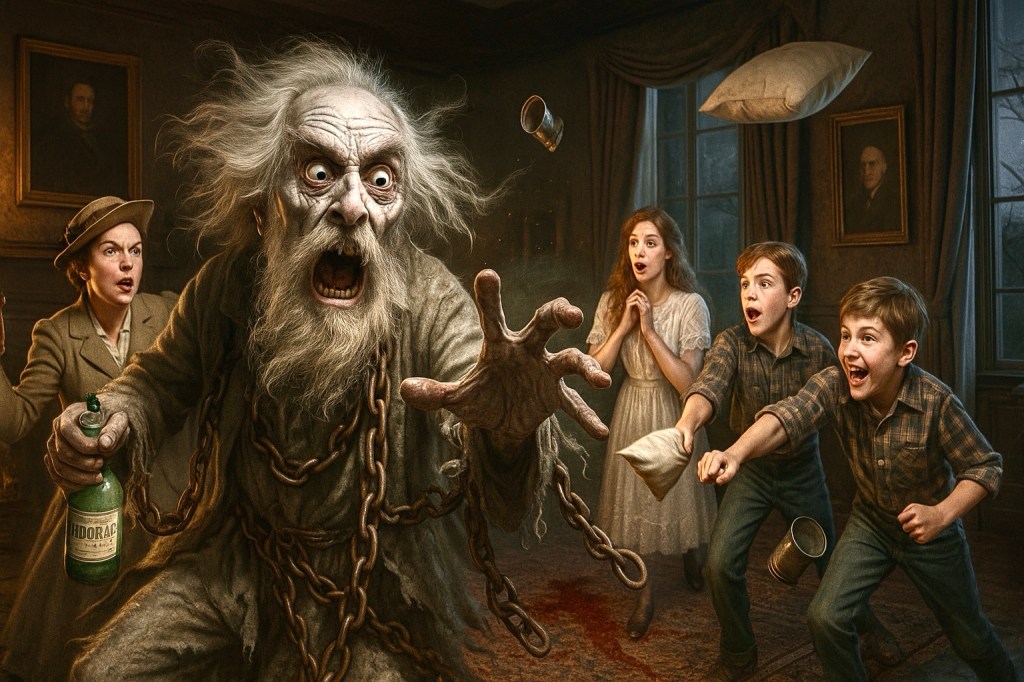
The set-up itself is delightfully Wildean: a brash American family purchases a venerable English mansion, complete with hereditary ghost. Instead of cowering, they immediately demand receipts. Bloodstains on the carpet? A nuisance for the housekeeper, to be treated with Pinkerton’s cleaning fluid. Chains in the night? Lubricate them with oil. The proud, centuries-old spook is met not with trembling, but with practical consumer solutions. Wilde is clearly enjoying the clash of cultural caricatures here: Old World romance and superstition colliding with New World pragmatism and salesmanship. One might even call it the supernatural reduced to a customer-service complaint.
Yet beneath the laughter, Wilde is also mounting a sly critique. The Gothic mode was already showing its age in the late Victorian period, and Wilde treats it as so much antique furniture – heavy, ornate, and ripe for parody. The ghost himself, though comical in his plight, is also curiously sympathetic. Here’s a being bound by tradition and family shame, rattling around the corridors of history, suddenly rendered impotent by the breezy irreverence of modern life. He is, in short, a Wildean dandy gone spectral: elegant, theatrical, and ultimately defeated by bourgeois practicality.
Philosophically, the tale touches on what Kierkegaard might call the ‘sickness unto death’: the ghost’s condition isn’t one of terror, but of meaninglessness. He’s condemned not to frighten, but to bore. What’s more existentially ghastly than being ignored? In this sense, Wilde anticipated modern psychology’s recognition that humiliation often wounds deeper than fear. A ghost that can’t scare is like a poet that can’t scandalise – a fate surely worse than purgatory.
Of course, Wilde layers the comedy with pathos. The phantom’s plight becomes an allegory for the artist in a utilitarian world. Just as the American family cannot comprehend the purpose of a ghost beyond its nuisance value, so too does bourgeois society fail to comprehend the purpose of art beyond its utility. As Roger Scruton once reminded us, beauty is never ‘useful,’ and precisely for that reason it’s necessary. Wilde’s ghost embodies this paradox: he’s an aesthetic creature in a world that demands function.
And there, perhaps, lies the story’s enduring appeal. It’s funny, yes – a parody of Gothic melodrama – but it also whispers of Wilde’s deeper concern: that art, tradition, and imagination will always be at odds with the world of detergent and ledgers. The ghost may be ridiculous, but so too is a civilisation that can see in him only a creaky hinge in need of oiling.

 Wording