“A culture of repudiation has taken hold among our elites, who will celebrate every culture but their own, and who see in the inheritance of the West not an achievement to be cherished but a crime to be atoned for.” – Sir Roger Scruton
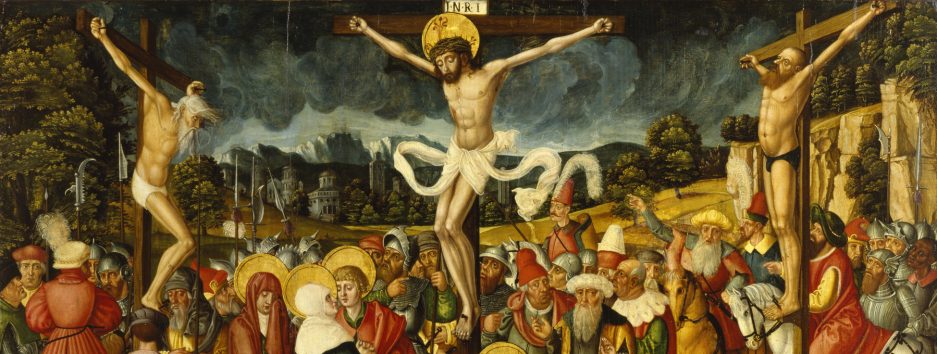
There’s something eerily biblical about Scruton’s lament. I think of the Israelites forever yearning for Egypt while despising their own Promised Land, or of prodigal sons squandering the family silver only to realise, too late, that the pigs have no loyalty to their keepers. Scruton named this impulse the culture of repudiation – a posture that looks learned, humane, cosmopolitan, and yet conceals a profound self-hatred.
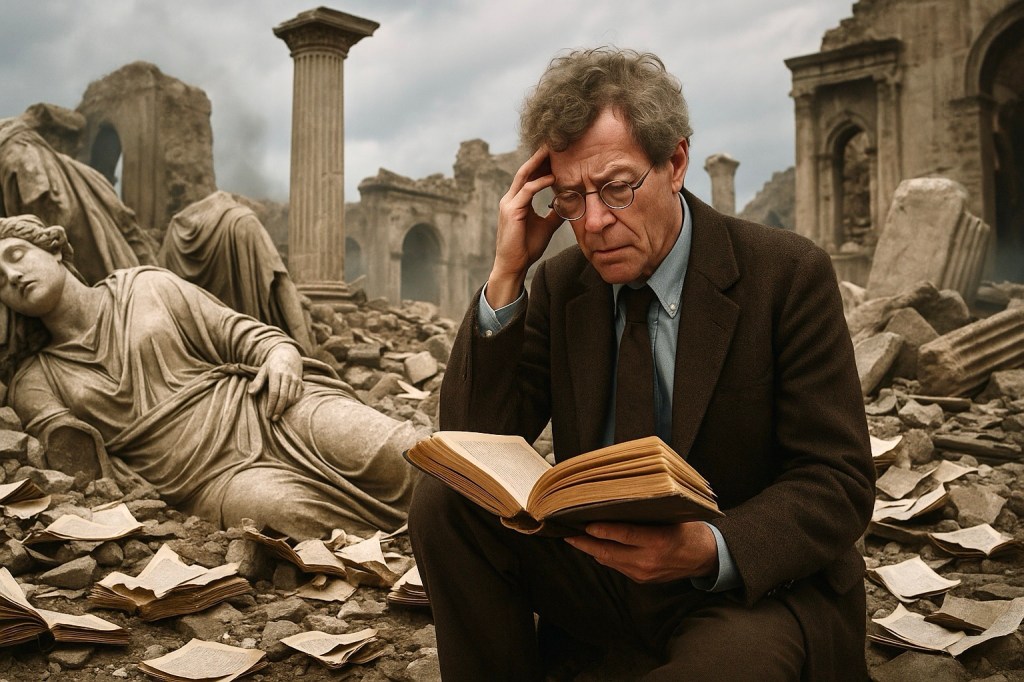
The phenomenon’s most visible among what he called ‘the elites’: the professors, journalists, cultural gatekeepers, and politicians who hold sway over the stories a society tells about itself. In their mouths, the West is seldom an achievement. Instead it’s a ledger of sins: slavery, colonialism, empire, patriarchy, capitalism, heteronormativity – the list lengthens like a medieval litany of devils. But unlike the medievals, who at least exorcised demons with holy water, our modern clerisy prefers the fire – burning books, toppling statues, decolonising syllabuses. Iconoclasm without theology.
And yet, paradoxically, the same voices that sneer at Shakespeare bow before the epics of other cultures. The Homer of Greece must be interrogated for misogyny, but the Mahābhārata is read with reverence. Chartres Cathedral is a monument to oppression, while the Great Mosque of Córdoba is an aesthetic marvel. Our own inheritance is treated not as something to inhabit but as something to apologise for – an ancestral crime scene.
Psychologically, this is telling. Freud would have recognised it as a collective neurosis: the child who cannot forgive his father’s failings and thus refuses his love. Nietzsche, with more venom, would call it ressentiment – the transformation of weakness and envy into a moral posture. What looks like conscience is often simply self-loathing with an academic veneer.
The irony, of course, is that this very posture is a product of the West. Only a civilisation with the capacity for self-critique – born of Socratic questioning, Christian confession, and liberal doubt – could so thoroughly despise itself. The Ottomans didn’t hold symposiums on the evils of empire. The Mongols didn’t publish papers on their own brutality. But Oxford dons and Ivy League professors write endlessly on Western guilt while comfortably seated in institutions founded by that same civilisation’s genius.
Scruton’s remedy wasn’t triumphalism but gratitude. He urged us to see civilisation as an inheritance, like a great library of fragile manuscripts. One does not burn the manuscripts because some of the scribes were flawed. One preserves, studies, corrects, and adds to them. Gratitude is the antidote to repudiation: a recognition that we are heirs as well as critics, custodians as well as reformers.
To cast the West only as crime is to deny Mozart’s Requiem, Dante’s Commedia, Magna Carta, the rule of law, parliamentary democracy, the concept of human rights. It’s to turn one’s back on the very sources of the freedom to complain. Repudiation offers no future – only an endless cycle of self-flagellation until nothing remains to inherit.
Scruton, like Burke before him, saw culture as a covenant between the living, the dead, and the unborn. To break that covenant is to leave one’s children orphans, wandering amid the ruins, armed only with slogans. We can, of course, atone for the sins of history – but atonement without gratitude curdles into vandalism. And as history shows, vandals do not build; they only leave behind broken statues and empty plinths.
The task, then, isn’t to repudiate but to remember, not to grovel but to steward. A civilisation isn’t a crime scene – it’s a home. And however creaky the floorboards, however embarrassing the portraits of ancestors on the wall, it’s the only home we have.

 Wording