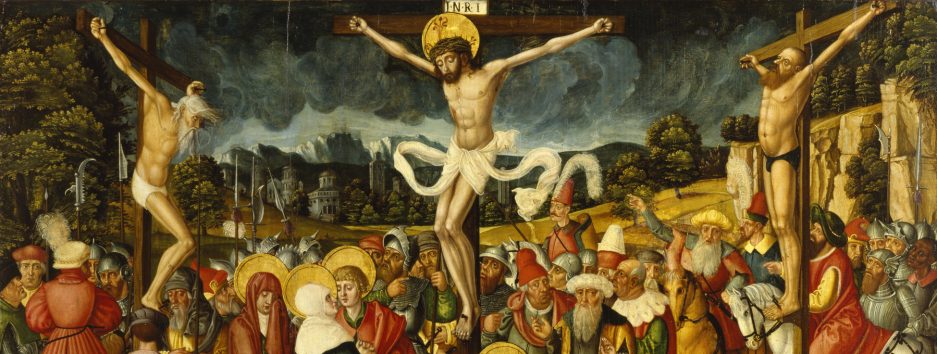
In truth, the news of Charlie Kirk’s assassination knocked the breath out of me. Over these last twenty four hours I found little appetite to write, or even to stir myself to much at all. I let the hours pass in quiet, trying to steady the heart and unclench the mind. When grief or anxiety weighs too heavily, I have an odd but faithful refuge: the company of words. Not the new-fangled jargon of politicians or technocrats, but the old, half-forgotten coins of language, each tarnished with history and heavy with human humour.
There’s a kind of solace in them. To turn the pages of a reference book, to stumble upon a word no longer in circulation – this can be, strangely enough, a kind of laughter therapy. Brewer’s Dictionary of Phrase and Fable, among others, has done me more good in dark hours than many a self-help tract. For there, amid the dragons, the hobgoblins, and the quaint insults of yesteryear, one remembers that mankind has always muddled through with the help of language: sometimes sharp, sometimes foolish, often comic.
And so I found myself pausing upon one such relic: draggle-tail. A small thing, an insult fit for a muddy lane, yet within it lies a miniature history of class, contempt, and comedy.
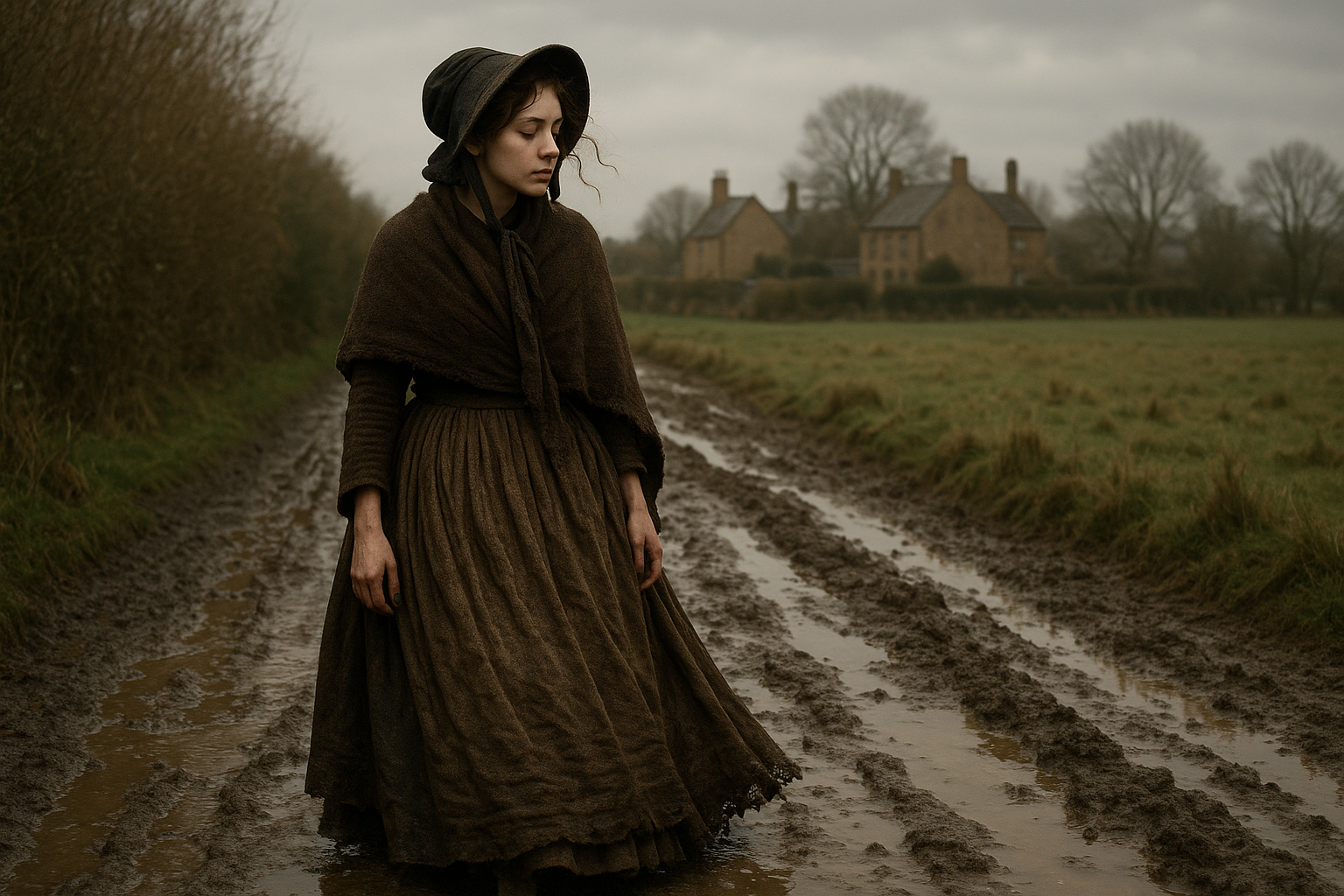
Some words cling to us like burrs, lodged not in the cloth but in the mind. One such is draggle-tail, an antique insult that sounds half like a nursery rhyme and half like a Puritan sermon. To hear it aloud is to see, at once, a hem trailed through puddles, a skirt bedraggled by the English rain, and a woman scolded into caricature by the tongue of her neighbour.
The word itself’s a mongrel: from draggle (to trail, to make dirty by dragging) and tail (the literal skirt, or in old usage the person who wears it). It’s first heard in Elizabethan mouths, that age of muddy roads and moralising wit. Shakespeare can’t resist it, giving Pandarus the sneer in Troilus and Cressida: ‘Very sooth, she makes a fine draggle-tail.’ Helen of Troy, the face that launched a thousand ships, reduced to a muddy hem.
From there it slipped easily into the pulpit and the tavern. Thomas Dekker called women of the stews ‘draggle-tails.’ Jonathan Swift flung it in his satires. Fielding had no qualms in Tom Jones about coupling it with ‘slut.’ The word did double duty: it described the physical dirt of poverty, and the moral dirt assumed by polite society to follow close behind. Thus a draggle-tail wasn’t merely untidy – she was unchaste, low-born, contemptible.
By the nineteenth century, Dickens could place a ‘draggle-tailed wife’ in the mouth of Alderman Cute (The Chimes) as shorthand for shabby domesticity: a vision of a woman worn out by childbearing and unwashed laundry. Hardy, with more irony, slipped ‘Dorothy Draggle-tail’ into a rustic chorus in Far from the Madding Crowd, where it becomes almost folkloric – the laugh of the village, not the sneer of the city.
The term never quite shook off its mud. Thoreau, in Walden, applied it to a sermon, calling one a ‘draggle-tail’ – as if language itself could become slovenly, its skirts caught in the swamp of prolixity. In that stroke he showed the word’s larger potential: not just to name a shabby woman, but to describe anything that trails behind, dirtied and diminished.
There is, I think, a certain beauty in its ugliness. Modern English has grown sleek, hygienic, airbrushed; our insults are clinical (unhoused, underserved, dysfunctional). But draggle-tail is gloriously mucky. You can hear the squelch of the road in it. It reminds us that words once grew out of the earth, not out of management theory.
Brewer’s Dictionary of Phrase and Fable would’ve relished it, lodging it somewhere between ‘dragon’s teeth’ and ‘draggled petticoat,’ giving us the folkloric sense, the biblical echo (‘a woman with the issue of blood, dragging her garment behind’), and perhaps a sly moral. For Brewer, every phrase was an archaeology of imagination. And so it is with draggle-tail: beneath the surface insult lies a social history of dirt, gender, class, and contempt.
Would I call someone a draggle-tail today? Hardly. But I like to keep the word alive, as one might keep a tarnished button or a bent farthing. It belongs in the pocket, ready to be pulled out, polished with a smile, and set back into the language – not as an insult now, but as a reminder that words, like hems, sometimes need a little mud on them to prove they have lived.

 Wording