On Being Mistaken for Death Itself, and Other Occupational Hazards
Testing the water here and posting an extract from the book I’m writing – be gentle with me.
In the 1990s, there was a hospital in the city where I worked that we in the profession referred to, with a kind of grim familiarity, as ‘The Geri Wards.’ You know the type: three floors up, a fading smell of antiseptic over stale toast, and that soft, static buzz of televisions nobody’s watching. The air carried the weight of slow decline.
My visits there were routine. I’d collect paperwork for upcoming cremations – part of the then-standard two-doctor certification system. (That’s been replaced now by the modern ‘medical examiner’ scheme – a post-Shipman tightening of the bureaucratic noose. The pendulum always swings after the monster’s unmasked.)
Anyway, one ordinary morning, I entered the hospital’s large lift – the kind designed to carry a trolley bed and a gurney at once – dressed, as ever, in my black suit. No sooner had the doors begun to slide shut than in came a porter, wheeling a man who was halfway out of this world already.
He was gaunt, sunken, pallid. His beard was straggled like roots pulled from river mud. He made no sound. Couldn’t, perhaps. But his eyes – his eyes were wild, locked directly onto mine with such sharp, abject terror I felt momentarily transparent, as if he were looking through me… or at something behind me.
I said, “Good morning,” – because of course I did. But he never blinked. He just stared. Unmoving. As if some part of him knew something I didn’t.
When the lift arrived, I nodded to the porter, exited, and promptly forgot all about it.
Until, that is, a few days later.
A call came in. Routine funeral arrangement. Elderly gentleman. I visited the family, made the necessary preparations. Name sounded vaguely familiar, but then, most do. Only when I returned to the hospital to collect the completed paperwork did the pieces lock into place.
The mortuary technician opened the drawer.
And there he was.
The man from the lift.
That frozen gaze. That pale, tight jaw. That sense of uncanny recognition as my hand guided the stretcher closer. A moment that replayed in my head for days. What had he seen in me? What had I been to him?
There’s a strange kind of folklore – Irish, mostly – about the Sin-Eater. A lonely figure, often impoverished, sometimes drunk, but spiritually functional enough to take the sins of the dying onto themselves.
The dying person’s family would leave out a crust of bread and a pinch of salt – placed on the chest of the corpse. The sin-eater would consume the meal and, in doing so, symbolically consume the soul’s sins, taking them on as spiritual debt. The sin was transferred by hunger.
A crude Eucharist for the margins of the Christian world.
They were feared, these men. And pitied. Sometimes spat upon after the rite was done. Sometimes refused burial themselves.
But they served a purpose: to make the dead clean.
And I wonder now – did that old man in the lift think that was me?
Not a funeral director. Not an administrator. But a spiritual scavenger, here to usher him on.
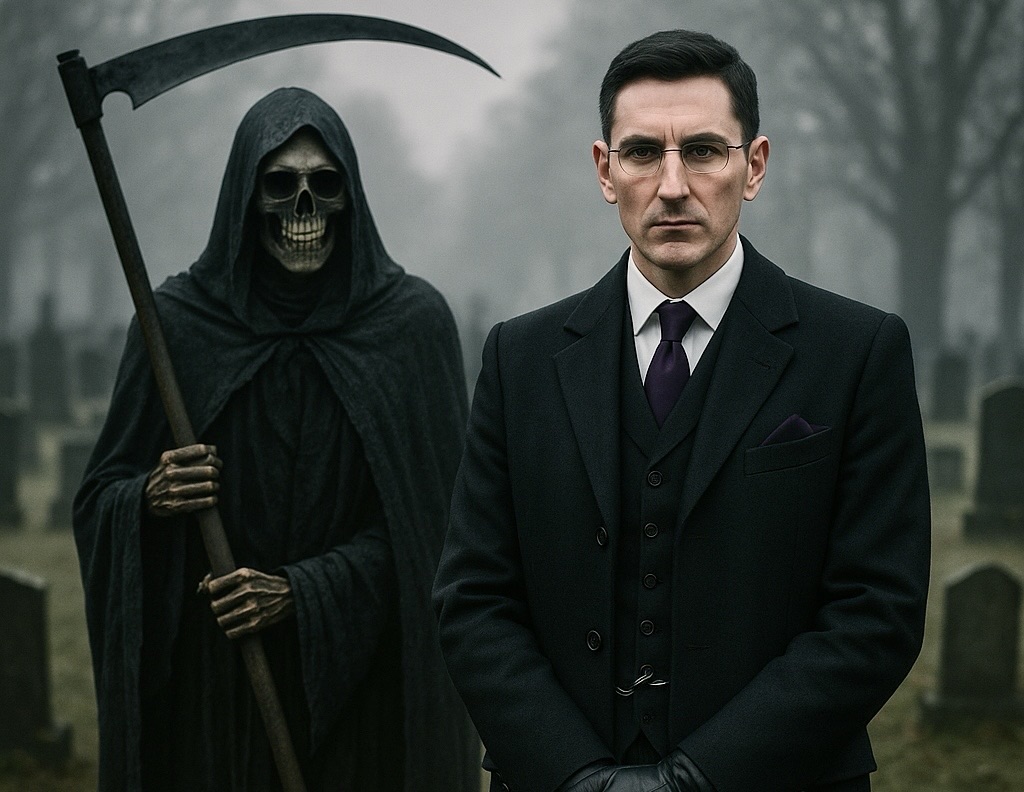
Or worse – perhaps he thought I was Death Himself.
In the 1980s, I read a novel that’s never quite left me. On a Pale Horse by Piers Anthony. It was about a man who accidentally kills Death, and as punishment (or reward?) must take up the mantle himself – collecting souls, riding that pale horse, living between time and judgment.
Years later, Pratchett would have fun with it in Reaper Man, turning Death into a character of weary wit and odd compassion. But even in satire, the idea remained potent: Death walks among us. Quietly. Sometimes unnoticed. Sometimes mistaken.
And what a strange profession mine is – to be always adjacent to death, always smelling of antiseptic and roses and formaldehyde, always dressed like the Grim Reaper’s underpaid assistant… and yet to live, fully and vividly, among the living.
Reflection: Seeing the Reaper
It’s easy to dismiss these moments as coincidence.
And perhaps they are.
Psychologically speaking, the man may have been in a state of delirium, or suffering from terminal restlessness – that eerie final phase where the mind flails against the dying of the light. Projection, perhaps. A frightened mind latching onto symbols: the black suit, the quiet presence, the undertaker in the lift.
Existentially, one might say he was confronting the absurd – Camus’ word for the gap between our yearning for meaning and the silence of the universe. And in that silence, maybe he made me mean something. We all do that, don’t we?
Spiritually? Well, who can say?
Perhaps I was meant to be there. A reminder. A marker. A mirror.
There’s a quote I’ve always loved – source uncertain, possibly apocryphal:
‘Death comes for us all. But sometimes he sends a man in a black suit first, just to say hello.’
I didn’t know that man.
But he looked at me like he’d known me all his life.
And when I saw him again, I couldn’t help but wonder if he’d been right.

 Wording
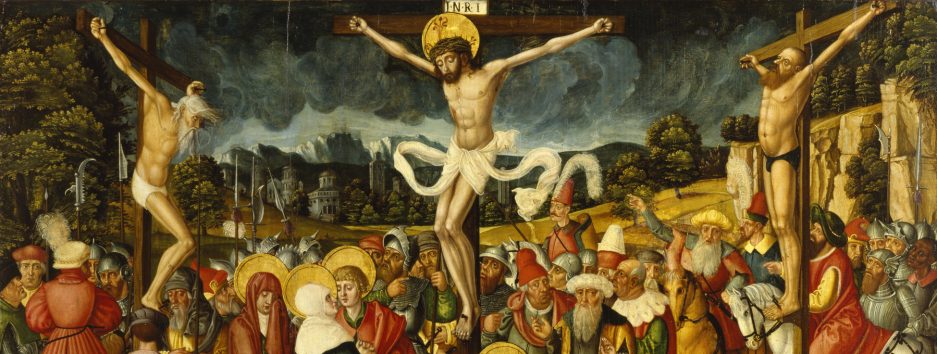
I can’t wait until Revelation 20:14 comes true:
“Then Death and Hades were thrown into the lake of fire. This is the second death, the lake of fire.”
english standard version translation
Amen to that. Whatever one’s view of Revelation, the idea that even death has its own death is a staggering hope. Thanks for sharing