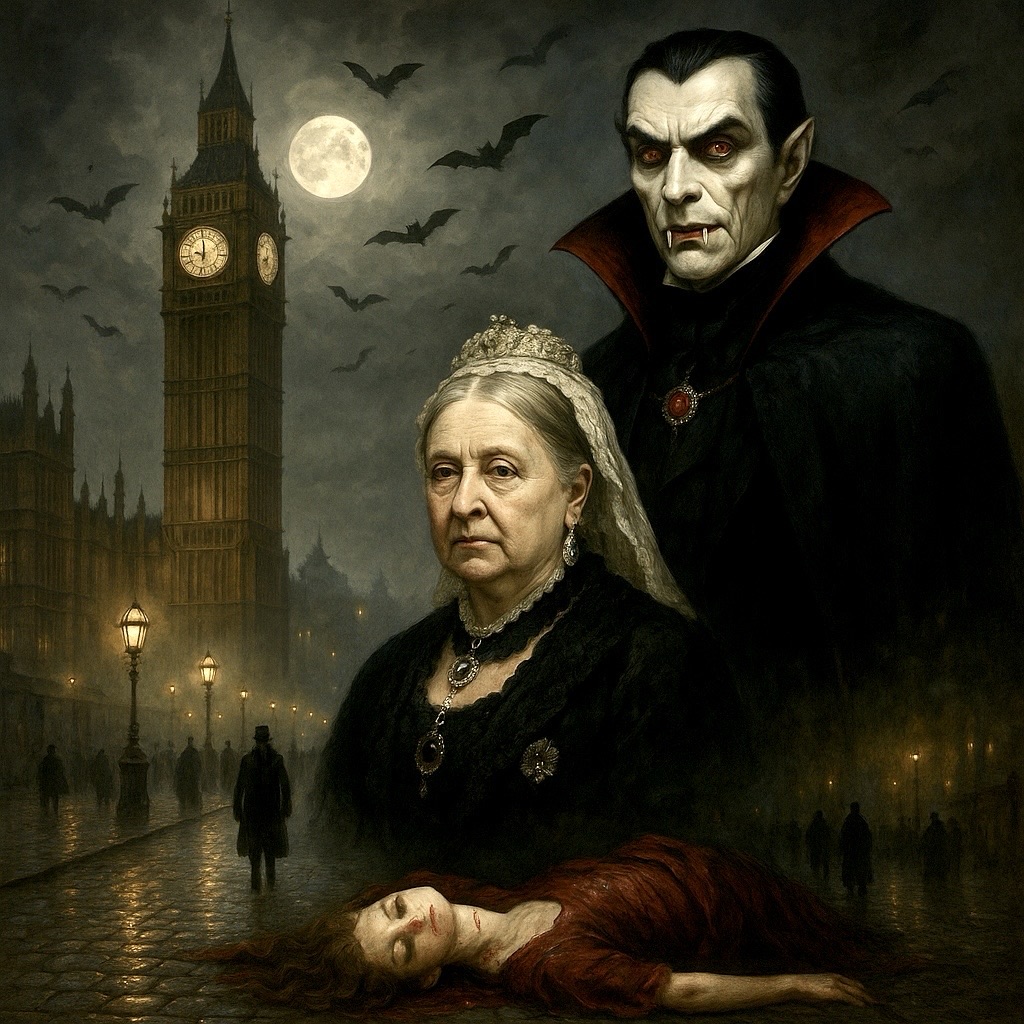
What if the monster had won? It’s the forbidden question behind so much of Gothic literature. We tidy our novels with the crucifix triumphant and the stake neatly driven home, as if evil may always be dispatched with a mallet and a bit of ash. Yet Kim Newman, that merry necromancer of the imagination, dared to ask: Suppose Dracula survived Jonathan Harker and Van Helsing – suppose he married Queen Victoria and draped his cape over the British Empire itself?
The result, Anno Dracula (1992), is a fantasia of blood and bureaucracy, a Dickensian London in which vampires aren’t hunted but ennobled. The aristocracy, after all, were always halfway to vampirism – feeding off the poor, cultivating pale complexions, and living parasitically off inherited estates. Newman merely grants them fangs. Victoria herself becomes Dracula’s bride, and England is suddenly ruled by a Transylvanian despot in silk-lined coffin. It’s history rewritten as horror, though I wonder whether the alteration is really so radical.
Jack the Ripper stalks Whitechapel still, but his chosen victims are vampire prostitutes. One monster hunting another: society’s hypocrisy in concentrated form. Charles Beauregard of the Diogenes Club and the noble Geneviève Dieudonné (a vampire of rare integrity) form the investigative duo. Their romance is the true heartbeat of the novel: two beings – one human, one undead – bound by their refusal to bend knee to tyranny.
Newman’s trick is intertextuality, that great Gothic parlour game. Every page teems with borrowed ghosts: Dr Seward, Mycroft Holmes, Oscar Wilde lurking at soirées, and a cavalcade of literary and historical figures pressed into service. It’s like a danse macabre of the Victorian imagination, a masquerade in which the living, the dead, and the fictional waltz together under gaslight. The reader, meanwhile, becomes a gleeful voyeur – spotting references like bats in the rafters.
But beneath the game, there’s philosophy. Anno Dracula asks what it means when corruption becomes law. Vampirism here isn’t simply horror but politics: the eternal parasite sanctified by royal decree. The underclass – the ‘warm’ humans – become second-class citizens, forbidden certain offices, hounded into submission. Its empire rendered in scarlet ink: the colonised drained not merely of resources but of blood itself. Newman sees that Victorian imperialism was already vampiric; Dracula’s reign’s but a logical extension.
Psychologically, too, the book’s fascinating. Vampirism becomes a metaphor for addiction, for sexuality, for the irresistible lure of power. One thinks of Freud’s death-drive, or Nietzsche’s will-to-power in its purest, most nocturnal form. Some embrace the bite as liberation; others recoil in horror. Newman thus captures the ambivalence at the heart of the Gothic: our simultaneous craving for and fear of dissolution.
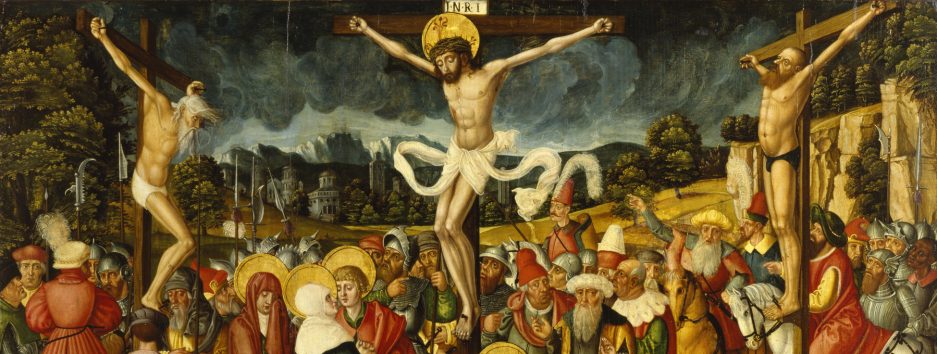
And spiritually? The novel’s haunted by an absence. God has fled the scene. The crucifix, once so potent, is here mere jewellery. The Church mutters on in the background, but Dracula is sovereign now, and eternity belongs not to saints but to bloodsuckers. In this alternate England, grace has been eclipsed by the endless night of appetite. It is, in short, the Victorian age as it might have been had it listened not to Tennyson’s ‘strong Son of God, immortal Love’ but to the hiss of the serpent in Eden.
Yet Newman isn’t merely grim. His wit shines in pastiche, in sly comedy, in the sheer exuberance of his cross-pollinated universe. Anno Dracula is both parody and prophecy, reminding us that history is fragile, literature porous, and power vampiric in every age. That, perhaps, is its truest lesson: that we’re never quite free of the count. He’s always waiting at the window, cape unfurled, asking only for permission to enter.

 Wording
I don’t know, I feel like you are giving Newman a lot more credit than he’s due. I’m not claiming the various things you mention aren’t in there, but I do wonder if it’s more by accident and tropes or inversions of tropes, than by actual design.
That’s a fair challenge! I think part of the joy of a book like Anno Dracula is that it straddles both worlds: on one hand, it’s a romp through Gothic tropes and Victorian pastiche; on the other, it almost accidentally becomes a mirror of empire, corruption, and appetite. Whether Newman intended every layer is almost beside the point – the Gothic has a way of smuggling meanings in through the back door. Half the fun’s discovering that what seems like pulp can carry the weight of philosophy if you tilt it to the light.
And I suspect that might be where you and I differ in our reading styles.
Quite so. Reading styles are themselves half the story; the meanings we bring to a text often say as much about us as they do about the author.