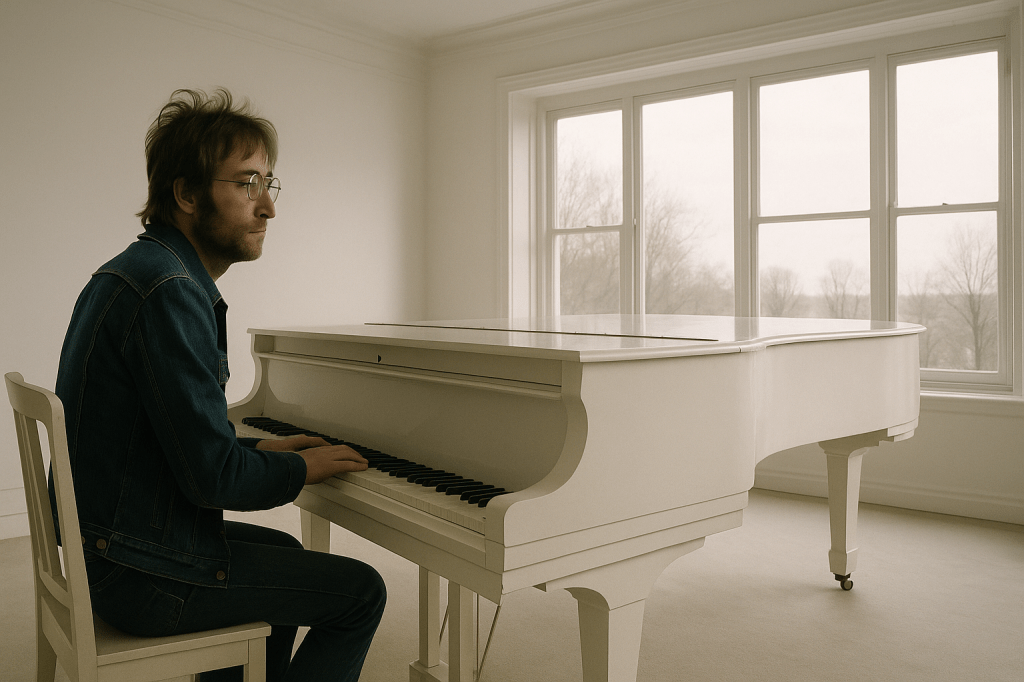
For years I tried to learn and perfect this song on my guitar, and then my piano. That is, until I realised just how useless this song is.
It’s become something of a secular hymn, hasn’t it? Imagine — that soft, self-satisfied lullaby for the spiritually sedated. A song so sanctified by sentimentality that to criticise it is to risk being accused of hating peace itself. But one must call a corpse a corpse, even when it’s been embalmed with a grand piano. For beneath its tender melody and doe-eyed optimism lies one of the most spiritually vacuous messages ever put to music.
John Lennon, with his round spectacles and Christ complex, invites us to ‘imagine there’s no heaven.’ And with that one line, he extinguishes millennia of longing, prayer, and poetry. What remains when you’ve imagined heaven away? A ceiling — low, grey, and godless. Humanity trapped in its own greenhouse of ego, growing mould instead of meaning.
He then encourages us to ‘imagine there’s no hell below us.’ Convenient, certainly, for those who prefer to sin without consequence — but disastrous for anyone who understands that moral gravity depends upon the possibility of falling. Without hell, virtue loses its silhouette. Every saint becomes a sentimentalist, every sin a misunderstanding. It’s as if Lennon wanted to cleanse the cosmos of both justice and awe, leaving us to paddle in a lukewarm bath of moral neutrality.
Then comes the killer line: ‘Imagine all the people living for today.’ Yes, that’s the anthem of every Instagram influencer and corporate mindfulness coach. Forget eternity — just be present. Never mind that all tyrannies begin with the obliteration of the past and all decadences with the denial of the future. To ‘live for today’ isn’t liberation; it’s existential illiteracy. It’s to strip life of narrative, to replace pilgrimage with picnic.
The tragedy of Imagine is not that it’s evil — evil, after all, has depth — but that it’s so shallow it could drown in a puddle. Its utopia is a padded cell where nobody believes enough to argue. No nations, no religion, no possessions — in short, no passion. It promises peace by removing the human heart’s capacity for struggle. Augustine knew better: ‘Our hearts are restless until they rest in Thee.’ Lennon, by contrast, wishes to tranquilise that restlessness, to lobotomise it into contentment.
There’s a kind of spiritual communism in it — not Marx’s violent revolt but a velvet tyranny of sameness. All differences dissolved, all desires flattened, all transcendence traded for tolerance. It’s the dictatorship of the bland. And of course, it sounds lovely. That’s what makes it so insidious. The melody is the sugar that helps the nihilism go down.
To the ear of the modern world, Imagine feels holy because it flatters its deepest laziness. It demands nothing. No faith, no discipline, no repentance. It lets the listener feel morally superior without lifting a finger. One can hum along and believe oneself a saint. It’s religion without God, ethics without obligation, paradise without price.
And that, perhaps, is why it endures — not as music, but as myth. It’s the gospel of the comfortable: a lullaby for an age that wants the fruits of faith without the roots. A generation humming itself to sleep while the temple burns, soothed by the promise that if we only imagine the flames aren’t real, they’ll go out.
So yes — it’s a nice tune. A lovely tune, even. But so is the whistling of the gravedigger.
The Imagination Redeemed
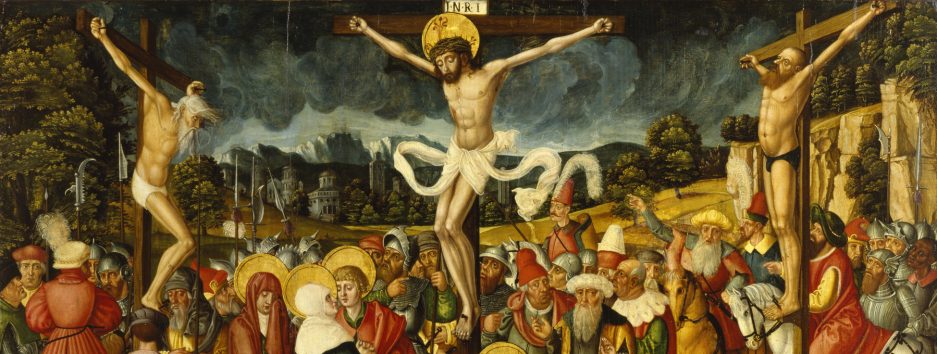
Perhaps the tragedy of Imagine isn’t its naivety but its wasted potential. The imagination, properly used, isn’t an escape from heaven and hell — it’s the bridge between them. To ‘imagine’ in the truest sense isn’t to erase the divine but to seek it. It’s to see through the veil, to peer at eternity through mortal eyes, and to make poetry of the abyss.
The saints imagined heaven so fiercely they almost brought it down to earth. The mystics imagined hell so vividly they trembled themselves into virtue. Lennon, poor man, imagined only comfort — and comfort, when crowned as creed, becomes the enemy of creation.
A redeemed imagination doesn’t flatten reality; it deepens it. It finds meaning in contradiction, beauty in suffering, and grace in the wound. It sings not, ‘Imagine there’s no heaven,’ but, ‘Imagine there is — and live accordingly.’
Because without that sacred tension between dust and divinity, we’re not imagining — we’re merely forgetting.

 Wording