Some poems sound like bells tolling at the turn of an age, and Thomas Hardy’s The Darkling Thrush is one of them. Written on the eve of the twentieth century, it stands like a weathered milestone between centuries — one hand resting on the grave of the Victorian world, the other reaching hesitantly toward the machine-clanking dawn of modernity.
Hardy’s scene is bleak, but not merely cold — it is existentially chilled. The speaker leans upon a coppice gate, looking out upon a ‘spectre-grey’ winter landscape, the vegetation ‘like strings of broken lyres.’ Even nature’s music, it seems, has been snapped and silenced. The ‘Century’s corpse outleant’ — that marvellous phrase — lies stretched across the frozen ground, its ‘crypt’ the clouded sky. Hardy has buried not just a century but an entire moral order.
There’s no divine radiance left here — no angelic dawn, only entropy and extinction. The poem’s landscape is both literal and theological: Eden turned to ice. Hardy, ever the rural realist, turns the English countryside into an x-ray of the human soul — the hedgerows as ribs, the wind as breath, the frost as bone. If Tennyson looked into the heavens and found ‘Nature, red in tooth and claw,’ Hardy looks into the same heavens and finds nothing at all.
Then — a miracle, or perhaps a mockery.
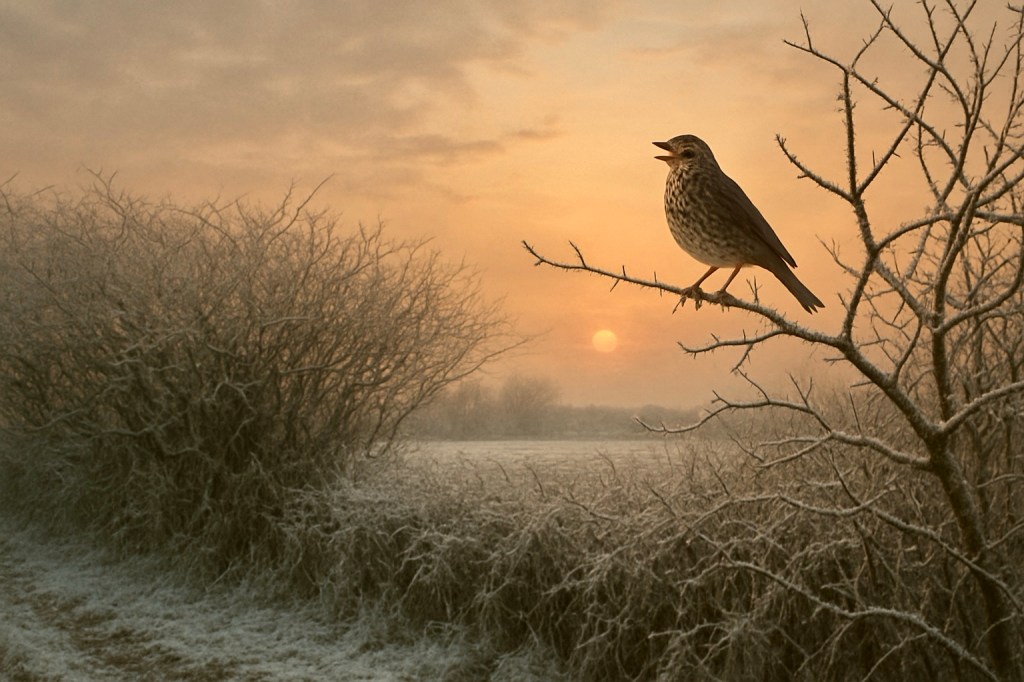
From the frozen hedge bursts the voice of a ‘full-hearted evensong / Of joy illimited.’ The thrush — ‘frail, gaunt, and small’ — sings against the cosmic silence. It’s old, tattered, and yet deliriously hopeful. Hardy, with typical irony, refuses to tell us what this bird knows that he doesn’t. ‘So little cause for carolings / Of such ecstatic sound / Was written on terrestrial things,’ he observes — and then, the line that hangs like a hesitant prayer: ‘Some blessed Hope, whereof he knew / And I was unaware.’
That ‘some’ is the most heartbreaking word Hardy ever wrote. Not a name, not a creed — just a vague, trembling some. A century of faith collapses into a single syllable of uncertainty. The thrush sings what might be called a preposterous hallelujah — a defiant hymn in a godless winter. Its song doesn’t erase the darkness; it merely insists upon meaning where none is visible.
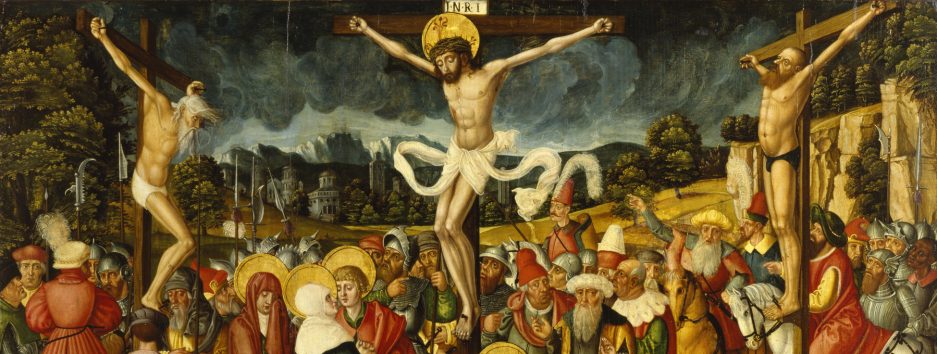
One might say the thrush is Hardy’s mock Christ — a ragged, winged redeemer offering resurrection to a poet who can’t quite believe. Yet the genius of Hardy lies in his refusal to commit either way. He neither kneels nor scoffs. He simply listens. That’s all that remains for the modern man at the turn of the century: to stand in the cold, to listen, to hope perhaps.
And so the poem ends not with revelation but with a shrug of wonder. The thrush sings, the wind howls, the frost deepens — and Hardy watches, half-despairing, half-enchanted. It’s as though the natural world itself is still stubbornly lit by a divine pilot light, even when the great cathedral of belief has fallen to ruin.
Hardy’s England — weary, rational, disillusioned — needed this bird (and God help us, we need it now too). It’s the faint heartbeat in a body presumed dead, the laughter at a funeral, the candle still guttering when all should be dark. In every age since, the thrush has stood for that tiny, inexplicable persistence of hope — not because Hardy believed in it, but because he couldn’t quite disbelieve.
The Frost and the Flame
The twentieth century did come — and it was as brutal as Hardy feared. Yet the thrush remains, eternal in its absurdity, as if to prove that despair, though eloquent, never gets the last word. Somewhere in the frost there’s always a feather, and in the silence, a song.
The Darkling Thrush
By Thomas Hardy (1900)
I leant upon a coppice gate
When Frost was spectre-grey,
And Winter’s dregs made desolate
The weakening eye of day.
The tangled bine-stems scored the sky
Like strings of broken lyres,
And all mankind that haunted nigh
Had sought their household fires.
The land’s sharp features seemed to be
The Century’s corpse outleant,
His crypt the cloudy canopy,
The wind his death-lament.
The ancient pulse of germ and birth
Was shrunken hard and dry,
And every spirit upon earth
Seemed fervourless as I.
At once a voice arose among
The bleak twigs overhead
In a full-hearted evensong
Of joy illimited;
An aged thrush, frail, gaunt, and small,
In blast-beruffled plume,
Had chosen thus to fling his soul
Upon the growing gloom.
So little cause for carolings
Of such ecstatic sound
Was written on terrestrial things
Afar or nigh around,
That I could think there trembled through
His happy good-night air
Some blessed Hope, whereof he knew
And I was unaware.
Note
Hardy wrote this poem on the cusp of a new century — the death of the old world pressing upon him like frost on the gate. The thrush’s song, frail but defiant, rises not as proof of faith but as a whisper against the void. It’s a hymn for all who stand at the threshold of despair and still dare to listen.
(Public domain text. Commentary © Wording, 2025.)

 Wording