The Scarlet Letter is a work so suffused with moral intensity that even the commas seem to blush. Hawthorne’s Puritan New England is a place where daylight feels like cross-examination, and every whisper sounds like scripture. Sin, here, isn’t merely an act — it’s a neighbourhood watch.
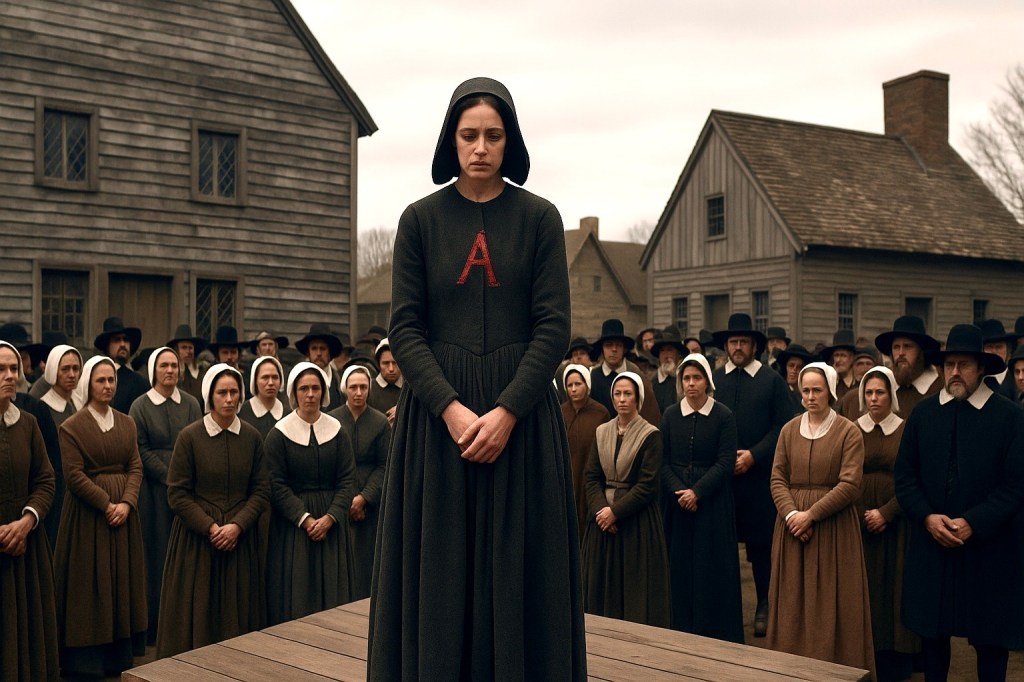
The story begins, quite literally, with a symbol — a piece of embroidery stitched upon conscience. And that’s Hawthorne’s genius: to take the ancient idea of guilt and make it wearable. His world is one in which the soul has a dress code, and salvation depends on how neatly one hems one’s shame. Beneath the starched collars and psalm-singing, however, lies something far less tidy — a profound confusion between holiness and humiliation.
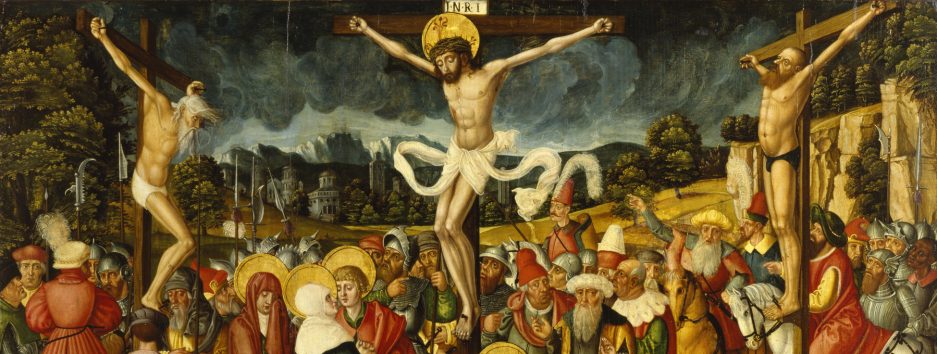
The Puritans, Hawthorne knew, were not bad people. They were simply too sure that they were good. He presents them as moral accountants, forever auditing the sins of others to keep their own ledgers clear. Their religion has become a public performance, their piety a form of theatre. Each sermon is a spectacle, each confession an entertainment. The gallows, in such a world, is merely a stage with better lighting.
But The Scarlet Letter isn’t content with satire. Hawthorne writes as both accuser and confessor. He understood that guilt, like a shadow, can’t be removed — only lengthened by light. Every soul in his book, saint and sinner alike, lives beneath that same sun. The difference lies only in who dares to stand beneath it. His protagonist, condemned by society, paradoxically becomes its most honest member — for her sin, at least, is visible.
Psychologically, the novel is astonishingly modern. Freud could have set up practice in Hawthorne’s Boston and found no shortage of clients. The repression, projection, and sanctified voyeurism of the Puritans prefigure every neurosis of the modern age. Hawthorne’s sinners hide behind prayer books instead of passwords, but the impulse is the same: conceal the truth, polish the image, and call it moral improvement.
And yet, there’s something deeply compassionate in his critique. Hawthorne never mocks belief; he mourns what belief becomes when handled by men who love reputation more than redemption. The true villain of his world isn’t sin but sanctimony — that peculiar vice which thrives in the pew and never leaves a calling card. He sees religion’s grandeur, but also its grotesque reflection in human pride.
Beneath all the fire and brimstone lies a quiet question: what if shame, instead of being our punishment, is our proof of humanity? Hawthorne’s vision of sin isn’t hellish but healing — or at least, capable of it. The mark of disgrace becomes, paradoxically, the only honest emblem in a dishonest world. It’s as if he’s whispering that God, unlike society, can read hearts without requiring embroidery.
Thematically, the book stands at the threshold between two eras: the Old World’s theology and the New World’s psychology. Its Puritans speak in psalms, but their nightmares are Freudian. It is a novel about visibility and invisibility — who may be seen, and what must never be shown. Its forests and marketplaces mirror the duality of human existence: the hidden self and the public self, the confessor and the confessed.
And Hawthorne’s prose — slow, rich, and luminous — feels carved rather than written. He composes not sentences but sermons in silk. Every paragraph glows with moral phosphorescence; even the silences glitter with judgement. Yet his irony is gentle, almost weary. He doesn’t condemn his characters for falling short of grace; he condemns the crowd for pretending it never does.
To read The Scarlet Letter today is to recognise that the Puritan scaffold still stands — only now it has Wi-Fi. We no longer embroider our shame; we post it, hashtag it, and curate it into confession. Hawthorne’s insight endures because it isn’t about sin at all — it’s about visibility. In every age, the crowd will demand someone to bear its collective guilt, to stand alone and branded, while it continues the performance of virtue.
In the end, Hawthorne reminds us that morality without mercy becomes a mask — and the holiest act may be to remove it. For beneath every scarlet letter beats a heart still human, still capable of grace, still stitched together, however roughly, by love and pain.

 Wording