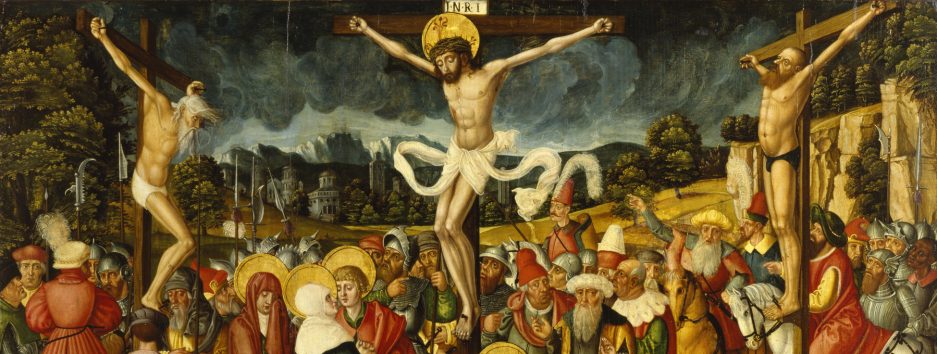
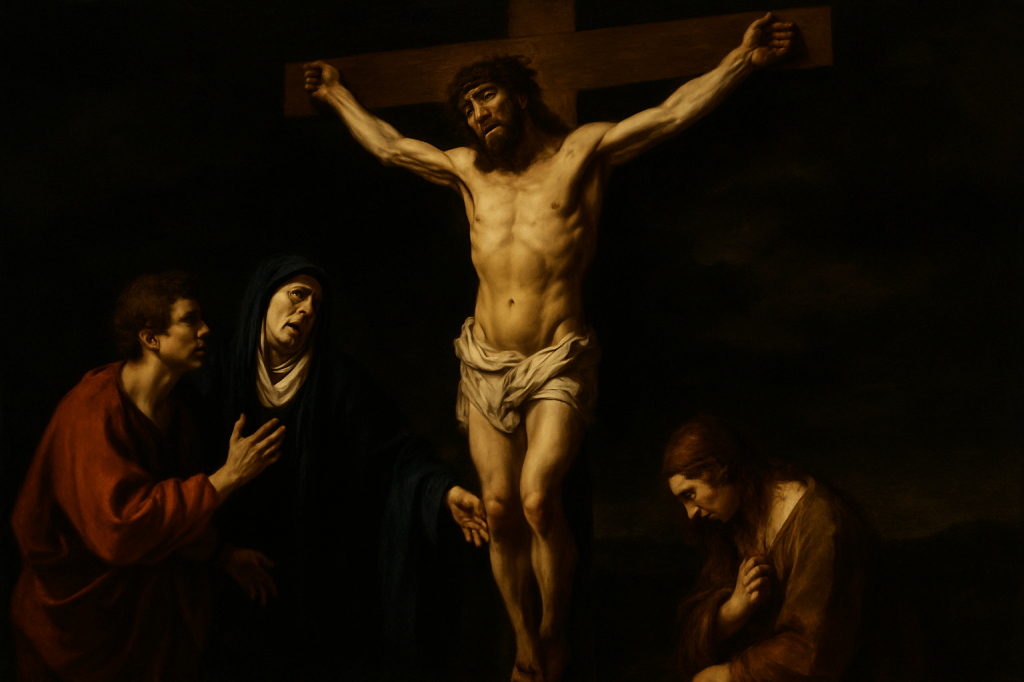
The question drifted across my day like an unexpected visitor — not hostile, not foolish, just curious: ‘If Jesus is God, then who was He talking to on the cross?’ It’s not the first time I’ve been asked it. In fact, it seems to surface every few months, usually in the same tone: part intrigue, part confusion, part suspicion that the whole edifice of Christianity might come tumbling down with one well-placed tug. And to be fair, it’s a serious question. The sort of question people ask when they’re actually thinking, rather than parroting slogans.
I’ve never pretended to be a theologian — if anything, I’m painfully aware that theologians rarely speak the language of ordinary bruised souls. But I’ve spent enough nights staring at the ceiling, asking God where He’s gone, to know that this question is forged in the same fire as all the others. The kind of fire that burns in the heart when life goes wrong and you wonder whether Heaven has been shut for winter.
So what follows isn’t dogma. It’s simply my own thinking on the matter: shaped by scripture, by sorrow, by philosophy, and by the memory of finding myself spiritually bloodied while the ungodly paraded their false virtue like a lynch mob with moral torches. And perhaps that’s why the cry from the cross still speaks to me — because it knows the taste of abandonment better than any creed ever written.
What comes next is my reflection on that cry: the most human, the most divine, and the most unsettling sentence ever uttered.
There’s a kind of holy scandal in that lone cry from the cross — a scandal so raw that even sceptics feel compelled to stop scrolling and listen for a moment. ‘My God, my God, why hast Thou forsaken me?’ It’s not the sort of line you expect from a deity. It sounds too human, too frightened, too much like something we ourselves have muttered into the dark when the night stretches too long and the soul feels hunted.
Modern piety tries to tidy the scene, of course. It prefers a polished Christ with impeccable posture and polite theology. But the Christ of Golgotha is inconvenient, untamed, and terribly honest. He cries out to God while being God, and if that doesn’t set the mind whirling, you’re either asleep or an Anglican bishop. The old creeds rightly explain that the Son isn’t the Father, that the Persons of the Trinity can speak without dissolving into a divine puppet show. But theology, that grand old professor in dusty robes, often walks past the deeper madness: that God Himself chooses to taste the loneliness that makes mortals shake.
For what He utters is no divine stage-play. No actor ever sweated blood in an olive grove. No charlatan ever carried the kind of sorrow that makes the universe itself hold its breath. What happens on the cross is a participation in the human condition so absolute that He borrows our own language of despair. He reaches for Psalm 22 — a text soaked in ancient fear — and uses it as His final breath. Even God must reach for human poetry when He wants to describe human pain.
And perhaps that’s why this moment unnerves us. It reveals that the world isn’t governed by a detached celestial bureaucrat, but by a God who enters suffering so deeply that He feels abandoned by His own Father. Not in essence — the Trinity doesn’t splinter like weak wood — but in experience. He shoulders the spiritual nausea of separation that sin creates, the way a man might willingly descend into a burning house for a loved one trapped inside.
But here’s the darker truth, the one we rarely dare admit: this cry isn’t merely historical; it’s existential. It drifts into our own lives whenever the soul feels besieged. I’ve known that moment — you’ve known it — when accusations fly like stones, when the ungodly parade their shallow virtue like a mob with torches, when you feel spiritually battered, not simply by life but by the people who claim they stand on moral high ground. The pitchforks of old have become hashtags, but the intention is the same. And in such moments, it’s frighteningly easy to believe oneself forsaken.
Yet the man hanging on that wooden beam knows this terrain better than any theologian. He’s the patron saint of the wrongly accused, the mocked, the slandered, the spiritually bruised. He’s the voice for anyone who has felt the world close ranks against them and wondered where God is hiding. In crying out, He lends His voice to every abandoned soul so that our own cries might not be lost in the wind.
And here lies the strangest consolation: the God who feels abandoned doesn’t abandon. The one who dies wondering where God is becomes the God who meets us precisely where we think He is absent. There’s no darkness we can fall into that He hasn’t stepped into first, no despair too deep for Him to echo.
So who was Jesus talking to? The Father, yes — but also to us, through us, and with us. His cry becomes the bridge between divine presence and human desolation. And in that terrible moment, the unimaginable happens: God shares the loneliness of man so that man might share the life of God.
It’s not a contradiction. It’s a relationship so profound it passes through agony. And the whisper hidden inside that bruised cry is the one message the soul most needs to hear when the world closes in like wolves:
‘I am with you, even when you cannot feel Me. Especially then.’

 Wording