Alan Bennett has never quite been my usual flavour — a bit too cardigan-and-cucumber-sandwich for my tastes. And yet All Day on the Sands, this modest, meandering little play, has fastened itself to me like damp sand between the toes. I suspect it’s because these were precisely the sort of ‘holidays’ we had when I was little: windswept excursions to the seaside where the sky threatened judgement, the sandwiches curled at the edges, and everyone pretended to be having a marvellous time because the alternative was admitting defeat. Perhaps that’s why the play lingers — not because Bennett is my literary soulmate, but because somewhere, buried in that grey Morecambe drizzle, is the ghost of my own childhood, shivering in a too-thin coat and insisting we stay all day because ‘we’ve paid for the bus.’
Some days in the British calendar feel predestined, almost biblical in their inevitability — Christmas, Bank Holiday gridlock, and the perennial hope that the sun might, just this once, shine upon Morecambe. All Day on the Sands captures precisely this: the national ritual of packing a family into a battered car, driving to the seaside, and discovering that the only thing warmer than the sand is the simmering resentment you’ve carried since 1973.
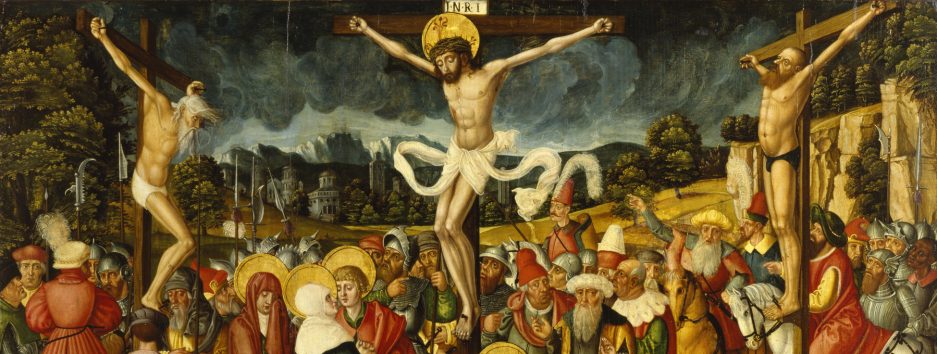
This isn’t merely a drama; it’s an English Eucharist of disappointment. Bennett, that great chronicler of our shared melancholy, takes a family day out and transubstantiates it into a meditation on class, boredom, and the peculiar psychic weather of the British soul. I almost expect a voice from heaven to declare: ‘This is my beloved family, in whom I am well displeased.
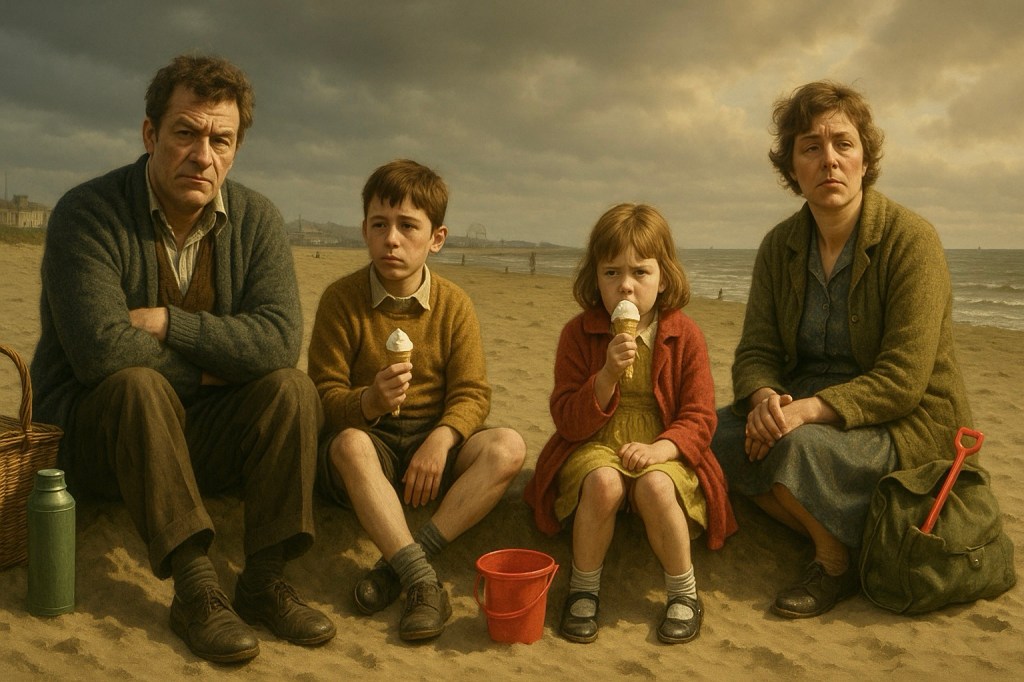
The plot, such as it is, wanders like a bored child with a plastic bucket. A working-class family descends upon Morecambe, armed with sandwiches wrapped in cling film and an unspoken but deadly determination to have a ‘nice time.’ Naturally, no one does. The children whine; the parents needle; the day drags on with all the epic grandeur of a Greek tragedy — if Agamemnon had been forced to queue for chips in a stiff northerly wind.
Bennett’s real trick is to show us how British suffering is both understated and endless. It’s not the heroic suffering of martyrs, nor the passionate suffering of Romantic poets. It’s the damp, vaguely mouldy suffering of a family spending eight hours on a beach that smells faintly of disappointment and fish-based snack foods.
Alun Armstrong, as the beleaguered Dad, carries the expression of a man who once dreamed of a better life but now measures joy in degrees of sunburn. Marjorie Yates, as Mam, has that uniquely English gift of turning a simple question — ‘Are you alright?’ — into a three-act tragedy with an epilogue of smouldering resentment.
The seaside itself becomes a kind of character: a liminal space where optimism goes to die. Bennett understands that the British resort is less a place of pleasure and more a national testing ground. The tide’s out (of course it is), the sky’s grey (obviously), and the tea tastes faintly of whatever existential crisis the kettle endured the night before.
And yet — here lies the magic — we laugh. We laugh because Bennett, like Wilde before him, knows that comedy is the only way to survive the absurdity of being human. Or more specifically, being British, which is like being human but with less sun and more passive-aggressive silences.
Bennett gives us the quiet agonies, the unspoken regrets, the tiny miseries of families who love each other too much to walk away, yet not enough to say anything kind before dusk. These are people whose emotional vocabulary begins and ends with ‘Well… if you’re happy, I’m happy,’ which, translated from the vernacular, means: ‘I’m one wrong word away from staging a coup.’
All Day on the Sands is ultimately a confession of our national temperament: we soldier on, armed with lukewarm flasks and stoic misery, believing that a day at the seaside can fix everything — or at least distract us until Monday. It’s the English condition distilled into one long, overcast afternoon.
And so Bennett leaves us with the abiding truth: a British family holiday doesn’t need sunshine — it needs patience, sarcasm, and a lower expectation of joy.
If that isn’t a biblical lesson, I don’t know what is.

 Wording