In the end, they decided she was innocent — and that was all she was ever allowed to be.
I’ve always felt that Daisy Miller is less a story about impropriety than about cowardice. Not Daisy’s — heaven forbid — but ours. Ours as readers, as observers, as members of those polite little tribunals that call themselves ‘society’ and pass sentence without ever calling a witness.
I first encountered Daisy as one encounters a breeze through an open window: unexpected, refreshing, faintly irritating if one prefers the air stale. She speaks too freely, laughs too easily, walks where she likes and with whom she likes. She doesn’t ask permission to exist. And that, I think, is her real crime.
Henry James — that great anatomist of hesitation — gives us Daisy through the eyes of Winterbourne, a man who spends the entire novella thinking instead of living. Winterbourne isn’t wicked. That would be too simple. He’s something worse: respectable. He wants Daisy, but he wants the approval of others more. He’s attracted to her vitality yet terrified of its consequences. He treats her not as a person but as a case study: Is she innocent or improper? Naïve or knowing? Angel or adventuress?
It never seems to occur to him that she might simply be herself.
This is where James is at his most surgical. Daisy isn’t destroyed by sin, but by interpretation. She’s read, footnoted, whispered about, corrected, escorted away, and finally — like all troublesome texts — quietly erased. The American expatriate set, those bloodless custodians of etiquette, are less concerned with morality than with optics. Daisy’s offence isn’t that she does wrong, but that she does wrong publicly, or worse, unconcernedly. She doesn’t perform shame.
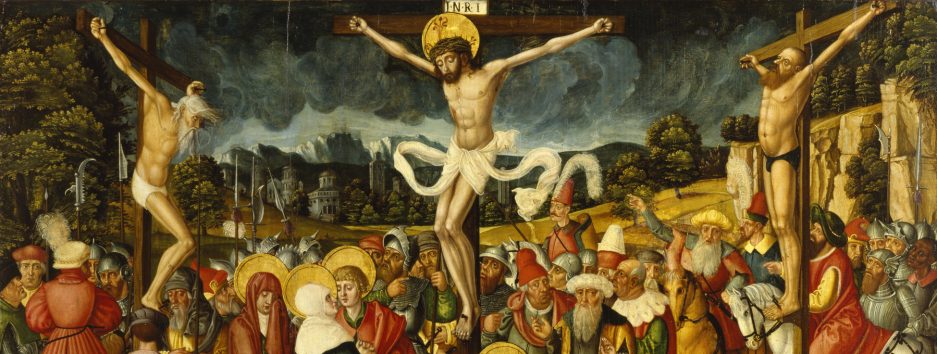
I can’t help thinking of Christ here — not because Daisy is holy, but because she’s similarly misread. ‘This man eats with sinners.’ ‘This woman walks with Italians.’ The sin’s always inferred, never proven. And when the innocent refuse to defend themselves properly, society is more than happy to crucify them anyway.
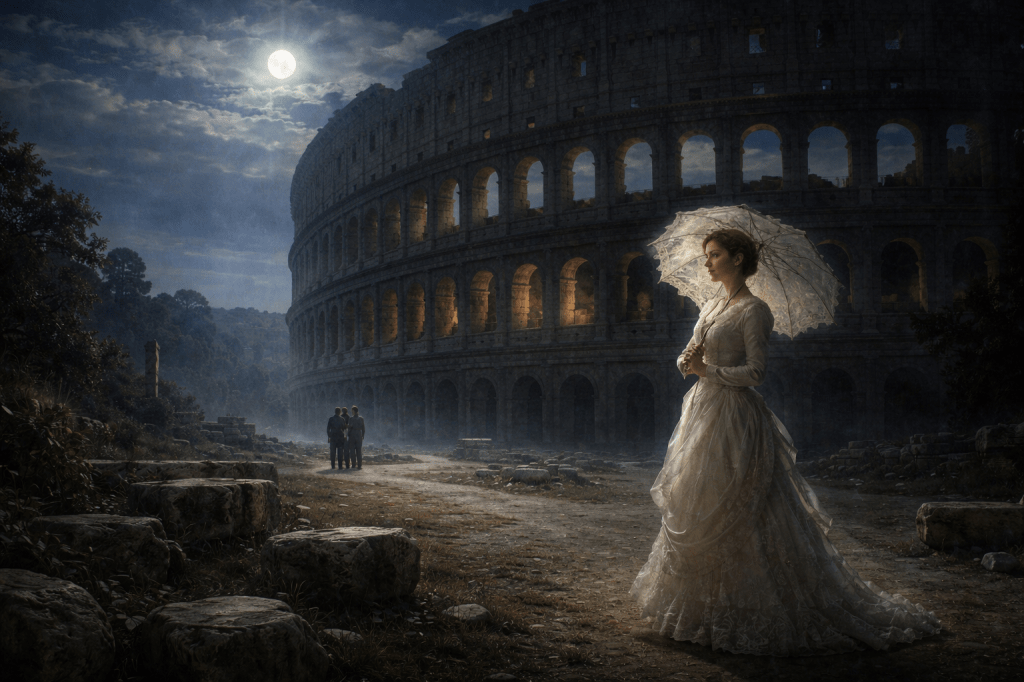
The Colosseum scene is the novella’s dark heart. Daisy wandering through those ancient ruins at night, fever lurking in the shadows, history and death quite literally in the air — it feels almost mythic. Rome, that old stone carcass of empire, finally claims her. And how neat society finds it: Well, she was warned. As though death were a moral tutor.
Only after Daisy dies does Winterbourne achieve clarity — that most useless of virtues when it arrives too late. He learns that Daisy ‘wasn’t bad.’ The phrase is devastating in its smallness. Not bad. As if that were the highest compliment one could pay a human soul. As if innocence were something granted retroactively, once the offender has conveniently expired.
James, I think, understood something timeless: civilisation often punishes vitality because it exposes sterility. Daisy’s openness makes others uncomfortable because it reminds them of the life they’ve chosen not to live. She laughs where they calculate. She trusts where they suspect. She lives in the present tense while they footnote the past.
And so Daisy Miller dies — not simply of Roman fever, but of social hypothermia. No one touches her when it matters. No one stands beside her loudly enough. No one risks being misunderstood on her behalf.
Which leaves me uneasy, because I recognise Winterbourne in myself far more than I care to admit. I too have hesitated. I too have watched rather than acted. I too have allowed ‘what people will think’ to outweigh what I knew to be true. Daisy Miller isn’t merely a story about a young woman abroad; it’s a mirror held up to the spectator who never quite steps onto the stage.
James doesn’t ask us to admire Daisy uncritically. He asks something harder: to defend the undefended, even when their innocence is inconvenient.
And that, I suspect, is why Daisy still walks the Colosseum at night — not as a ghost, but as a rebuke.

 Wording