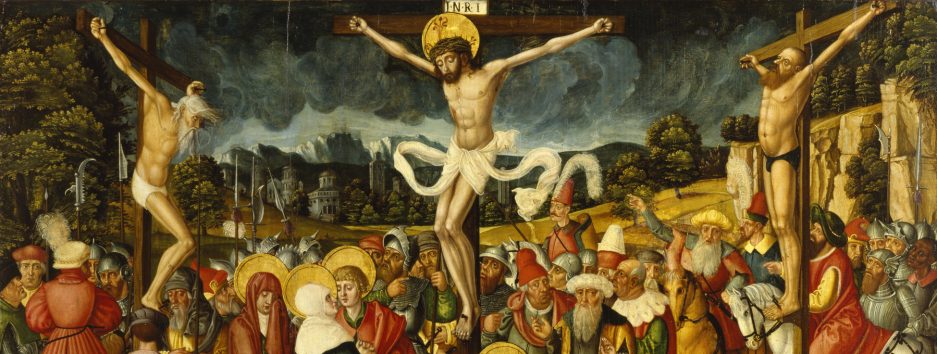
Before we begin, a quick word of warning: if you’re a devout Christian Scientist, a fan of metaphysical reasoning, or simply allergic to sarcasm, you may wish to pop the kettle on and find a gentler corner of the internet. What follows is a light-hearted take on Christian Science - a movement born in 19th-century … Continue reading Christian Science: Or How I Learned to Stop Worrying and Misdiagnose Everything
Category: philosophy
The Power of the Classics: Enoch Powell and the Legacy of Political Rhetoric
It has always struck me as curious that, in an age where fewer and fewer people read the great works of antiquity, classical literature still finds its way into the mouths of politicians. Like incantations spoken in a dead language, these references - often half-remembered, plucked from history like ripe fruit - are meant not … Continue reading The Power of the Classics: Enoch Powell and the Legacy of Political Rhetoric
T. S. Eliot’s Little Gidding & The Waste Land
T. S. Eliot’s Little Gidding is the grand finale of Four Quartets, a poem of spiritual reckoning and renewal that reads like a soul’s dark night before the dawn. It is a tapestry woven with threads of history, theology, and poetry, each stitch pulling the reader deeper into Eliot’s meditative vision of time, suffering, and redemption. The poem … Continue reading T. S. Eliot’s Little Gidding & The Waste Land
Mild Indifference and Arse-Breathing: A Reflection on Peter Høeg’s Observations
The following quote is from Peter Høeg’s short story Reflection of a Young Man in Balance, which is part of his collection, Tales of the Night (“Fortællinger om Natten” in Danish). The collection explores themes of love, identity, and existential reflection, often with a lyrical and philosophical style. However, as I’m using this quote in … Continue reading Mild Indifference and Arse-Breathing: A Reflection on Peter Høeg’s Observations
Shards of a Broken Mind: A Critique of The Life of a Stupid Man
The Life of a Stupid Man was published posthumously in 1927, the same year Ryūnosuke Akutagawa took his own life. That makes this work seem like a literary suicide note - one final, unfiltered outpouring of his disillusionment and despair. It wasn’t crafted for an audience so much as exhaled, a last gasp of a man … Continue reading Shards of a Broken Mind: A Critique of The Life of a Stupid Man

