The individual in this painting appears utterly wretched, a little like myself, however, I’m not feeling wretched because I’ve committed fratricide, thankfully – our subject here though, has. So, for your edification, read on…
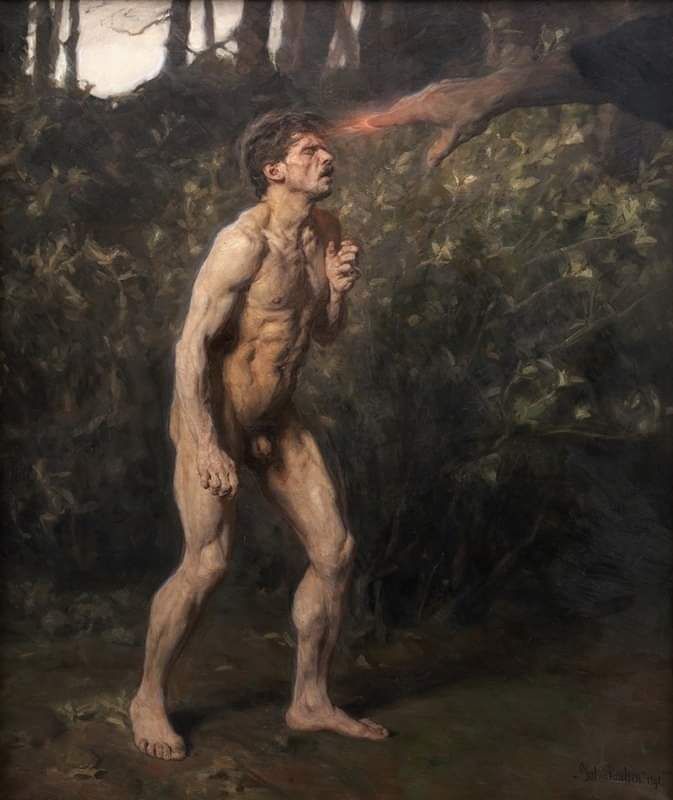
Julius Paulsen’s painting, Cain, is an unsettling, morose portrayal of one of the most infamous characters in biblical lore. It is a dismal reminder of the inherent darkness within humanity, a ghastly exploration of guilt, and a visual descent into the bleakest corners of the human psyche. Let’s dissect the vile symbolism, oppressive colour scheme, and the disheartening composition of Paulsen’s work, revealing a landscape devoid of hope and saturated with despair.
Paulsen’s Cain wallows in the grotesque aftermath of the first murder, steeped in a palpable aura of doom and desolation. The central figure, Cain, is a wretched embodiment of fratricidal guilt, his posture and expression reflecting the abysmal depths of his remorse and the eternal damnation of his soul. Paulsen spares no sentimentality in his depiction, presenting Cain as a loathsome creature, marred by the weight of his own heinous act.
The painting is rife with malignant symbolism. Cain’s surroundings are a nightmarish hellscape, a barren wasteland that mirrors the desolation of his soul. The absence of Abel is a ghostly void, an eerie reminder of the life extinguished by Cain’s vile hand. The sparse, lifeless environment underscores the irrevocable nature of Cain’s sin, suggesting a world left forever scarred by his violence.
One of the most chilling aspects of Paulsen’s painting is the spectral arm and hand that extends into the composition, pointing accusingly at Cain. This ghostly limb serves as a powerful symbol of judgment and condemnation, an eternal reminder of Cain’s guilt. The arm appears almost disembodied, emerging from the shadows as if from an unseen force, representing the inescapable nature of divine retribution and societal scorn.
The hand’s accusatory gesture is stark and unrelenting, directing the viewer’s attention back to Cain and reinforcing his isolation. It acts as a visual indictment, an ever-present witness to his crime. The spectral quality of the arm suggests that this judgment is not merely human but also divine, as if the very fabric of the universe is condemning Cain for his sin.
Paulsen’s colour palette is a bleak array of dark, oppressive tones. The painting is dominated by sickly browns and oppressive blacks, colours that evoke the stench of decay and the suffocating weight of guilt. There is a stark absence of vitality, with only the faintest, most malevolent hints of red seeping through – symbols of blood, anger, and the unrelenting presence of sin.
The composition is claustrophobic, ensnaring Cain in a purgatorial space that offers no escape from his torment. His hunched figure occupies the centre of the canvas, drawing the viewer’s eye into the pit of his despair. Cain’s downward gaze and contorted expression are masterfully rendered, capturing the grotesque amalgamation of regret, fury, and existential dread that defines his wretched existence.
Paulsen’s meticulous attention to the details of Cain’s suffering is relentless, offering no respite or redemption. Every stroke of the brush adds to the atmosphere of bleakness, ensuring that the viewer is fully immersed in Cain’s internal hell. The background, a desolate expanse of nothingness, amplifies the sense of isolation and abandonment, leaving Cain – and the viewer – utterly alone with the consequences of his sin.
In Cain, Paulsen does not shy away from the darkness of the human condition. Instead, he delves into its deepest, most repugnant recesses. Cain is portrayed not as a mere villain but as a tragic figure ensnared by his own monstrous actions. This portrayal forces the viewer to confront the uncomfortable truth of human fallibility and the catastrophic potential of unchecked emotions.
Cain’s psychological torment is depicted with a brutal honesty that is both disturbing and compelling. His crime is not merely an act of evil but a tragic inevitability borne of jealousy and despair. By focusing on the aftermath, Paulsen emphasises the corrosive nature of guilt and the soul-crushing weight of remorse. The painting suggests that Cain’s punishment is as much internal as it is external – a perpetual, inescapable torment.
Julius Paulsen’s Cain is a sombre, scathing indictment of the human soul, a visual testament to the dark, malignant forces that lurk within. Through his use of malignant symbolism, oppressive colours, and a stifling composition, Paulsen crafts a narrative that is both profoundly tragic and deeply unsettling. The painting offers no solace, no redemption – only the stark, unyielding reality of Cain’s eternal suffering.
Paulsen’s Cain stands as a grim reminder of the destructive power of envy and the irrevocable consequences of sin. It is a work that confronts the viewer with the darkest aspects of human nature, leaving an indelible mark on the soul and a chilling awareness of the potential for darkness within us all.


