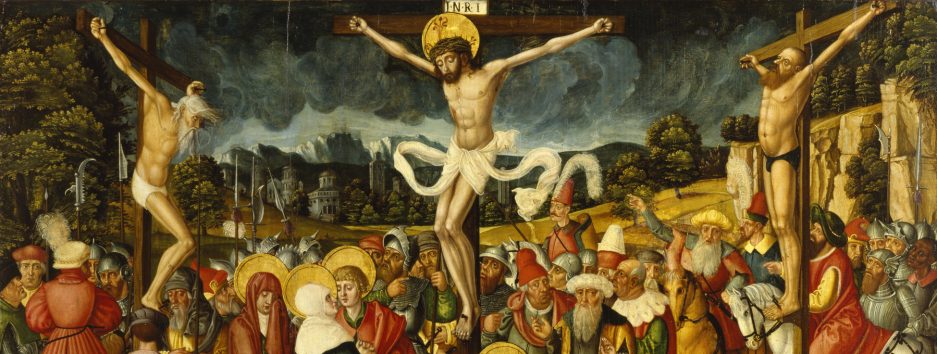
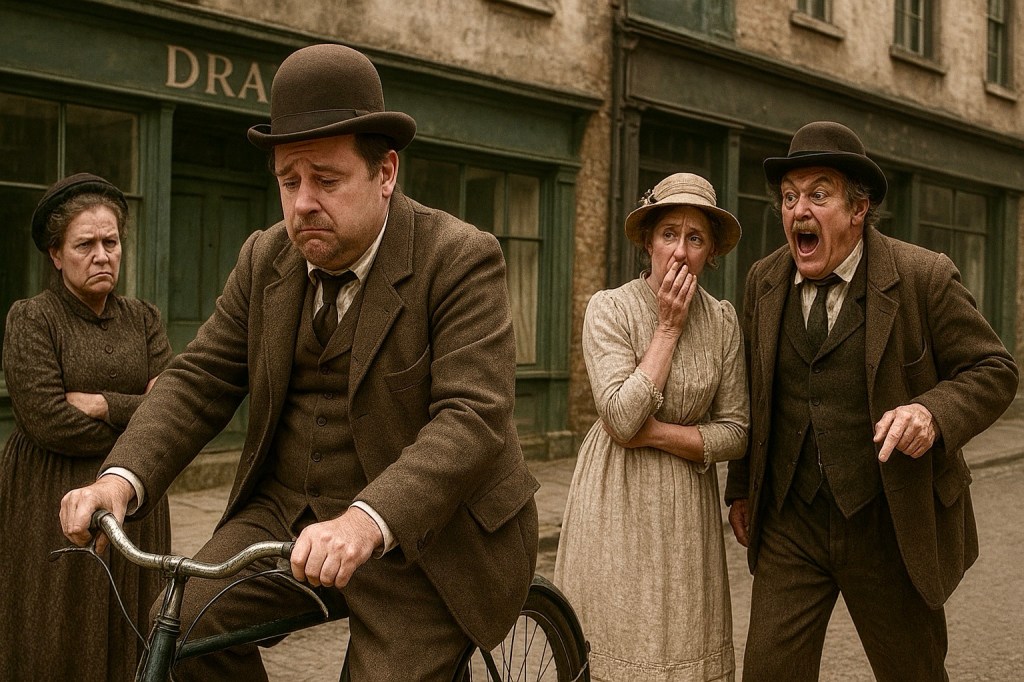
Yesterday, I found myself deeply overwhelmed, though I kept it hidden as best I could as I accompanied my dear dad to the hospital for his first round of chemotherapy. He turns ninety this Sunday, a milestone I cherish even as we navigate this difficult journey. Having helped him care for his late partner, and now finding myself caring for him, I can’t help but feel a bit drained, both physically and emotionally. In these moments of weariness, I turn to reading, thinking, and writing with an almost frantic intensity. It’s a brief escape, a form of therapy that soothes my spirit, if only for a little while. I do have my faith and my bible to fall back on but sometimes, well, I just feel the need to vent.
This piece has been polished and reworked so many times that I’ve hesitated to share it. The thing is, I hold this story so close to my heart. I can’t even remember how many times I’ve read it – each time fills me with a rush of excitement, but there’s also a certain sadness that lingers with every read. The heart of the issue lies with the Potwell Inn. For as long as I can remember, I’ve been searching for this idealised haven in my own life. At one point, I was utterly convinced I had found it, only to watch it crumble before my eyes. For a time, I lay buried beneath the metaphorical wreckage of this shattered dream. Eventually, I managed to crawl out from under the ruins, but now I find myself standing amidst the devastation. The pain is raw, and I know it will be a long time before I’m ready to move on from it. Let’s move on…
H.G. Wells’ The History of Mr. Polly is a gem of early 20th-century British literature, a novel that combines humour, satire, and a good dose of pathos in the portrayal of one of literature’s most lovably ineffectual protagonists. Mr. Alfred Polly, the novel’s central figure, is a man beset by the ills of mediocrity: his life is a slow march through the mundane and uninspiring, punctuated by bursts of comic absurdity and existential malaise. In typical Wellsian fashion, the novel dissects the life of an everyman with both sympathy and sharp wit, turning what could have been a dreary tale of a draper’s son into a biting commentary on the absurdities of societal expectations and the pursuit of happiness.
Mr. Polly is, by all measures, an average man living in an average English town. His education is lackluster, his career as a draper uninspiring, and his personal life a series of small disappointments. But it is precisely his ordinariness that makes him extraordinary within the context of Wells’ narrative. Mr. Polly is not a hero in the traditional sense – he does not slay dragons or lead revolutions. Instead, he embodies the quiet, persistent struggle of the middle class against the crushing ennui of routine existence.
Wells’ depiction of Mr. Polly’s internal world is where the novel truly shines. Polly is a man who, despite his dull exterior, possesses a rich, albeit bumbling, inner life. His tendency to mispronounce words, a feature that might seem like a quirk in another character, is symbolic of his larger disconnect from the world around him. Polly’s verbal fumbling represents his broader struggles to articulate his desires, fears, and frustrations. He is a man lost in a fog of his own making, yearning for something more but unsure of what that ‘more’ is.
Wells expertly crafts a narrative that oscillates between humour and tragedy, often blending the two to create scenes of delicious irony. Mr. Polly’s early attempts at romance, for instance, are a masterclass in awkward comedy. His courtship of Miriam, the woman who eventually becomes his wife, is a sequence of misunderstandings, half-hearted gestures, and reluctant compromises. Their marriage, unsurprisingly, becomes a prison of mutual discontent. Polly’s life with Miriam is a dreary succession of meals that fail to satisfy, conversations that go nowhere, and a general sense of life being something that happens to other people.
When Mr. Polly is still a young man, long before his ill-fated marriage to Miriam, he becomes infatuated with a girl named Christabel. She’s the kind of youthful, innocent figure that many young men might idealise – someone who embodies beauty, grace, and the promise of something better than the dreary life Polly knows.
Polly, being a man who’s never quite learned how to express his emotions with any sort of finesse, quickly becomes smitten with Christabel. His infatuation, however, is more about fantasy than reality. He sees in Christabel not just a girl, but an escape from his mundane existence – a romantic dream that could lift him out of his everyday life.
Unfortunately for Polly, his attempts to woo Christabel are nothing short of disastrous. He makes a complete fool of himself, stumbling through awkward conversations and clumsy gestures that only highlight his lack of experience and confidence. Instead of impressing Christabel, Polly’s efforts come off as misguided and laughable, leaving him humiliated.
This episode is a classic example of Polly’s tendency to over-reach in his search for something better, only to fall flat on his face. Christabel, who is quite out of his league both in terms of social standing and emotional maturity, quickly loses interest in Polly. The encounter ends with Polly feeling defeated and even more disillusioned with life and love.
Christabel’s brief but impactful presence in Polly’s life serves as a lesson in the dangers of romantic idealism. Polly’s vision of love is built on unrealistic expectations, and his failure to win Christabel’s affection forces him to confront the gap between his dreams and the reality of who he is. This humbling experience sets the stage for Polly’s later decisions, including his lackluster marriage to Miriam – a union born not out of passion but out of resignation.
In essence, Christabel represents the unattainable ideal that many of us chase at some point in our lives, only to learn that such fantasies often lead to disappointment. Polly’s misadventures with Christabel are both humorous and poignant, illustrating the painful but necessary process of growing up and coming to terms with life’s limitations. Perhaps my estranged wife was really my own unattainable ideal? I certainly feel foolish having allowed to be taken in, however, in her defence, I suspect I did place her on a pedestal; something she once told me I mustn’t do – right after she’d told me how easily she can move on from a relationship. Bang! Simple as that.
Yet, it is in these moments of failure that the novel’s humour is most potent. Wells does not simply depict Mr. Polly’s life as sad; he shows it as absurd. The tragedy of Mr. Polly is not that he fails, but that his failures are so small, so petty, that they are almost laughable. He is not a tragic hero brought down by a fatal flaw, but rather a man who trips over his own shoelaces at every turn, unable to see that the laces were untied in the first place. I feel that failure too.
The turning point in the novel, when Polly decides to end it all by burning down his shop (with himself in it, presumably), is both darkly humorous and deeply tragic. His suicide attempt is, in keeping with the rest of his life, a spectacular failure – much like my own attempts that were absolutely embarrassing failures. Instead of dying, he inadvertently becomes a hero by saving an old lady from the fire he started. This event propels Polly into a new life – one that is ostensibly free from the constraints of his previous existence.
But is it truly freedom that Mr. Polly finds? Wells plays with the idea that escape from the trappings of modern life is possible, but he does so with a sardonic grin. Polly’s new life as a handyman at an inn seems ideal at first, but it quickly becomes clear that he has merely swapped one set of routines for another. His new life is not so much a rebirth as it is a reconfiguration of the old one. The difference is that Polly now accepts his lot with a degree of contentment, having realised that true happiness is not about escaping life, but learning to navigate its absurdities with a light heart – I haven’t quite mastered that one as yet.
The History of Mr. Polly is not a novel of grand gestures or sweeping narratives. It is a quiet, introspective work that finds humour in the small miseries of life and wisdom in the acceptance of one’s limitations. Mr. Polly is a hero not because he overcomes great odds, but because he learns to live with them. Wells’ humour is gentle, his satire pointed but never cruel. He invites the reader to laugh at Mr. Polly’s follies, but also to recognise a piece of themselves in his struggles.
In the end, Wells suggests that life, with all its absurdities, is worth enduring – not because it is grand or glorious, but because it is, quite simply, life. And within the mundane, there are moments of unexpected joy, quiet triumphs, and the occasional, absurd adventure. Mr. Polly’s story is a reminder that even in the humdrum, there is the potential for something more, however small or silly it might be. After all, if Mr. Polly can find a modicum of happiness in his tangled, mispronounced life, perhaps there’s hope for the rest of us. I truly hope so.
Before you proceed with the following, there are more detailed spoilers.
The Resurrection of Mr. Polly: A Ghostly Return and the Tea Room of Unspoken Agreements
After his botched attempt at self-immolation, Mr. Polly simply disappears and is presumed dead by everyone back in the sleepy town of Fishbourne, including his long-suffering wife, Miriam. This ‘death’ gives Polly a fresh start, allowing him to shed his old life like a snake’s skin and begin anew at the Potwell Inn. But as anyone who’s tried to escape their past knows, it has a funny way of creeping back up on you – especially when you least expect it.
One day, curiosity gets the better of Mr. Polly, and he decides to take a stroll down memory lane – or more precisely, down Fishbourne High Street. There, he finds that his old shop, the very site of his planned fiery demise, has been transformed into something far less combustible: a quaint tea room. The irony isn’t lost on Polly, who once failed so spectacularly at drapery that even setting it on fire didn’t go as planned. Now, his old shop is a place of calm and comfort, where patrons sip tea and nibble on scones, oblivious to the dramas of its past.
Polly, driven by a mix of nostalgia and a mischievous curiosity, steps inside. The scene is almost surreal – this is the place where his old life ended, and yet here he is, standing in it like a ghost haunting his own past. No-one recognises him, of course; as far as the townsfolk are concerned, Mr. Polly is nothing more than a memory (or perhaps just a name on a shop’s insurance claim).
Fate has a sense of humour, it seems, because who should walk into the tea room but Miriam, the very woman who was once chained to Polly by the unbreakable bonds of matrimony. Their eyes meet, and the moment is thick with the weight of everything that once was – and everything that will never be again.
Miriam, stunned by the sight of her supposedly dead husband, doesn’t scream or faint. Instead, she and Polly have a silent, awkward, yet strangely profound exchange. No words are needed to convey the complex mix of emotions that passes between them: surprise, relief, and perhaps a touch of sadness.
Without a single word, the two come to a mutual, tacit understanding: this encounter never happened. Miriam, having made peace with her life as a widow (a title that has brought her some measure of freedom and sympathy), has no desire to see Polly reinserted into her life. Polly, on the other hand, is more than happy to let sleeping dogs lie – after all, he’s quite fond of his new, uncomplicated life.
The agreement is sealed with silence. Miriam leaves the tea room, and Polly watches her go, neither of them willing to shatter the delicate balance that has been struck. For Polly, this encounter is a final release from the burdens of his past. He’s been given a second chance at life, and he intends to live it without the ghosts of Fishbourne haunting him.
This encounter in the tea room is a fitting, understated conclusion to Mr. Polly’s relationship with Miriam. It’s not a dramatic confrontation or a tearful reconciliation; it’s simply two people recognising that their paths have diverged and that this divergence is for the best. The unspoken agreement to forget this meeting ever happened allows both of them to continue with their lives as they see fit – Miriam as the widow and Polly as the man who, quite literally, walked away from it all.
In this quiet moment, Wells captures the essence of Mr. Polly’s journey: it’s not about grand gestures or heroic acts, but about small, personal victories and the subtle art of letting go. Polly’s story ends not with a bang, but with a peaceful acceptance of the life he has chosen – one that, for all its flaws, is now his own.
There is a wealth of thoughts I could pour out about this novel, but my emotions won’t allow me to dive that deep right now. It’s beyond my strength at this moment to articulate just how profoundly I resonate with Mr. Polly and the Potwell Inn, and how eerily our lives intertwine. My estranged wife – who, despite her intimate knowledge of me, once confessed to never truly understanding me – would, I believe, grasp just how deeply this novel has etched itself into my soul, and how much of myself I see reflected within its pages.
And now I’d like to take a philosophical look at the Potwell Inn.
The Potwell Inn in The History of Mr. Polly represents more than just a physical refuge for its beleaguered protagonist; it is a philosophical symbol of the human yearning for a utopia – a place where one might finally escape the drudgeries and disappointments of life. In the context of the novel, and perhaps in my own life, the Potwell Inn embodies that elusive sanctuary we all seek, a haven just beyond our grasp, much like the curse of Tantalus in Greek mythology.
For Mr. Polly, the Potwell Inn is a discovery that transforms his life. After years of enduring a stifling existence, marked by a loveless marriage and the monotony of running a small shop, the Inn offers him a fresh start. It’s a place where he can be free from the expectations that once suffocated him, where life is simpler and more aligned with his desires. The Inn represents an idyllic retreat from the world – a small corner of peace and contentment.
However, the Potwell Inn is more than just a picturesque setting. It symbolises the ideal life that many of us dream of but find hard to attain. The idea of such a place – a personal utopia where we can finally be ourselves, unburdened by past mistakes or societal pressures – is deeply appealing. Yet, like Tantalus reaching for the fruit that always eludes his grasp, this vision often feels just out of reach.
In Greek mythology, Tantalus is punished by the gods to endure eternal hunger and thirst, with fruit and water forever just beyond his reach. This image captures the cruel irony of desiring something that is perpetually unattainable. Similarly, the Potwell Inn can be seen as a metaphor for the human condition – our relentless pursuit of happiness, fulfilment, and a place where we feel truly at home, even as these things seem to slip away just as we draw near.
The philosophical tension here lies in the nature of utopia itself. Is the Potwell Inn, as Polly experiences it, a true utopia? Or is it simply a temporary reprieve from the inevitable challenges of life? Wells suggests that while the Potwell Inn may offer solace, it is not immune to the troubles of the outside world. Polly’s battles with Uncle Jim, for instance, show that even in this supposed paradise, conflict and strife are never far away.
The Potwell Inn’s allure is undeniable – it offers a vision of a simpler, more fulfilling life. But its fragility is also apparent. Polly’s time at the Inn is filled with moments of contentment, yet it is clear that this tranquility is precarious, dependent on factors beyond his control. The world outside still exists, with all its complications and demands.
In my own life, the Potwell Inn might represent a similar ideal – a place or state of being where everything falls into place, where I can finally find peace. But the challenge, as the novel subtly hints, is in reconciling this ideal with the imperfect reality we inhabit. The Potwell Inn, like any utopia, is as much a state of mind as it is a physical location. It’s about finding a sense of peace within, even when the external world remains chaotic and uncertain.
The philosophical message of the Potwell Inn may ultimately be one of acceptance. Like Tantalus, we may never fully grasp the utopia we seek. But that doesn’t mean the pursuit is futile. There is value in the journey, in striving for a life that aligns with our deepest desires, even if it remains just out of reach. The Potwell Inn teaches us that while perfection may be unattainable, the pursuit of a better, more fulfilling life is itself a worthwhile endeavour.
Wells seems to suggest that true contentment comes not from reaching a utopia, but from learning to appreciate the moments of peace and joy we encounter along the way, however fleeting they may be. The Potwell Inn, then, is less about escaping reality and more about finding a way to live within it, on our own terms.
The Potwell Inn stands as a poignant reminder of the human condition – our constant striving for a place of peace, happiness, and fulfilment. It symbolises the tension between our dreams and the realities we face, between the life we want and the life we live. While it may feel like a utopia just out of reach, the Potwell Inn also offers hope. It suggests that while we may never fully attain our ideal, we can still find moments of grace and contentment in the pursuit.
In your own life, the Potwell Inn might seem tantalisingly close, yet just beyond your grasp. But perhaps the lesson is not to despair at its elusiveness, but to cherish the glimpses of it you do find – those rare, fleeting moments when life feels just right. And in doing so, you may discover that the Potwell Inn isn’t so much a place to be reached, but a state of being to be nurtured within yourself.
And that’s it. If you’ve made it this far, then well done – although I have no rosettes to hand out, your attention is appreciated, and I hope some of this post will in some way edify you. Thank you.

 Wording
I stopped reading at the spoilers, since I found The History of Mr Polly on Project Gutenberg and have saved it to read later. I’ve read the first few lines and think he should give up bread, or whatever he is eating at lunch that is causing him indigestion every afternoon. Mr Polly sounds relatable and endearing. I’m sorry he settled for Miriam, but am looking forward to seeing him find contentment you promised, despite his middling life and constant small disappointments! On the flip side. I often think the small things are also what make me happiest, a sunny day or seeing a duck unexpectedly, or whatever little surprise comes my way when I’m out walking.
Good luck to your father during his treatment. 90 is an age worth celebrating with cake.
I think Polly’s indigestion naturally occurs from his angst – he seems permanently disgruntled and on edge. I won’t spoil it further by telling what I think of Miriam regarding how things turn out for her, except to say that at the time they were together, I think they pretty much deserved one another. You’re correct, the small things are the most important. I adore being out in nature, and have had years of camping, caravanning and travelling all over this beautiful country. I find the simplest of things in nature thrilling and heart-warming.
We had all the family calling in today to wish dad happy birthday, with sparkly cakes and some seriously off-key singing of ‘Happy Birthday to You’. He appreciated it though, and I got to see my wonderful grandson, and dad his great-grandson. So all well with the world today – aside from dad being exhausted and embracing his comfy bed afterwards. Have fun with Polly!