The Death of Ivan Ilyich, or as I like to call it, ‘How to Have a Midlife Crisis While Actively Dying.’ This novella by Tolstoy is less a story and more a literary post-mortem of a man who spends his life climbing the social ladder only to realise, with the grim clarity of impending death, that said ladder was leaning against the wrong wall all along. What a cheery prospect!
Let’s start with the protagonist, Ivan Ilyich Golovin. Here we have a man who, bless him, is the embodiment of mediocrity. He does everything by the book – marrying not out of love but because it’s expected, choosing a career that’s respectable but soulless, and decorating his home with such exacting bourgeois precision that even IKEA would struggle to outdo him. His life, we are told, is “most simple and most ordinary, and therefore most terrible.” Tolstoy isn’t pulling any punches here, is he? It’s almost as though he’s wagging a finger at us, warning that our own lives might also be a dreadful string of mindless conventions if we’re not careful. Charming.
The plot, if I can call it that, is more a slow-motion car crash of existential dread. The drama begins when Ivan injures himself while hanging some drapes – a subtle but hilariously symbolic moment. He doesn’t fall off a horse or duel a rival; no, he gets terminally ill because of interior decorating. It’s as though Tolstoy is mocking Ivan’s trivial existence, turning the very act of improving his home into the start of his undoing. You almost expect a sarcastic doctor to appear and say, “Well, Ivan, I hope those curtains were worth it.”
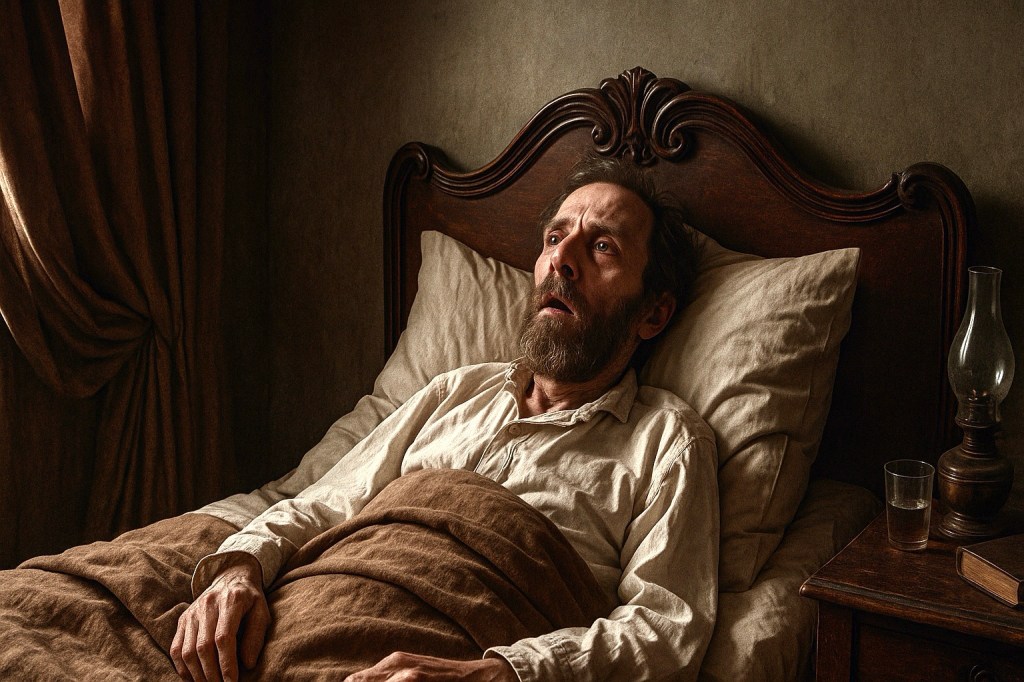
What follows is a prolonged and painfully vivid account of Ivan’s decline. He suffers, he rages, he questions everything. His friends and family, meanwhile, are paragons of self-absorbed indifference. His wife is too busy fretting about social engagements to care about his dying; his colleagues are already jockeying for his position before he’s even cold. It’s a bleak but brutally accurate satire of human selfishness. Gerasim, the humble servant, is the only one who offers genuine comfort, showing more humanity in his simple acts of kindness than all the self-serving ‘civilised’ people in Ivan’s circle combined. Well played, Tolstoy, well played.
And then there’s Tolstoy’s moralising. Oh, how he loves to preach! This novella isn’t content to just show us Ivan’s misery; it has to rub our noses in it. “Look,” Tolstoy seems to say, “this is what happens when you live a hollow life. Repent, ye sinners!” His commentary on the emptiness of social conventions and material pursuits is about as subtle as a brick to the head. Yes, it’s profound, but it’s also relentless. There were moments when I wanted to tell Tolstoy to take a breath and let me process Ivan’s existential crisis without him shouting, “And THIS is why you’re all doomed!” from the margins.
That said, Tolstoy does achieve something remarkable here. For all the gloom, the novella is a masterclass in psychological realism. Ivan’s anguish is so vivid that you can almost feel it yourself – a morbid accomplishment, to be sure, but an impressive one nonetheless. And for all its preachiness, the story forces you to confront uncomfortable truths about your own life. Am I living authentically? Will my deathbed be a scene of peace or regret? And most importantly, will I ever hang drapes again without worrying about a mysterious terminal illness?
In the end, The Death of Ivan Ilyich is both a scathing indictment of societal shallowness and a compassionate exploration of the human condition. Yes, it’s heavy-handed, and yes, it’s unrelentingly bleak, but it’s also deeply moving and, dare I say, necessary. Tolstoy might come across as a smug know-it-all at times, but he knows how to make you squirm in your existential discomfort, and isn’t that the whole point? Just don’t read it while you’re feeling even slightly unwell – you might start Googling your symptoms, and trust me, that’s a rabbit hole no drape-loving mortal should enter.

 Wording