Rudyard Kipling’s The Norman and the Saxon is a poem steeped in history, but it also serves as a stark and prophetic warning. On the surface, it appears to be a study of the differences between the Norman conquerors and the Saxons they subdued, but beneath the historical veneer lies a commentary on resilience, justice, and the perils of underestimating a seemingly docile people. As I read this poem, I cannot help but feel that it speaks directly to the state of England today – a country where its native people are increasingly marginalised, demonised, and pushed to the fringes of their own culture. Kipling, ever the keen observer, saw something intrinsic in the English spirit that still holds true: a quiet endurance that, once tested too far, turns into unrelenting defiance.
The Saxon’s Patient Strength: A Dangerous Undercurrent
Kipling’s portrayal of the Saxon is one of silent endurance. The Saxon is likened to an ox in the furrow – steady, labouring, and uncomplaining until provoked. This simile is particularly apt because the ox is a beast of burden, expected to toil without protest. Yet, an ox pushed too hard or wounded unjustly will turn on its master with deadly force. Kipling’s warning is clear: do not mistake patience for passivity.
This is something I see reflected in England today. The English people – so often derided for their reserve, their understatement, and their tolerance – have been patient, perhaps too patient, with the cultural and political forces that seek to undermine them. For years, they have been told that their traditions are outdated, their values obsolete, their very identity something to be ashamed of. Statues are torn down, history is rewritten, and every grievance under the sun is laid at their feet. And yet, the English have gritted their teeth and carried on, much like Kipling’s Saxons.
But there comes a point where patience wears thin. Kipling understood this well. He writes:
‘But he never means anything serious / Till he talks about justice and right.’
This line is a thunderclap of a warning. The Saxon – by which Kipling means the common Englishman – is slow to anger, slow to action. But once he starts speaking of justice, of fairness, of being wronged, the game changes. I cannot help but feel that we are nearing that moment now.
The Dangers of Underestimation
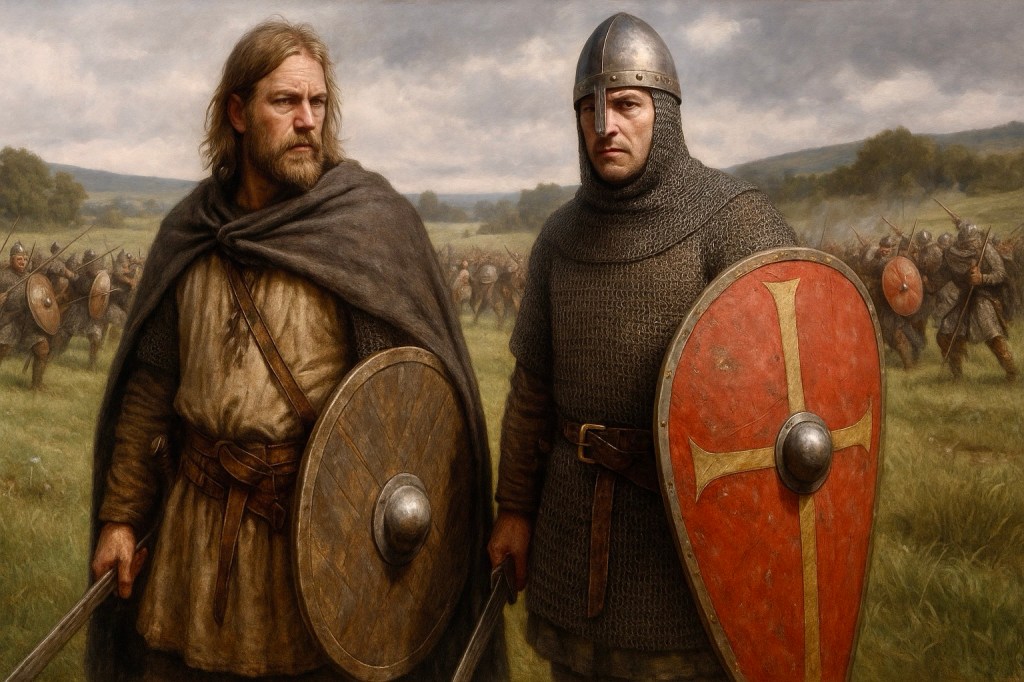
The Norman in Kipling’s poem is a ruler who believes he can dictate terms indefinitely, as long as he maintains the appearance of strength. He can whip his Gascony archers and torture his Picardy spearmen with impunity, but the Saxon is a different creature altogether. Unlike the mercenaries and foreign soldiers who fight for coin, the Saxon is bound by something deeper – an innate sense of justice, a connection to the land and its history.
Kipling’s description of the Saxon’s method of resistance is strikingly modern. He does not march in open rebellion immediately but instead resists in quiet, subtle ways:
‘The Saxon, learnt from his mother, / To speak with his tongue in his cheek.’
This idiom, ‘speaking with one’s tongue in one’s cheek,’ suggests that the Saxon is not as simple as he appears. He plays along, biding his time, feigning obedience while secretly nursing his grievances. This is the same English defiance we see today, where people- exhausted by the relentless barrage of attacks on their identity – have stopped engaging openly with the forces that vilify them. Instead, they quietly resist, speaking in coded language, withdrawing from public discourse, waiting. Kipling knew that this kind of resistance, though often invisible, is far more dangerous than outright rebellion.
The Unheeded Warnings of the Past
One of the most prescient stanzas in the poem is this:
‘Do not judge by the look of a village / Or the people you meet on the road.
Call nothing a trifle nor harmless, / That may end in a naked sword.’
How many politicians, journalists, and cultural elites today would do well to heed these lines? They scoff at the quiet English towns, the ‘left-behind’ places, assuming them to be irrelevant relics of the past. They dismiss those who grumble about fairness and justice as backward reactionaries. But what they fail to understand – what Kipling saw so clearly – is that beneath the surface, something is simmering. What appears insignificant today can become an uncontainable force tomorrow.
We have already seen flashes of this in recent years. There is a reason why political and cultural elites were so blindsided by events like Brexit or the growing disillusionment with mainstream politics. They assumed that the Saxon – the ordinary Englishman – would forever remain silent, forever compliant. But Kipling’s poem reminds us that there is a limit to what even the most patient people will endure.
The Price of Arrogance
Kipling closes his poem with an unspoken but implicit lesson: the wise ruler understands his subjects. He does not abuse their tolerance, nor does he mistake patience for submission. He learns their language, respects their ways, and treads carefully.
Today, our rulers – whether in Westminster, in academia, or in media – have done the exact opposite. They have sought to remake the country in their own image, ignoring the voices of those they deem unworthy of consideration. They have, in effect, treated the Saxon as though he were one of their mercenaries – someone to be browbeaten, coerced, and exploited without fear of consequence.
But history, as Kipling knew, has a way of reminding those in power that nothing lasts forever. The Saxon’s silence is not eternal. The Englishman, though slow to anger, will not remain quiet indefinitely.
A Lesson for Today
Kipling’s The Norman and the Saxon is not just a historical reflection; it is a prophecy. The Saxon – the true English spirit – still exists, even if it has been quiet for some time. The forces that seek to erase or undermine it would do well to remember Kipling’s warning.
England has changed immeasurably since the days of 1066, but human nature has not. A people can only be pushed so far before they push back. And when the Saxon finally rises, it will not be with fanfare or spectacle. It will be with the quiet, unstoppable force of a tide reclaiming the shore.
Those who laugh at the Saxon now may one day find themselves caught in the storm.


