Cinema, despite its thunderous claims to originality, is in truth a great necromancer. It raises the dead more often than it invents the living, and its spirits wear borrowed costumes even when paraded as new. When James Wan and Leigh Whannell conjured Insidious, they weren’t scribbling out some pristine mythology in a Hollywood boardroom but cracking open an old trunk stuffed with Gothic tropes, biblical visions, and occult handbooks, then letting them loose under the harsh glow of digital cameras. That, perhaps, is why the series strikes such a deep chord; its terrors seem familiar, not because we’ve seen them before in multiplexes, but because they stalk our collective memory, lurking in scripture, folklore, and the uneasy hinterland between sleep and waking.
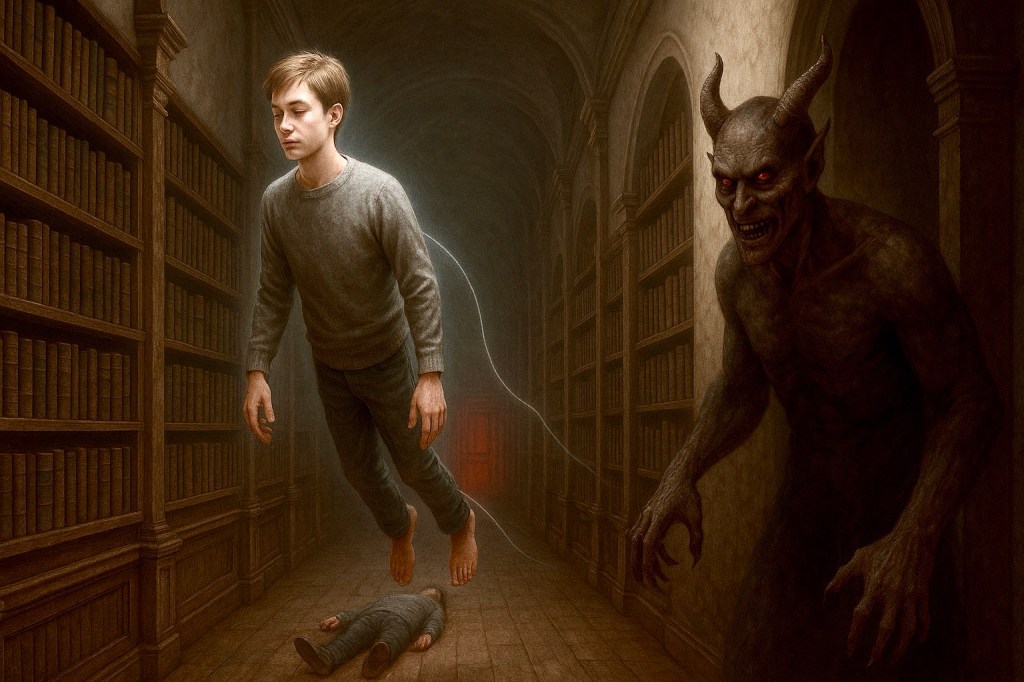
At first glance, the premise is simple enough: a family, a house, a child who will not wake. Yet from the moment Dalton Lambert slips into his unnatural slumber, the film ceases to be a mere ghost story and becomes a dramatization of one of mankind’s oldest anxieties – that the soul can wander from the body and may not return. The haunted house is, after all, a decoy. The true haunted structure is the human form itself, vacant and vulnerable, an empty house into which demons may rent themselves with alarming ease. ‘It’s not the house that’s haunted, it’s your son,’ proclaims the medium Elise, and with that line the franchise announces its literary parentage: a fusion of Gothic fiction’s architecture of fear with the Theosophists’ astral manuals, a séance dressed in Dolby surround.
The Gothic genealogy is easily traced. Shirley Jackson’s The Haunting of Hill House taught us that buildings absorb sorrow like sponges; Poe made premature burial into both art form and practical hazard; Dickens scattered ghosts through Christmas as casually as one sprinkles nutmeg. Insidious borrows their house of dread, their suffocating corridors, their sense that wallpaper can leer if stared at long enough. But where Jackson’s Eleanor is absorbed into her house like water into salt, Dalton’s dragged beyond the house into what Wan christens ‘The Further’ – a fog-choked limbo where the dead sit waiting, as though for a bus that never comes. It’s Jackson crossed with Lovecraft, Dickens crossed with Dante, Poe crossbred with Plato, which sounds like the worst dinner party imaginable but makes for potent horror.
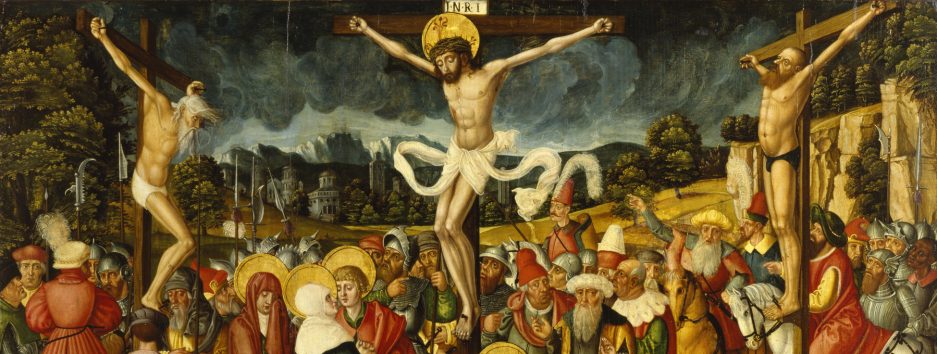
Astral travel is the film’s true inheritance, though, and here the red door opens onto a tradition as sprawling as theology itself. The Greeks spoke first of the soul’s capacity to depart. Plato in his Phaedrus described the soul as a winged charioteer who once soared through the heavens before crash-landing in flesh. The Neoplatonists extended this into a ladder of ascent, where the soul might climb back through celestial spheres like a drunk scaling a fire escape. Christianity, never slow to borrow a good metaphor, embroidered its own tales. Paul in 2 Corinthians admits, almost sheepishly, that he once ‘knew a man’ caught up into the third heaven, unsure whether in the body or out. Ezekiel wheels his chariot through cosmic geometry, Jacob dreams of angels scaling ladders, and Revelation practically drowns us in astral tourism. The Bible’s less a book than a travel brochure for the restless soul.
The Middle Ages gave us mystics who described their flights with unsettling candour. Hildegard of Bingen wrote of leaving her body and gazing down on creation bathed in Living Light; Sufi mystics recounted the mi‘raj, the Prophet’s night journey through the heavens, complete with guided tour. In India and Tibet the story was older still. Yogis spoke of subtle bodies – sheaths of spirit which could be coaxed from the coarse flesh through meditation. Tibetan Buddhists mapped the bardo, the between-state, where consciousness drifts after death before reincarnation. Dalton, suspended in his coma, is a modern bardo-walker, neither living nor dead, stalked by entities who hunger for his empty shell.
By the nineteenth century, the Victorians, ever incapable of leaving well enough alone, turned astral travel into parlour entertainment. Madame Blavatsky, high priestess of Theosophy, insisted that the astral body was tethered to the physical by a ‘silver cord,’ severed only at death. Annie Besant produced diagrams as if the invisible could be drafted on graph paper, while Crowley, that merry trickster, devised rituals for ‘rising on the planes’ with all the solemnity of a man climbing a ladder in his dressing gown. Séances became fashionable diversions, and the idea that one might wander outside oneself became as commonplace as afternoon tea. Wan and Whannell, knowingly or not, drew directly on these manuals. Dalton’s drifting, the silver tether, the demonic squatters circling his body – all are Theosophy refitted for popcorn and Dolby Atmos.
Modern psychology tried to tidy the mess, as psychology always does, sweeping astral bodies under the rug of neurology. Freud reduced out-of-body experiences to wish-fulfilment and repressed desire – though I suspect he might have preferred a dream of cigars to a red-faced demon crouched on a wardrobe. Jung, more generous, proposed the collective unconscious, in which dreamers might bump into archetypes – the Shadow, the Anima, the Self. In this sense Dalton’s Lipstick-Face pursuer is not merely a demon but his Shadow, the disowned part of himself given talons and teeth. The Further becomes less purgatory than psyche, a haunted attic in which one must confront what’s been nailed under the floorboards.
The horror, then, isn’t simply in the jump scares but in the philosophy. If the soul can leave the body, who exactly are we? Are we tenants in flesh, boarders in bone, with leases easily broken? The terror of Insidious is existential: the notion that we may be detachable, that our identity isn’t safely housed in skin. Dostoevsky toyed with similar dread in The Double; Camus sniffed it in his absurd man staring at the unresponsive sky. To imagine the astral is to imagine exile from oneself.
And yet, it must be admitted, the whole business contains its share of comedy. The astral, for all its solemn mysticism, is also inherently absurd. What dignity can one claim floating through the cosmos if one’s body lies snoring and dribbling into the pillow? Imagine popping out of your body not in a monastery but in a Tesco checkout line, your astral form fumbling with the self-service machine while your body stands vacant beside the frozen peas. Or worse: you drift out during a romantic entanglement, only to hover awkwardly above the scene like a particularly guilty guardian angel. Even the Theosophists, in their scented drawing rooms, must have suppressed a giggle at the image of respectable bishops floating through their own ceilings like spectral balloons.
The comedy of astral travel is, of course, the comedy of the human condition. We’re creatures who dream of transcendence but can’t help tripping over the carpet on the way. The very idea of a ‘silver cord’ linking us to our bodies is both profound and faintly ridiculous – an umbilical leash ensuring we don’t drift too far from the cradle of flesh. Wan and Whannell understand this and sprinkle their film with just enough absurdity to season the terror. The Lipstick-Face Demon, revealed in full, is as much pantomime villain as metaphysical menace. The séance, with its gas-mask contraption, borders on slapstick. Horror, after all, requires laughter; without it, fear would curdle into despair.
When all’s considered, Insidious is less a horror film than a theological essay disguised as one. It asks whether the body is truly our home, whether the soul has windows, whether death is the only passport required for travel. It resurrects Plato, Paul, Hildegard, Blavatsky, Freud, and Jung, dressing them in Hollywood prosthetics, and it dares to suggest that the nightmares of mystics and philosophers may, in fact, be true. The red door’s not merely a cinematic gimmick but a threshold: the entrance to a tradition older than cinema itself.
In the end, what terrifies us in Insidious isn’t the demon’s claws but the suspicion that we’re porous, that identity isn’t secure. We laugh, we scream, we turn on the light after watching, but some part of us wonders, as we drift toward sleep, whether we too might slip through the seams of flesh and find ourselves wandering down a dim corridor, groping for a door, tethered by a cord as fragile as breath. And perhaps that’s why the film lingers, long after its orchestral stabs and sudden apparitions. It has linked cinema to scripture, myth to neurosis, comedy to terror. It has reminded us that we are, all of us, already astral travellers, nightly voyagers across that precarious bridge between consciousness and oblivion.
The red door, painted with dread, is cinema’s invention. But the corridor behind it – that’s always been there, waiting, in our dreams, our scriptures, our occult handbooks, and our Gothic novels. Every time we shut our eyes, we reach for its handle. Every time we dream, we step inside.

 Wording