
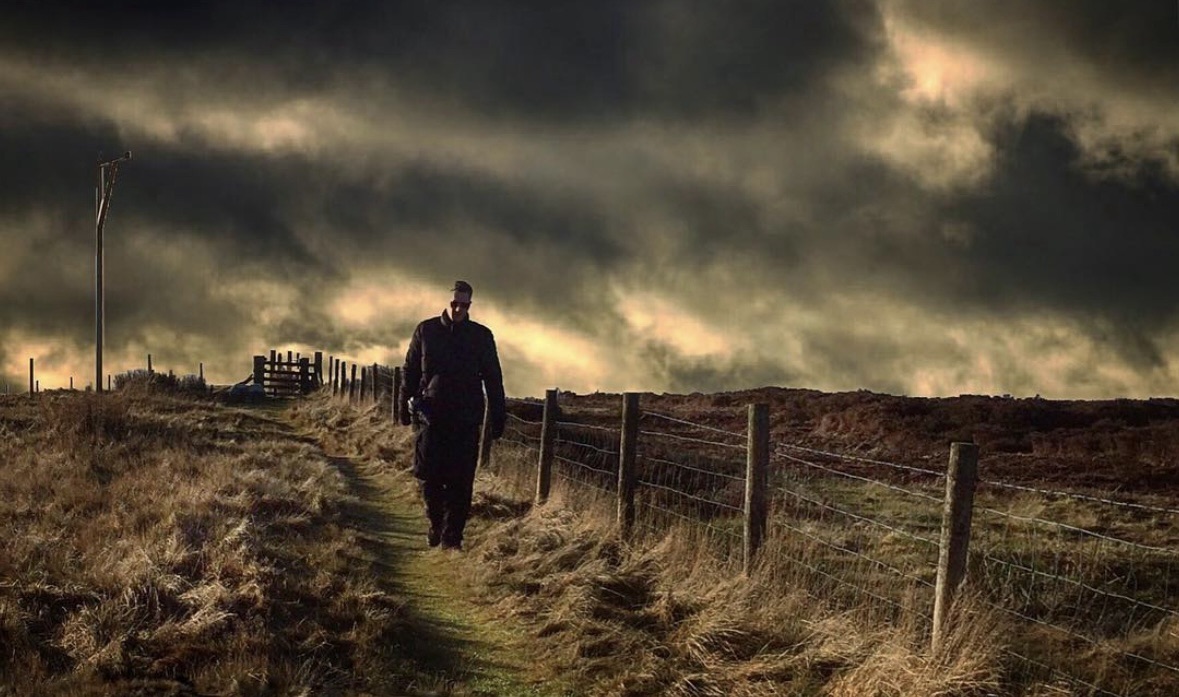
The trouble with gibbets is that they’re both too much and not enough. Too much when they hold their grisly trophies aloft for the crows; not enough when they stand bare against the horizon, gaunt as a pauper’s ribcage. Winter’s Gibbet, perched on Steng Cross above Elsdon, knows this paradox well. It’s a machine for displaying death, long since emptied of its cargo, yet still it looms – a scaffold without a show, an execution with the body missing.
William Winter himself is dust. In 1791, he was hanged at Westgate, Newcastle, for the murder of Margaret Crozier, an old widow in Raw Pele Tower. That might have been punishment enough, but Georgian justice liked an aftertaste. His body was slung in chains on a gibbet, left to squeak and rattle in the moorland wind, a grim advertisement for morality. If the sermon on the mount was the gospel of grace, the sermon on the gibbet was the gospel of terror: ‘Go thou and sin no more, lest thy bones clatter in the heather.‘
The authorities called it ‘deterrence.’ Shakespeare would have called it farce. ‘The play’s the thing,‘ said Hamlet, but here the play wasn’t for conscience-catching kings, but for shepherds, travellers, and gawping locals. Picture it: Winter’s corpse swinging like an ill-tuned church bell, the sheep untroubled, the crows delighted, and the neighbours moralised into virtue by the sight of an anatomy lesson in chains. If that isn’t black comedy, I don’t know what is.
Yet the gibbet today is empty. No effigy, no straw dummy, no grotesque puppet put up by local hands. Just the timber frame itself, cracked, weathered, and pointless. And here’s where things become stranger, for the absence is more eloquent than any mannequin. The imagination rushes to fill the void. One half-sees the body that’s not there, hears the chains that don’t rattle, smells the rot that’s long since blown away on the wind. In this sense the gibbet’s a negative icon, like a hollow reliquary. Its power lies in what it no longer contains.
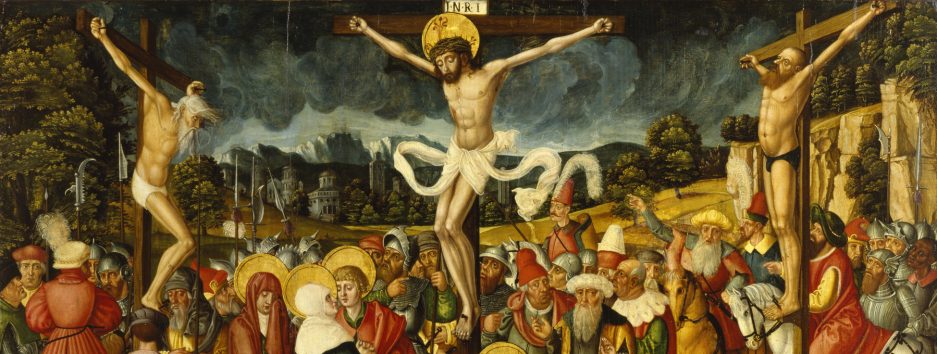
There’s a theology to such emptiness. ‘He is not here: for he is risen‘ (Matthew 28:6) is the declaration at the empty tomb. Winter’s gibbet offers no such consolation. Its emptiness isn’t resurrection but decay, not victory over death but death’s victory over us. The cross without Christ is simply gallows. And yet the mind still treats the structure as sacred in its way – a relic of punishment, a shrine to crime, a pilgrimage site for the morbidly curious.
Philosophically, it’s also instructive. Michel Foucault famously charted the move from the ‘theatre of punishment’ to the hidden machinery of prisons. Winter’s Gibbet stands at the hinge of that history. It shows us how public cruelty was once dressed up as morality, how the community was meant to learn its lessons through spectacle. But without the body, the lesson collapses into absurdity. We’re left only with a frame: a stage without an actor, a law without its example, a justice system unmasked as theatre all along.
And yet – we’re not so different. Today we no longer gibbet men in chains on hilltops, but we do gibbet reputations on X (Twitter) feeds. We don’t display bodies, but we display shames. We’re still spectators at a morality play, only now the arena is digital, and the corpses are careers, names, faces blurred across screens. Winter’s Gibbet isn’t an antique curiosity but a mirror. What it once did to William Winter, we now do to one another with hashtags and headlines.
The comedy of it all’s hard to ignore. Here, on one of the loneliest spots in Northumberland, stands a monument to futility. The victim is forgotten; the murderer a trivia answer. The gibbet endures. And people still point at it from car windows: ‘That’s Winter’s Gibbet!‘ As if the absence itself were entertainment. We might as well erect a plaque that reads: ‘Justice – Closed for Weather. Please Imagine the Rest.‘
In the Book of Ecclesiastes we’re told: ‘Vanity of vanities, all is vanity.‘ Winter’s Gibbet is vanity in timber form. It proves nothing, deters nothing, saves no one. It’s simply there – weathered, empty, ridiculous, sublime. And in that, perhaps, it tells us more about humanity than all the sermons preached beneath it. We love our symbols, even when they’ve been hollowed out. We love our theatre, even when the actors have left the stage.
So the next time you pass that lonely scaffold on the moor, spare a thought for William Winter. Not because his crime was great, nor his punishment unique, but because his absence still speaks. A scaffold without a show is still a show of sorts. And if you listen closely enough, you may hear not the clink of chains, but the laughter of history – at our strange, persistent need to turn death into spectacle, and emptiness into meaning.

 Wording