There are phrases that ring through history like bells tolling in fog: ‘Et tu, Brute?’, ‘I have a dream,’ ‘Father, forgive them.’ Yesterday another such phrase was spoken – not in marble halls nor on the steps of Washington, but from a widow’s lips at her husband’s memorial service. Erika Kirk stood before the world, her grief fresh as the grave, and said: ‘I forgive.’
My mind staggered. For is forgiveness not the hardest of all commandments? To love your neighbour when he mows your lawn badly is one thing; to love your enemy when he mows down your husband is quite another. I thought of Hamlet’s words: ‘O, what a rogue and peasant slave am I!’ For I, in her place, would have been a roaring Lear, cursing the heavens, crying vengeance into the storm. Yet she, like Stephen beneath the hail of stones, found words that Christ Himself once uttered, words that unmake the world’s arithmetic of blood.
Where does such strength come from? Not from psychology – Freud would mutter of repression, Jung of archetypes, Adler of inferiority. None of them can explain the trembling widow who raises her chin and gives mercy instead of malice. Nor does politics supply an answer; ideology, left or right, can whip up a mob but can’t soothe a heart. No, Erika’s strength came from that perilous fountain called grace – the scandalous power that turns enemies into brothers, Saul into Paul, and murderers into saints.
We moderns prefer ‘closure’ to forgiveness, like shutting a file rather than transfiguring it. Closure requires no miracle, only distraction. Forgiveness, however, is miracle through and through – it breaks the chain of cause and effect. Nietzsche saw in forgiveness the poison of slave morality, a weakness dressed as virtue. Yet Nietzsche, for all his hammer, couldn’t shatter the Cross. He could only sneer at it. Forgiveness remains, stubborn as Golgotha, defying logic.
And I thought of Corrie ten Boom, hand outstretched to the Nazi guard who’d tortured her sister. She confessed she felt nothing but ice – until, in desperation, she prayed, and felt warmth surge through her hand like a secret current. Or of the Amish of Nickel Mines, who baked bread for the family of the man who slaughtered their daughters. These aren’t sentimentalists. They’re radicals of another order – revolutionaries armed not with rifles but with mercy.
Of course, forgiveness isn’t denial. It doesn’t say the wound didn’t bleed. It doesn’t erase the tombstone. It says only: ‘Hatred shall not have the last word.’ Justice still has its day, but vengeance is laid down at the feet of God. Augustine knew this tension: justice is necessary, yet without forgiveness it curdles into cruelty.
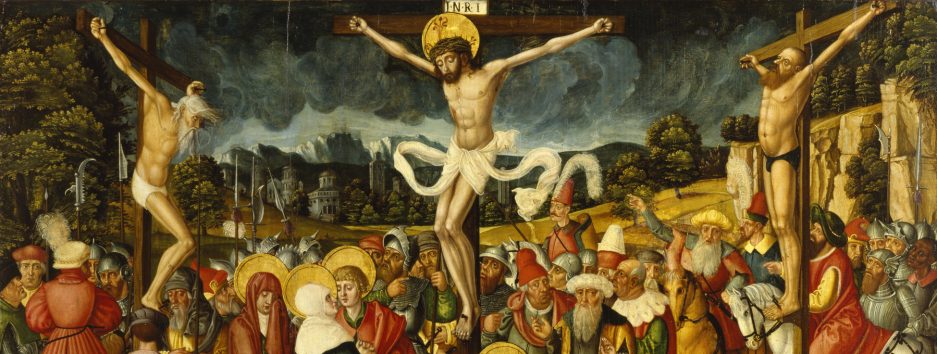
So when Erika Kirk said ‘I forgive,’ she didn’t speak as a saint on a pedestal, but as a woman with nails through her heart, echoing the words of Another with nails through His hands. She gave us a scandalous glimpse of heaven’s logic: where power is made perfect in weakness, and where the widow, not the emperor, speaks with true authority.
And what of us? We gape, we clap, perhaps we tweet pious emojis. Yet we know that tomorrow we’ll snarl in traffic and curse our neighbours for smaller slights. It’s good that her words undo us. Forgiveness, when genuine, should always appear impossible, for it is impossible – without the Spirit’s breath.
The Greeks imagined Nemesis, goddess of revenge, with her wheel of fate. But Christianity imagines something stranger: a God who forgives even as He is nailed to a tree. And Erika Kirk, in one short sentence, carried that strangeness into the twenty-first century.
The world expects widows to wail, to demand justice, to say, ‘I’ll never forgive.’ And yet she forgave. That’s why her words resound, why we can’t shake them, why my own mind – usually quite happy with a cuppa and a Plato quote – is left rattling like a church bell in a gale.
As Pascal once observed: ‘Man is neither angel nor beast, and unhappily whoever wants to act the angel, acts the beast.’ Yet forgiveness is the exception. When man forgives, he rises momentarily to angelic heights. Erika Kirk didn’t deny her humanity; she allowed her humanity to be possessed by something greater. And in doing so, she revealed the one truth all the Caesars and philosophers could never manufacture: that mercy is stronger than death.
A Devotional Reflection
‘Father, forgive them.’ (Luke 23:34)
When Erika Kirk stood in her grief and said ‘I forgive,’ she spoke words that no human strength can sustain on its own. Forgiveness at such a cost isn’t natural. It is supernatural.
Her act reminds us that forgiveness isn’t forgetting, excusing, or pretending evil didn’t wound. It’s choosing to let God hold the final word. It’s placing vengeance back into His hands, and trusting that His justice and His mercy are greater than ours.
Like Stephen, who prayed for his murderers as the stones fell, Erika’s words echo Christ Himself – the One who bore nails and still prayed for His enemies. In her weakness, His power was made visible.
When forgiveness feels impossible in my own life, Lord, let me remember: it’s not my strength You require, but my surrender. You will supply the love.

 Wording