
Leonora Carrington didn’t so much write a memoir as vomit out an apocalypse. Down Below isn’t autobiography in the polite sense, with polite sentences arranged like cutlery for an afternoon tea. It is, rather, the table turned over, the crockery smashed, and the cutlery embedded in the wallpaper. This slim, feverish account of her psychotic breakdown in Spain in 1940 reads like Dante crossed with Freud in a straitjacket, dictated by Cassandra after a night on absinthe.
We must remember the setting. Europe was in flames; Max Ernst, her lover, had been arrested by the Gestapo; and Carrington, twenty-three, fled to Madrid with the crumbling scaffolding of her sanity rattling like loose timbers. There, convinced she was at the centre of cosmic conspiracies and messianic missions, she was thrown into an asylum and subjected to Cardiazol convulsions – a treatment so barbaric it made medieval flagellation look like a Swedish massage. Out of this furnace came Down Below.
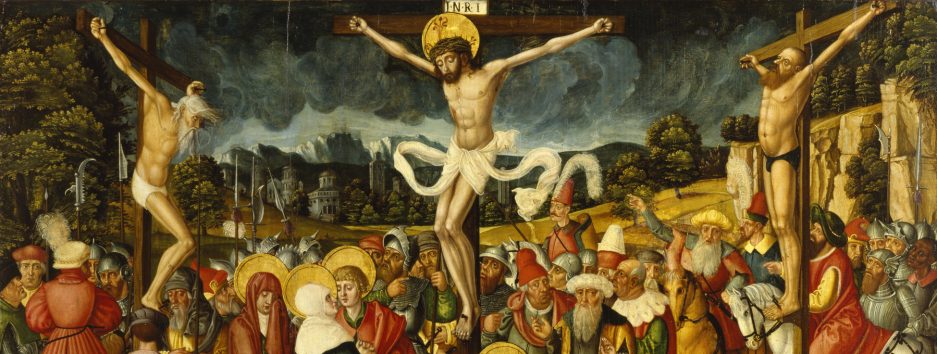
Carrington doesn’t narrate madness; she mythologises it. Her prose is soaked in religious and alchemical symbolism: she imagines herself as Christ incarnate, the sacrificial victim for the sins of nations, as well as a participant in some occult chemistry of rebirth. In her world, the nurses are inquisitors, the doctors priests of a false science, and her own body the crucible in which the soul is boiled down to ash.
Psychiatry – that stern modern priesthood – labels this ‘psychosis.’ But Carrington insists on the grandeur of her visions. Here she’s not the ‘hysterical woman’ of medical report but the prophetess wandering in a desert of electrodes. She reminds us of Ezekiel, who saw wheels within wheels, or of Cassandra, cursed to prophesy with no one believing her. Except, unlike Cassandra, Carrington believed herself.
Her male Surrealist comrades – Dalí, Breton, Ernst – were delighted to exploit women as muses, priestesses, hysterics who conveniently poured forth visions while the men scribbled manifestos. But Carrington refuses this role. In Down Below, she’s not the muse but the author of her apocalypse. She seizes the archetypes and remakes them: Christ as female, alchemy as bodily agony, asylum as underworld.
This is perhaps why the text remains so unsettling: it’s not a ‘confession’ of madness but a staking of territory. “This is my delirium,” she declares, “and I will write it before it writes me.” In that sense, Carrington prefigures Sylvia Plath’s Bell Jar, or even the feminist reclamations of the 1970s – though she herself would’ve shrugged at the labels.
There’s a perverse philosophy at work in Down Below. What’s sanity, after all? Is it the calm acceptance of a lunatic world – war, genocide, concentration camps – or is it the shrieking recognition that reality has become intolerable? Carrington’s collapse looks less like a personal failure than an existential diagnosis of civilisation itself.
I think of Nietzsche, who declared that when you gaze long into the abyss, the abyss gazes into you. Carrington gazed, and she tumbled headlong. Yet unlike Nietzsche, she crawled back up with her notebook. Or consider Kierkegaard, who said that anxiety is the dizziness of freedom: Carrington’s dizziness was less philosophical and more convulsive, but the effect was the same. She plumbed the depths and returned to say, “Behold the abyss – and pass me a pen.”
And yes, for all its horror, Down Below has moments of black comedy. How could it not? To believe oneself both Christ and a chess piece in the great game of nations has a Monty Python tang to it. (Indeed, had she lived in Britain through the 1970s, Carrington might have been cast as an extra in Life of Brian.) Even her tormentors, with their ridiculous Cardiazol syringes, resemble second-rate alchemists, less Paracelsus and more pantomime villain.
It’s the comedy of extremity, the farce of institutions convinced of their own seriousness. Much like modern psychiatry, or indeed modern government.
Carrington survived – barely – and carried her demons across the Atlantic to Mexico, where she lived to the astonishing age of ninety-four. In her art and writing, the madness never left her, but it was transfigured. Her canvases teem with hybrid beasts, witches, spectral nuns, white horses – the iconography of Down Below reborn in colour.
The text itself remains slim, difficult, uncomfortable. It doesn’t entertain; it sears. And perhaps that’s the point. We’re accustomed to literature about madness that tidies the horror into digestible lessons. Carrington offers no such comfort. She drags us into the furnace and leaves us there, trembling, wondering if we too are sane merely because our delusions are collective.
Down Below isn’t simply a memoir of breakdown. It’s a testament, a scripture of the underworld, and a reminder that art’s rawest power often comes not from the polite salons of Surrealism but from the padded cells of the asylum.
If Dante descended through Hell with Virgil, Carrington descended alone – and came back clutching her own gospel, scribbled in the smoke.

 Wording