There are books that make me think, and there are books that make me squirm. Dostoevsky’s Notes from Underground manages both – a confessional so raw it feels like eavesdropping on a man’s nervous breakdown, with philosophy as his chosen weapon. It’s not so much a novel as an exorcism, written in ink and bile.
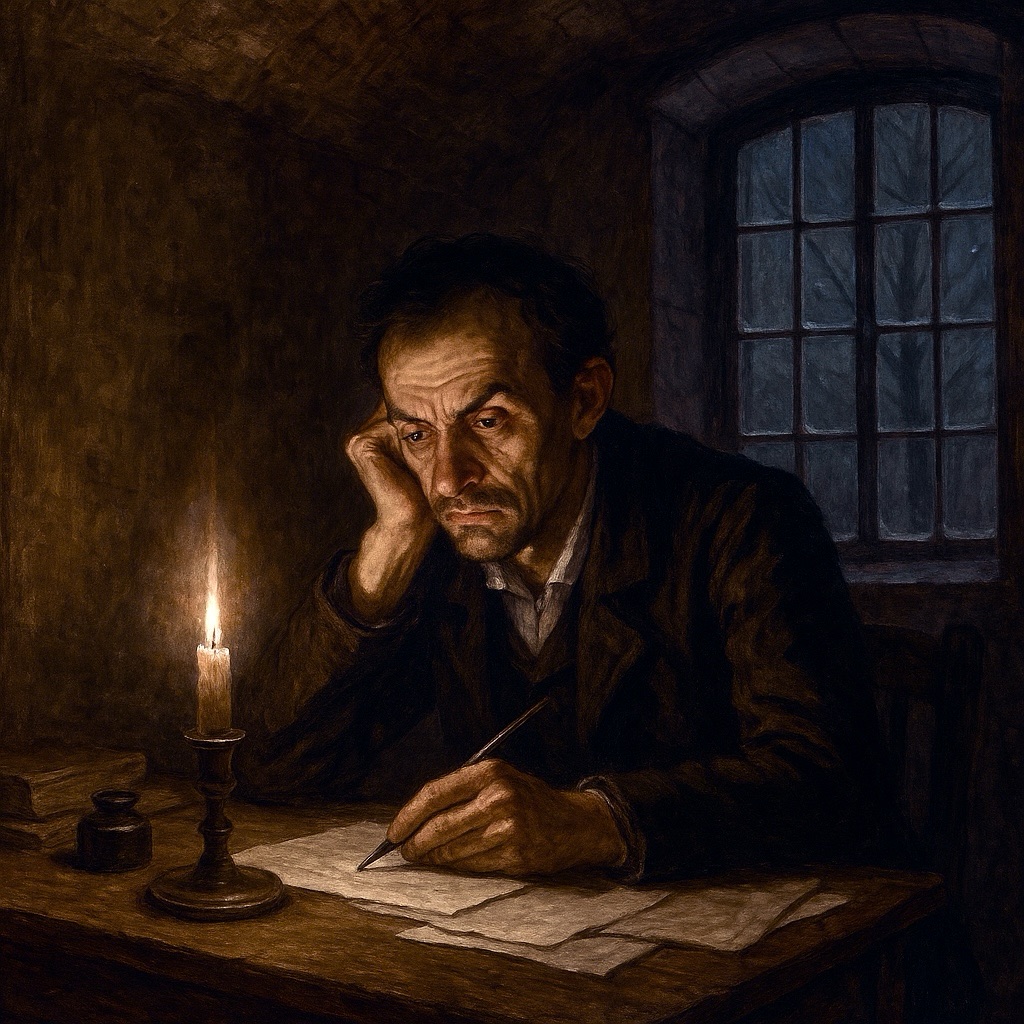
Our narrator, an unnamed gentleman of St Petersburg, is the kind of man who could ruin a picnic just by attending it. He’s the original internet troll, long before Wi-Fi or wellness gurus existed – a man who resents everyone for being happier than himself, and himself for being so resentful. He doesn’t so much speak as he boils over, with sentences that hiss like steam escaping from a cracked kettle. And yet, in his madness, there’s method; in his bitterness, strange lucidity.
This ‘underground man’ rejects everything that society calls progress – reason, order, self-improvement. He looks at the bright, rational 19th century with all its engineers and reformers and says, ‘You can keep it.’ To him, man isn’t a machine but a contradiction wrapped in self-awareness. Give him paradise, and he’ll dig a hole just to complain about the view. Promise him happiness, and he’ll take offence at the implication he could be satisfied. Dostoevsky understood, long before Twitter, now X, that man’s truest instinct isn’t to be good, but to be contrary.
The comedy lies in how honest this is. The underground man admits what everyone else politely conceals – that much of our moral virtue is theatre and our politeness a form of cowardice. He mocks the rationalists who claim that man, if properly educated and well-fed, would behave decently. ‘Give him a full stomach and he’ll behave!’ they say. But Dostoevsky replies, ‘Have you met man?’ Feed him, and he’ll bite the hand that holds the spoon, just to prove he’s free.
There’s something of the biblical rebel in him, too – a Lucifer with a library card. Like Job without God, he demands to suffer on his own terms. He’d rather choke on freedom than be spoon-fed virtue. And so he retreats underground, not out of cowardice but pride – a sort of moral hibernation, where he can sulk in peace and sharpen his complaints. In this sense, his ‘underground’ is both cellar and sanctuary, coffin and confessional.
Psychologically, the book is a minefield. The man’s torn between craving connection and despising it, like a cat that bites the hand it just begged to stroke. His logic coils and contradicts itself until truth and spite become indistinguishable. Yet we recognise him. He’s the secret voice that speaks when the lights are off – the part of us that enjoys being miserable because at least it proves we’re alive.
Dostoevsky, of course, is laughing at us the entire time. His underground man isn’t simply pathetic – he’s prophetic. Modern man, glued to his phone, scrolling through his grievances, would find a kindred spirit here. We too write our ‘notes from underground,’ only ours are tweets and status updates. We too measure our existence by how cleverly we can sneer at others. And we too, like Dostoevsky’s anti-hero, call it self-expression when it’s really self-torment.
It’s a rebuke to every Enlightenment optimist who ever believed that progress would make us moral. You can dress man in reason, but he’ll still dance barefoot in chaos. You can light the streetlamps of civilisation, but his shadow grows only darker. As Kierkegaard said – another expert in the art of anxiety – ‘The self is a relation which relates itself to itself.’ Dostoevsky’s underground man proves this with every syllable: he’s a man talking himself into existence, one contradiction at a time.
The work’s almost demonic in its insight. Pride, after all, was the first sin – and our narrator is practically its patron saint. He refuses redemption, not because he doesn’t believe in it, but because he’d rather be damned by his own hand than saved by someone else’s. It’s the ultimate ego trip: a man insisting that his misery be his masterpiece.
And yet, amid all this irony, there’s a strange kind of grace. The underground man, for all his venom, is honest. Brutally, embarrassingly honest. He tells the truth no polite society wants to hear: that man, when confronted with goodness, prefers the gutter. He’s what every saint might have become without God – intelligent, miserable, and uncomfortably self-aware.
Dostoevsky once said that if you want to understand man, watch him at the edge of a cliff. In Notes from Underground, he pushes him off – and records the descent. But he does so with such wicked humour and psychological brilliance that we laugh even as we fall. It’s less a warning than a wink, a reminder that the abyss doesn’t just stare back; it sometimes smirks.

 Wording