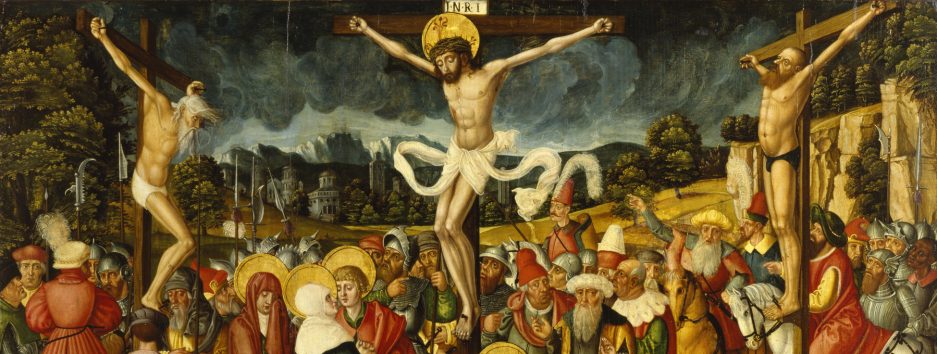
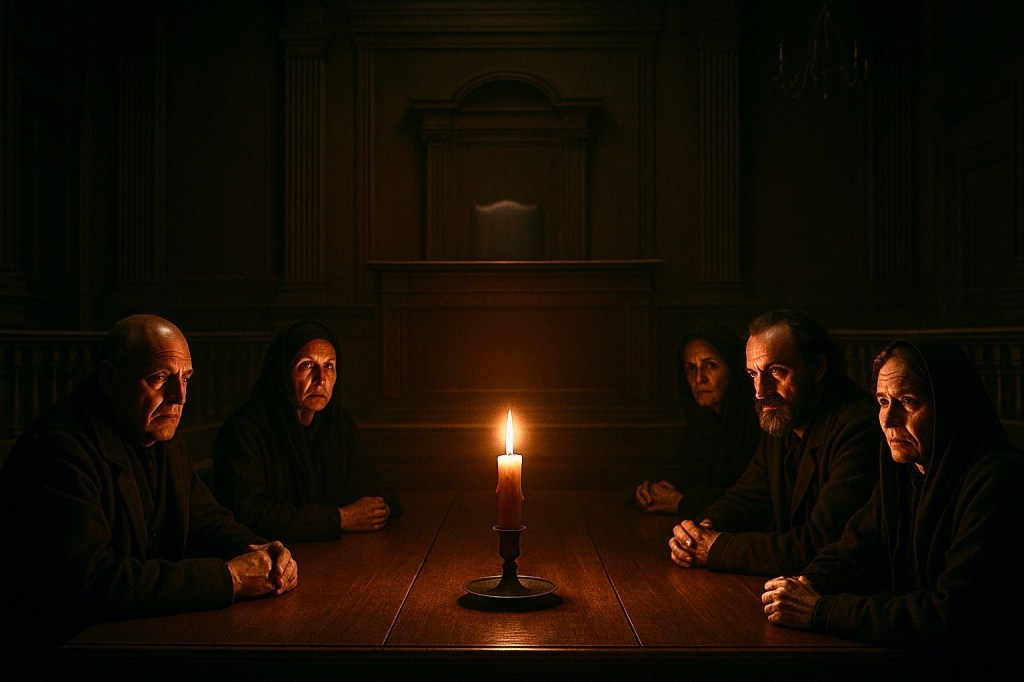
The Trial of God is a courtroom drama in which the accused is the Almighty Himself, and the charge is silence. It’s not merely literature, but an act of theological rebellion, a Job rewritten for the smoke-stained century.
Elie Wiesel, who survived the unspeakable and somehow found words anyway, didn’t write this work to comfort. He wrote it as a cry – and not the polite sort of cry that fades into prayer, but the defiant shout hurled toward a God who seems to have turned His face away. The result is part passion play, part moral inquest, and entirely human: the ancient question, ‘Why, Lord?’ delivered this time with the solemnity of a court order.
Set in a world still smouldering from atrocity, the play’s premise is terrifying in its simplicity. If justice is divine, and yet evil prevails, then either God is guilty or mankind’s alone. Wiesel’s characters wrestle with this paradox not from an ivory tower, but from the ruins of faith itself. Their theology isn’t learned from books, but from ash and bone. They don’t debate doctrine – they cross-examine it.
And yet, for all its darkness, there’s strange beauty in Wiesel’s audacity. He dares to take the oldest story in Scripture – the suffering of the innocent – and stage it as a trial, as though heaven might be brought to account before the laws it wrote. It’s both absurd and magnificent, like Don Quixote suing the windmill. The absurdity, of course, is the point. In a universe so silent, the act of questioning becomes a kind of faith – the last fragile thread connecting man to God.
Theologically, it’s an earthquake. Job demanded an answer; Wiesel demands a verdict. But his blasphemy is holy, because it refuses to let God vanish without notice. The trial isn’t atheistic – it’s wounded belief, faith limping on a broken leg. It acknowledges that love, once betrayed, still aches for the betrayer. This isn’t the nihilism of Nietzsche, but the despair of a lover left unanswered.
Wiesel understood what many philosophers missed: that silence can be more terrible than denial. An atheist can argue with a believer, but who argues with an absence? To live through horror and still ask God ‘why’ is already to confess belief in something beyond horror. The trial, therefore, becomes a ritual of remembrance. Even in accusing God, the characters testify that He once spoke – and perhaps, might again.
The play also serves as moral mirror. In placing the divine on trial, man unwittingly reveals his own indictment. Every accusation – every charge of cruelty, neglect, indifference – rebounds toward the accuser. For who allows evil if not the indifferent man beside it? Wiesel knew that our greatest terror isn’t that God abandoned us, but that we replaced Him. The empty heavens merely reflect the courtroom of the human heart, where we’re both jury and defendant.
Stylistically, The Trial of God is spare, ritualistic, and searing. The dialogue burns with irony; the humour, when it flickers, is black as a charred Bible. There’s no melodrama here – only the dignity of exhaustion. It’s the poetry of the aftermath: speech stumbling over silence, and still refusing to shut up.
In moral tone, it recalls Kafka’s The Trial, but with a reversal of roles. Here the accused is divine, not human – and yet the atmosphere of absurd justice is identical. Both Kafka and Wiesel recognise the same terror: that meaning itself may stand before a tribunal, speechless, while bureaucrats of reason take notes.
And yet, somehow, Wiesel’s darkness carries light. He reminds us that to curse God isn’t to forget Him – that rage, grief, and accusation are the prayers of the wounded soul. Even in its fury, the play affirms that man can’t live without some echo of the divine. Silence may rule the heavens, but humanity still speaks, still remembers, still holds court in the name of love betrayed.
By the final pages, one feels not despair but recognition: that perhaps the truest faith isn’t certainty but protest. To question God is to keep the dialogue alive – to hammer upon heaven’s locked door until the knuckles bleed, because to stop knocking would be to admit there’s no one home.
In that sense, The Trial of God is less a play than a prayer disguised as blasphemy. It shows that the absence of God isn’t the death of faith, but its final test – the moment when belief must learn to breathe without air. Wiesel’s courtroom may never deliver a verdict, but the act of convening it is victory enough. Humanity, though wounded, still insists upon meaning. The silence remains, but it’s been interrupted.

 Wording
But God isn’t absent. Jesus’ coming showed us that.
And I never have a problem with people screaming out their pain. But I do have a problem when, as you say “But his blasphemy is holy,”. That is what exactly what God was addressing in Job. Blasphemy is not holy, ever.
I completely understand where you’re coming from, and I agree that blasphemy in its true sense – a rejection of God – isn’t holy. What I meant in calling it ‘holy’ was more paradoxical: that even in outrage and protest, there can be faith. The cry itself – even if it sounds like defiance – is still directed toward God, not away from Him. Job’s anguish, Jeremiah’s lament, even Christ’s ‘Why hast Thou forsaken Me?’ – they’re all part of the same desperate conversation between man and heaven. Wiesel’s ‘blasphemy’ is really that kind of wounded belief, not disbelief.
Thank you for clarifying…
You’re welcome. I’m forever trying to understand things myself – whom sometimes I confuse totally! 🤣