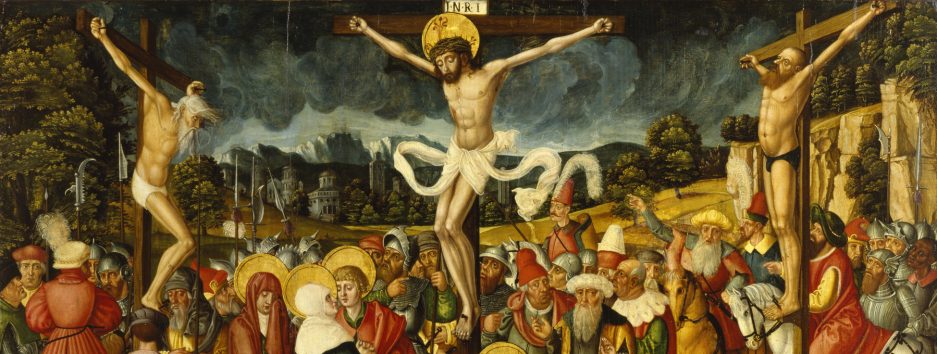
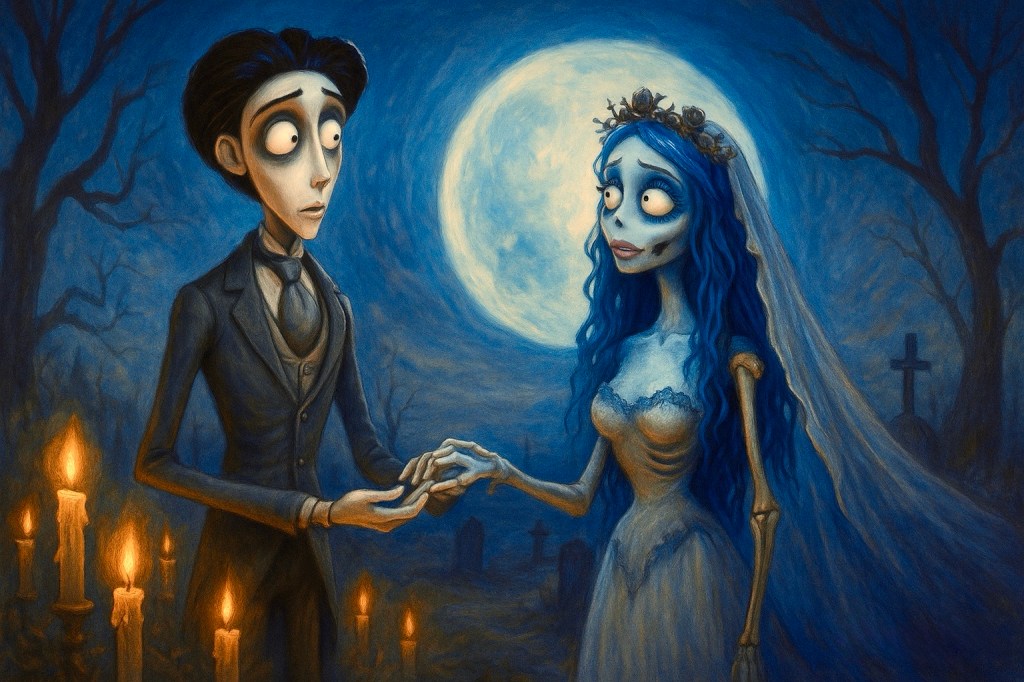
Illustration inspired by Tim Burton’s Corpse Bride. Original concept and rendering © Wordinguk, 2025.
I’ve been working on my book again — circling the same themes of death, memory, and the strange comedy of human attachment — when Tim Burton’s Corpse Bride came to mind. It often does, that little animated elegy; the film has always felt like an uninvited guest at my writing desk, sipping tea with the dead and asking why the living take themselves so seriously.
Burton’s stop-motion masterpiece is ostensibly a children’s film, but that’s like saying a gravestone is merely decorative. Beneath the whimsy, Corpse Bride is a gothic meditation on love and mortality — one that feels far closer to truth than the syrup of modern romance. Its world of living people is painted in funereal greys, while the underworld thrums with warmth, colour, and jazz. It’s a glorious inversion: the dead dance, while the living sit stiffly at the table pretending not to rot.
As I return to my own writing, surrounded by pages that smell faintly of tea and mortality, I’m reminded that the Victorians understood this paradox far better than we do. Burton’s film inhabits that same candlelit tension between repression and release — between the corseted manners of the drawing room and the wild laughter of the grave. When Victor nervously rehearses his wedding vows in the forest and accidentally proposes to a corpse, he performs the ultimate Freudian slip: the lover’s unconscious acknowledgment that marriage and death have long shared a bed.
Emily, the titular Corpse Bride, rises from her woodland tomb not as a monster but as a ghost of memory — one part lover, one part lesson. Her tragedy isn’t that she’s dead, but that she remembers what it meant to be alive. She’s Shelley’s Frankenstein rewritten as a love story: the creation yearning not for vengeance but for tenderness. When she finally releases Victor to marry the living Victoria, she dissolves into butterflies — the old pagan and Christian symbol of resurrection. Burton, in that moment, redeems the Gothic from its reputation as mere gloom and restores it as theology in disguise.
There’s a wonderful irony in the fact that the dead are far more humane than the living. Down in the Underworld, skeletons sing, bones click like castanets, and even decapitated heads grin with existential acceptance. They have no illusions left; and perhaps that’s why they’re happy. Above ground, the living are strangled by status, propriety, and class anxiety. You can almost hear Marx groaning in his coffin: the bourgeoisie never looked so embalmed.
I sometimes think my own book has wandered into similar territory — a waltz between the sacred and the ridiculous, where grief wears a top hat and irony carries a candle. Like Burton’s puppets, my characters (and the real people they’re drawn from) are all stitched together from bits of memory, humour, and regret. I polish them, pose them, make them speak — and yet, somewhere beneath the artifice, they move of their own accord. Writing about the dead isn’t so different from animating them.
Corpse Bride may masquerade as fantasy, but it’s a parable for every undertaker, poet, and broken-hearted fool who ever mistook silence for peace. It whispers that there’s life beneath the grave, if only we’d stop embalming ourselves in fear. Love, even unfulfilled, has a kind of resurrectional logic — it doesn’t die; it just changes its address.
I think of Emily again, looking up at the moon before she vanishes, and I see something profoundly human in her decay. She is hope in skeletal form — the promise that beauty survives even when the flesh gives way. Death, after all, is only the last dance before the music fades. And if you listen closely, as Burton does, you can still hear the bones keeping time.
So perhaps, as I continue to write my own book of ghosts and giggles, I owe a small debt to that animated widow in blue. She reminds me — as all good art does — that the line between life and death is thinner than a page, and that sometimes the truest love stories are written in the dark.

 Wording