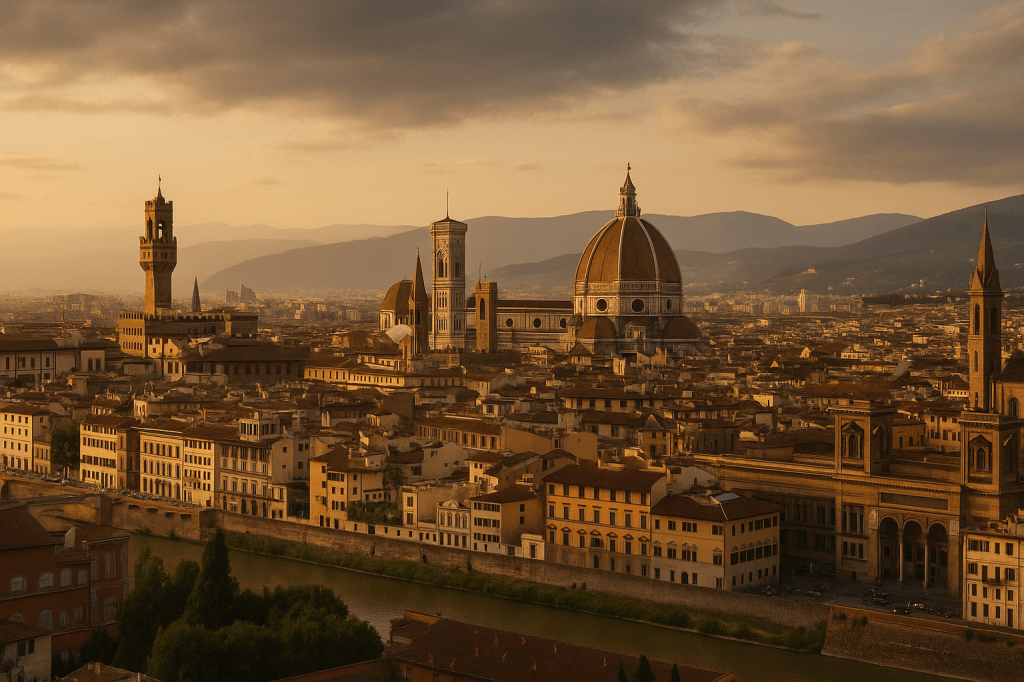
They say every paradise has a pit beneath it. Florence, for me, has always shimmered like a painted heaven — that impossible marriage between reason and rapture. As a child, I was bewitched by her domes and frescoes, the polished glow of Botticelli’s Venus, and the ghostly gaze of Savonarola who once tried to burn beauty itself for fear it might eclipse God. I devoured Boccaccio’s Decameron as if each tale were a communion wafer soaked in sin and sunlight. Florence seemed to me the altar of civilisation — the place where man learned to make eternity blush.
But even the marble saints, if you stare long enough, seem to sweat. The same streets that once echoed with the laughter of apprentices and philosophers later whispered with rumours of the Mostro di Firenze — the Monster of Florence. A name that sounds almost mythological, like some Renaissance chimera painted on the underside of the human soul. Between 1968 and 1985, couples were found slaughtered in their cars across the Tuscan countryside — lovers in life, sacrificial offerings in death.
The newspapers called him a monster, but I’ve always thought of him as a mirror. Every society fashions a beast in its own image, and Florence — that marble bride of civilisation — wasn’t spared. The artist has his chisel; the killer his Beretta. Both shape the human form, though only one leaves beauty in his wake.
It’s impossible not to feel the irony: a city that once gave birth to Leonardo, Michelangelo, and Dante also nurtured a modern horror fit for an Inferno. The Monster of Florence murders were methodical, ritualistic, and obscene — couples shot, women mutilated, fear seeping through the vineyards like spilled Chianti. The gun, a .22 calibre Beretta, became the devil’s signature — a grotesque pen writing its own gospel of dread across the rolling hills of Tuscany.
I’ve read the case files and the fevered theories: the Sardinian trail, the misfired investigations, the alleged conspiracies of the Mafia and the Masons, of doctors harvesting organs for rituals, of politicians and priests whispering in corridors of power. It’s tempting to see a grand pattern behind the horror — for what human mind can bear the idea of evil without purpose? The philosopher seeks meaning as a drunk seeks a lamp-post: more for support than illumination.
Yet perhaps the true terror of the Monster lies not in conspiracy but in chaos — that cold, indifferent void Kierkegaard and Camus both glimpsed when they stared into existence too long. Evil, like God, is often silent; both test our appetite for meaning. We crave order as a starving man craves bread, and when the world offers us blood instead, we invent theology to justify the taste.
Florence has always known the bargain between beauty and damnation. The Medici built their palaces on gold filched from the poor, the Church gilded its ceilings while the plague rotted its faithful below. Savonarola tried to purify the city by fire, and for his zeal was himself reduced to ash. The city, like the soul, has never been content with moderation — it must either paint angels or summon demons.
If the Renaissance was man’s ascent to godhood, then the Monster of Florence was his fall back to dust. Civilization is only ever a thin plaster laid over the skull of barbarity. Freud might have called it the ‘return of the repressed’; Jung would have seen it as the shadow of the collective soul. I see it simply as proof that the human heart still beats in the dark long after the candles of reason have burned out.
The psychologists, the priests, and the police all searched for motive, but perhaps the deeper question is metaphysical. The killer’s choice of lovers’ lanes — those secret groves of tenderness — suggests not merely lust or envy but a hatred of intimacy itself, a desecration of union. There’s something diabolically symbolic in that: Eros nailed to the cross of Thanatos. It’s as if Death, jealous of Love, demanded equal adoration beneath the Tuscan moon.
Much has been written about the alleged connection between these murders and the secret lodges of power — the Masons, the Propaganda Due, even whispers of Satanic rites. Italy in the 1970s and 80s was a cauldron of corruption, espionage, and holy rot — a theatre where Church, State, and Underworld all danced together, pretending not to know each other’s steps. If truth is the first casualty of politics, Florence was by then a charnel house of half-truths.
And yet — what’s a conspiracy but the modern form of mythology? The Greeks had their Olympians; we have our cabals. The gods have merely traded thunderbolts for telephones. We fear hidden hands because we cannot face the visible emptiness. Even Nietzsche, that great hammer of certainties, would have recognised in the Monster the grim laughter of nihilism: a man killing to prove that meaning has already died.
My former wife once promised that she would take me to Florence for my sixtieth birthday. That pilgrimage won’t happen now. And perhaps it’s just as well. The older I get, the less I belong among the crowds. I’d rather admire the city from afar — as one might love a woman too perfect to touch. To walk those streets now, knowing their history, might be to spoil the dream. Better to imagine her forever bathed in Renaissance light, her sins and saints mingled like pigments on a fresco, fading beautifully into time.
Besides, distance has its own kind of devotion. One need not visit the altar to feel the flame. Perhaps that’s the secret of faith itself: to love without possessing, to worship what one can never quite reach.
Whenever I think of Florence now, I picture her not as a museum but as a mirror. Behind every saintly statue lurks a sinner’s reflection; behind every marble angel, a beast waiting to be carved free. The Monster of Florence was not an aberration but an echo — the scream of a civilisation that’s forgotten its own shadow.
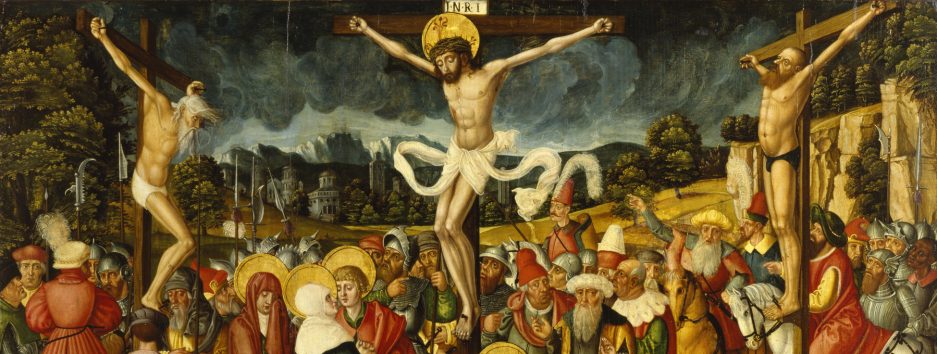
As a Christian (or at least a hopeful heretic), I’m reminded that even Christ was betrayed in a garden, and that paradise, however walled, still harbours serpents. The philosopher in me suspects that evil is simply beauty with its back turned; the psychologist knows that repression breeds monsters; the theologian mutters that Hell is the absence of love. And I, the writer, can only conclude that Florence, for all her splendour, remains both cathedral and confessional — a city where art and atrocity kneel side by side.
We’re all, in the end, a little Florentine — painting our halos while hiding our horns.

 Wording