Madness isn’t a visitor, Jung tells us — it’s a tenant. A hereditary lodger sealed into the house of the psyche long before we learned to speak. Most people spend their lives pretending they don’t hear it pacing upstairs. They turn the radio up. They shut the door with a polite smile. They medicate the rattling doorknob.
But madness waits. Madness remembers.
What Jung is really saying is this: the part of you that terrifies you most is the part that knows you best. And if you ignore it, it will tear through the wallpaper of your life with claws sharpened on childhood nights.
We speak as if sanity were a fortress, but it’s only a paper lantern trembling above a bottomless well. One gust of wind — a trauma, an old memory, a whisper from the unconscious — and the flame flickers. The darkness climbs.
People fear madness because they think it’s death. But Jung understood something more frightening:
Madness is life that has nowhere to go.
Repressed grief becomes a noose.
Buried rage becomes a furnace in the bones.
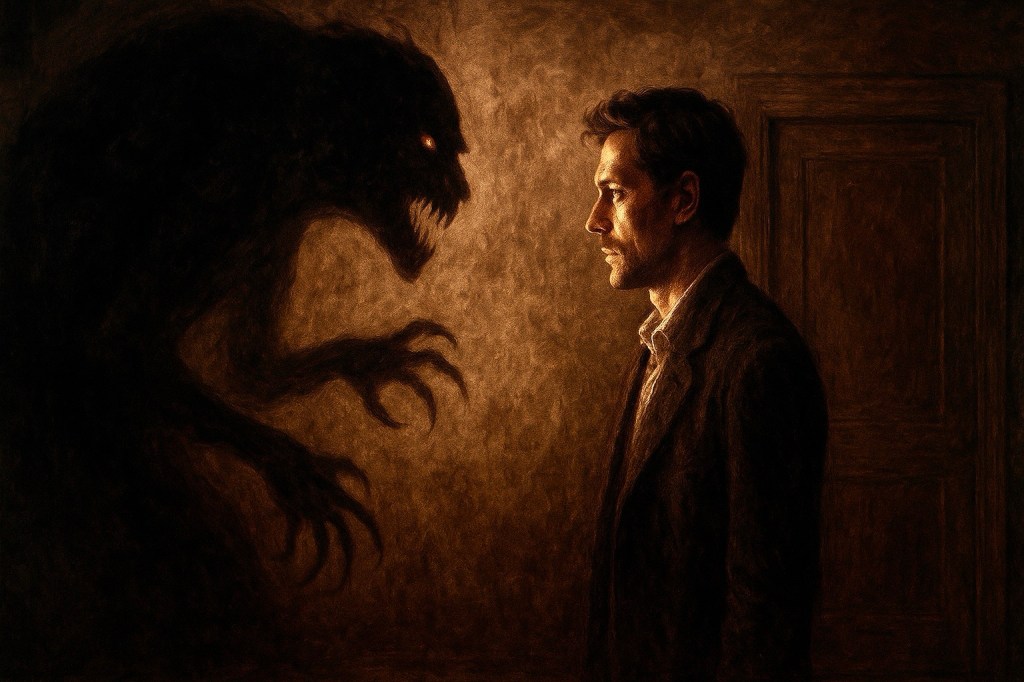
Unspoken trauma becomes a figure in the corner of the room.
And when you refuse it entry, it comes in through the walls.
To ‘give it life’ isn’t to celebrate chaos — it’s to stop lying to yourself about the creatures that live under your own ribcage. Your shadow will not stay dead simply because you pretend you’ve buried it. Shadows resurrect themselves.
Give it life, Jung says — meaning:
acknowledge the horror. Name it. Speak to it. Let it sit opposite you in the dimly lit room and tell you what it wants.
Because when you ignore the beast, it feeds in secret.
But when you confront it, it shrinks into something human.
I’ve long believed that the psyche isn’t a cathedral but a catacomb. The sacred bones of the self lie beneath the earth, arranged not in order but in warning. Anyone who descends without a lantern may mistake their own reflection for a demon.
And perhaps it is.
Jung never flinched from that truth:
the demon and the self are often the same figure, seen in different light.
When madness is despised, it becomes vindictive.
When madness is feared, it becomes predatory.
But when madness is given life — when you open a small window and let it breathe — it transforms. It becomes memory, symbol, dream. It begins to speak in metaphors instead of screams.
Those who refuse this will forever be haunted by the room they never enter — the room that exists in every one of us, locked from the outside, pulsing with a dread that feels like prophecy.
And Jung, with that unsettling calm of his, simply hands us the key.

 Wording