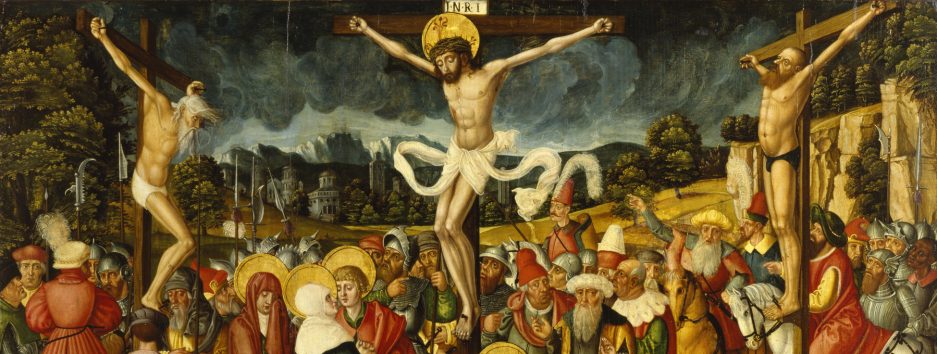
Ecclesiastes 11:1, the art of giving, and the peculiar futility of being alive
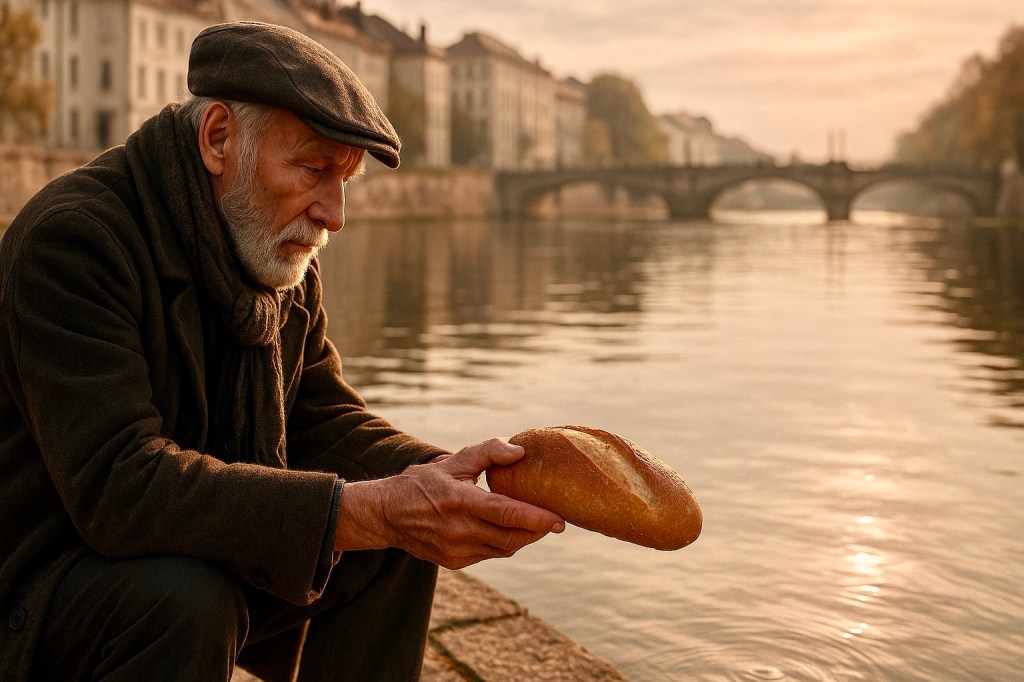
“Cast thy bread upon the waters: for thou shalt find it after many days.”
— Ecclesiastes 11:1
There’s something heartbreakingly hopeful about that line, isn’t there? Something that makes you want to nod sagely, as if you understand it, even though – let’s be honest – you’re not entirely sure what it means. I’ve always imagined a man in sandals throwing a Hovis crust into the sea with an expression of profound wisdom and a slight undertone of madness, like a prophet who’s been out in the sun too long. And yet, like so much of Ecclesiastes, it lingers in the mind long after its sense has floated off like… well, like bread on water.
Of course, the scholars will tell you it’s an ancient metaphor for commerce. Ship your grain overseas, they say, and trust it’ll come back with profit in due time. That may be historically accurate, but it’s also terribly uninspiring. I prefer to read it existentially – with a splash of absurdism, a dash of mysticism, and perhaps a nod to the idea that sometimes you just have to do something irrationally kind and wait for the universe (or God, or grace, or chaos) to decide what it means.
Waterlogged Loaves and Waiting Games
There’s something dreadfully undignified about the idea of wet bread. It sinks, it swells, it dissolves into a pale, glutinous mess. And yet, this is precisely the image offered: throw it out anyway. Don’t wait for favourable tides or a divine receipt. Just do the thing – give, risk, relinquish – and trust that “after many days,” something will return. Maybe not bread. Maybe not what you hoped for. But something.
The world we inhabit is deeply suspicious of that kind of trust. We live in an age of algorithms, metrics, and immediate feedback. If a post doesn’t get enough likes within the hour, it’s binned. If an investment doesn’t yield by the second quarter, it’s dropped. Even our acts of charity come pre-packaged with press releases and tax relief. But Ecclesiastes would have us be fools – divine fools – scattering our efforts not with spreadsheets but with faith.
Wilde Weather, Kafka Currents
Oscar Wilde, always ready with a pin for the pious balloon, once quipped, “No good deed goes unpunished.” And isn’t that the fear? That you’ll offer your best and be met with silence? That your loaf will float out, go soggy, and be pecked apart by cynical seagulls?
Franz Kafka would understand. In The Trial, the protagonist is condemned by a system he cannot see or reason with, and still he persists. There’s a bread-upon-the-waters quality to that: the futility of effort, the absurdity of striving, and yet… the undeniable nobility in continuing regardless.
To Seven, and Also to Eight
The verse immediately following reads: “Give a portion to seven, and also to eight; for thou knowest not what evil shall be upon the earth.” I find this quietly brilliant. Give abundantly, even irrationally, because you don’t know what tomorrow brings. You don’t know who will need it. You don’t even know if you’ll be around to see it bear fruit. But do it anyway.
It is an ethic of holy wastefulness – a sacred prodigality. Like the woman with the alabaster jar in Matthew 26, who poured her costly perfume over Jesus while the disciples muttered about the price. “Why this waste?” they grumbled. But some things are only meaningful because they are wasted. Because they are not calculated, repaid, or explained. Because they are given.
Bread in the Age of Burnout
In my darker moods (which are, admittedly, not rare), I sometimes wonder whether anything I’ve said, written, or done has truly mattered. I think many of us do. The creeping dread that we are shouting into the void, performing for ghosts. But then I remember this line – not as instruction, but as permission.
Permission to write a letter to someone who may never read it.
To love someone who may never love you back.
To plant a tree you’ll never see grow.
To say “thank you,” even if the person doesn’t deserve it.
To forgive, even when the other party thinks they’ve done nothing wrong.
The bread you cast is not your property once it leaves your hand. It is an offering. An act of hope. And, in a very strange way, a kind of prayer.
The Return (After Many Days)
And what of the return? Ah, that ambiguous promise. You shall “find it.” But find what? The same bread? A crusty French baguette instead? Perhaps not even bread at all – perhaps wisdom, resilience, or an unexpected friend. Perhaps the return is not in kind, but in character. As C. S. Lewis said, “I do not pray because it changes God. I pray because it changes me.”
The act of casting is transformative. It pulls you out of your self-preserving shell. It forces you to live in trust rather than certainty. And in a world terrified of loss, that is its own kind of power.
A Final Loaf
So then: cast your bread. Cast it with laughter, with tears, with reckless grace. Let it float. Let it sink. Let it be pecked by metaphorical ducks if it must. But don’t hoard it. Don’t clutch it close like a miser with his last crust. The hands that release are the ones that are open.
And maybe, after many days – many years – many lives – it will return. Maybe not as bread. But as blessing.
Or, as Leonard Cohen once said, “There is a crack in everything. That’s how the light gets in.”
Let the bread break. The light will find its way.
Note: By the way, I’m not taking about money – that’s how those Prosperity Gospel folk reel you in.
If you’ve enjoyed this, why not support me and, Buy Me a Coffee (oh, now’s there’s irony).

 Wording
Howza bout you buy ME a coffee?
😉
With pleasure 👍
I just realized, I don’t drink coffee any more. Kind of shot myself in the foot with that one 😀
Actually I only have perhaps one coffee a week. 😁 Perhaps I should change it to ‘Buy Me a Chocolate Digestive’.
😀