There are books that don’t so much entertain as they haunt. They don’t ask for your approval, or even your sympathy – they simply step into the quietest room of your mind and sit there, uninvited, until you are forced to acknowledge them. The End of the Affair by Graham Greene is one of those novels. It arrives like a forgotten letter from a former lover, faintly perfumed and dog-eared, and once opened, it never quite closes again.
What struck me most, on reading it, was not the affair itself – though it’s there, twisting and tangled like ivy round a crumbling wall – but the ache that follows. The novel is less concerned with love in its ecstatic flowering, and more with what remains after it has withered: resentment, longing, spiritual confusion. And, in some rare cases, a quiet kind of grace.
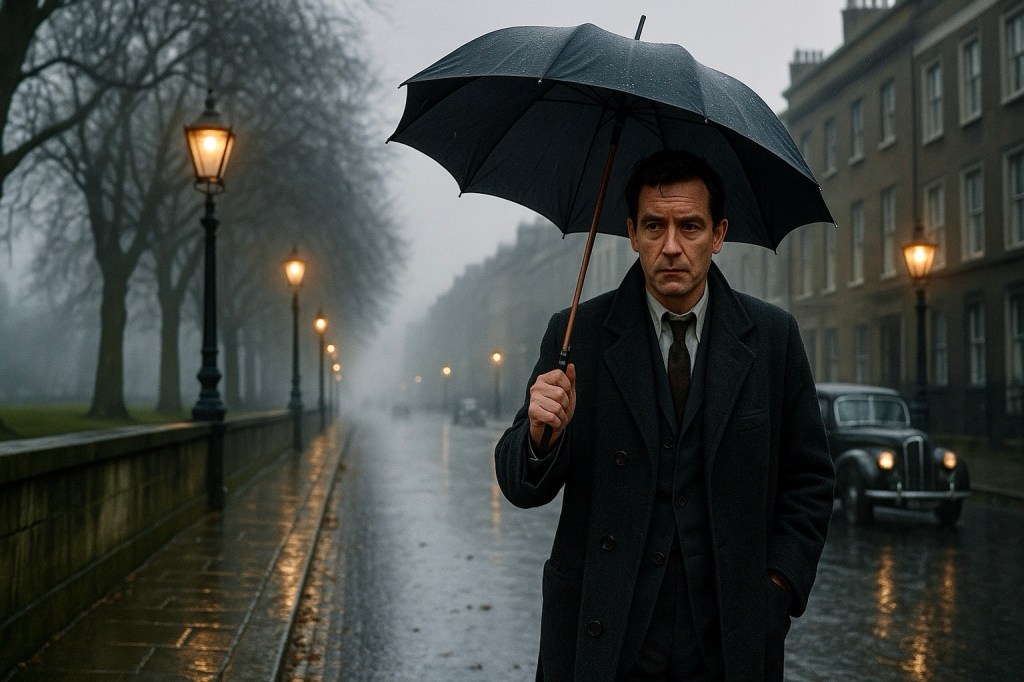
Set against the grey and crumbling backdrop of wartime London, Greene gives us a story drenched in rain, in ash, in bomb-dust and moral fatigue. But the real devastation is internal. It’s not a city reduced to rubble that preoccupies us – it’s the human soul, mid-collapse, trying desperately to rebuild itself without knowing whether to reach for reason, or for God.
There’s a desperate honesty in Greene’s writing that borders on cruelty. He has no time for sentimentality. Love, in his hands, is not the sugary nonsense of cinema – it’s a kind of sickness, an obsession that humbles and humiliates. And yet, for all its ugliness, it’s also the one thing capable of tearing open the veil that separates man from the divine.
The novel invites uncomfortable questions: What does it mean to believe in something, or someone, with the totality we once reserved for a lover? Is faith a betrayal of reason, or its natural endpoint? And perhaps more disturbingly – can the loss of love be the very thing that saves us?
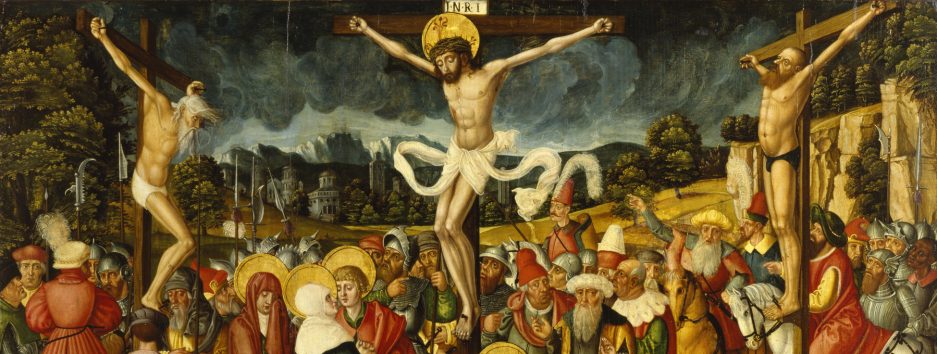
I found myself wondering, more than once, whether Graham Greene believed in redemption, or whether he merely wrote about it as one might write about a ghost – something glimpsed through a curtain, never quite confirmed. His so-called ‘Catholic novels’ are never pious. They are bruised, bloodied, suspicious of virtue. The End of the Affair feels less like a conversion and more like a surrender. As if the soul, exhausted by its own cleverness, finally gives in – not to dogma, but to something deeper and more terrifying: mercy.
There’s a particular kind of spiritual crisis that can only come from great love. When we give ourselves entirely to another person and are met not with eternity but with silence or withdrawal, we are left with a hole shaped like a prayer. Greene doesn’t fill that hole with answers. He leaves it echoing.
It’s a deeply existential novel, not in the abstract philosophical sense, but in the private, late-at-night sense. The kind that comes to you when you realise that no amount of success or sensuality can protect you from grief, or the mystery of being alive at all.
Some writers show us how to live. Greene shows us how we fail to live – and how, sometimes, out of that failure, something unbearably beautiful is born.

 Wording