
I’ve touched on a similar theme in an earlier post, but as per my obsession with objects, I thought there’s be no harm indulging again.
There’s a sentence in Julian Barnes’ Metroland that hits with the sort of quiet, subcutaneous sting I’ve come to associate with him: Objects contain absent people. On the face of it, it’s a throwaway line. Something you might mutter while rummaging through a box of old letters or brushing the dust from a book left behind by a friend who’s since become either a stranger or a ghost. But like all the best lines, it unfurls. It haunts. It kneels beside you while you’re peeling an orange, and whispers: remember them?
Barnes, for the uninitiated, is something of a literary surgeon – he makes the incision with humour, but the knife is always sharp. In Metroland, his first novel, we follow Christopher, a suburbanite turned Parisian flâneur turned comfortable husband, who slowly comes to realise that the life he once mocked has its own quiet dignity – and its own grave cost. Metroland is, in many ways, a novel about becoming the very thing you once promised not to be. And this line – about objects and absences – carries the emotional freight of that transformation.
Because here’s the thing: people don’t really leave. Not completely. They become embedded in the furniture. They hide in teacups and scarves, in biro pens chewed at one end, in marginalia, in keys you’ve forgotten the lock for. They’re in the hairbrush with a single grey strand still coiled at the base. They’re in the umbrella you never returned. The old cassette tape with someone’s handwriting on it.
I recently found an old receipt in a book I hadn’t opened for a while – one of those tissue-thin things from some shop or other, dated precisely a month or so before my father died. I’d given him a book to look at, and used the receipt as a makeshift bookmark. I held it like it was a relic from Lourdes. I couldn’t bring myself to throw it away. What if that scrap of thermal paper still carried something of him? What if he was in it?
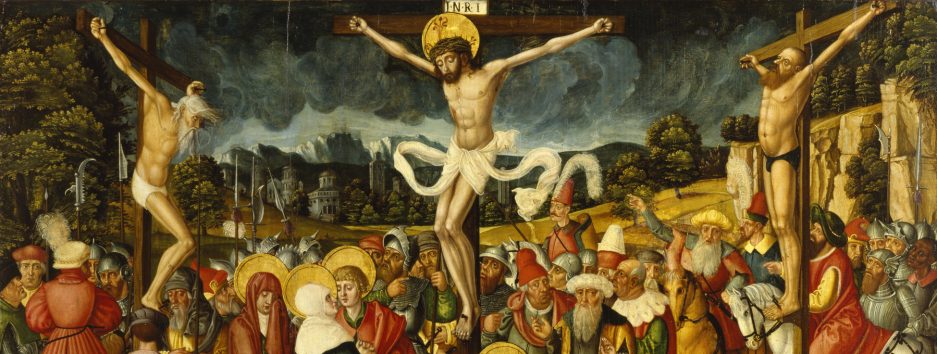
Theologically, it’s not far off the concept of relics. The Catholic imagination knows a thing or two about presence-in-absence. Bones of saints, veils of virgins, the hem of a robe that maybe once brushed against Christ himself. These are not just keepsakes – they’re contact points. Doorways. Touchstones for the sacred. Protestants, for all their industrious modernism, don’t really do that kind of magic. They’ve always been a bit squeamish about fingernails and thighbones.
But psychologically, we do it anyway. We imbue. We enshrine. Jung might call it projection; Freud, transference. I call it stubbornness. We refuse to accept vacancy, so we fill the silence with echoes. Sometimes I’ll hold a jumper to my face, as if it still holds the scent of someone I loved. It doesn’t. Not really. But the brain is a cathedral full of ghosts, and memory is its incense.
It’s all a bit Proustian, really. Though I’ve never once had a Madeleine moment. My moments are more like: I opened an old toolbox and found a screwdriver my dad once used to fix my bike. I wept in the yard for twenty minutes and then dropped it on my foot. We all grieve in our own way.
There’s something spiritual here too. In Genesis, God breathes into clay and it becomes a man. Matter, infused with presence. Maybe it works in reverse too – maybe when someone dies, or leaves, they breathe back into things. They dissolve into objects. A kind of reverse Pentecost: the Holy Spirit poured into cracked mugs and coat pockets.
But of course, there’s a danger in it. If every object is a reliquary, we risk turning our lives into mausoleums. There’s a fine line between memory and entombment. Between keeping a photo and setting up a shrine. I’ve met people who could not let go – not of people, but of their possessions, because the possessions were the people. The house becomes a haunted museum, and no new life is permitted to enter.
Still, I think I’d rather risk the clutter than forget altogether. The soul, after all, is a hoarder. It keeps what the world wants to discard. Broken shells. Unsent postcards. The keyring from a car we no longer own. These things may not speak, but they murmur. They nudge. They remind.
So yes, Julian Barnes, you slippery prophet of suburban nostalgia, you’re right: objects contain absent people. They are the proofs we carry for the case of having once been loved. And when we die, someone will open our drawers and cupboards and find us, hidden in teaspoons and notebooks and the backs of wardrobes, whispering:
I was here.

 Wording
We don’t “do” mysticism for the very good reason that the power of God isn’t something to be manipulated by humans for their own use. Simon Magus thought it was that way and ended up being rebuked by Peter. Plus, the Bible warns against magic users (in various terms) from old to new testament.
I quite agree that the power of God is not a party trick for human conjuring, nor is the Holy Spirit to be auctioned off like livestock, as Simon Magus discovered to his cost.
That said, I’d gently suggest that mysticism — properly understood — is rather different from magic. One seeks control; the other seeks communion. The mystic does not summon God, but surrenders to Him. It’s less “abracadabra” and more “Thy will be done.” Think less Gandalf, more Gregory of Nyssa.
Scripture’s replete with warnings against sorcery, necromancy, and attempting to divine power apart from God. But Scripture’s also thick with mystery: burning bushes, divine dreams, transfigurations, veils torn in two, voices from clouds, and the Spirit descending like a dove. Christianity is, in its bones, a mystical faith — the incarnation, the Eucharist, resurrection — these aren’t rational formulae, but sacred paradoxes.
Of course, when the mystical gets severed from orthodoxy, it can go truly haywire — and you end up with people claiming to channel Jesus while charging £9.99 for chakra realignment. But the answer to that isn’t to banish mystery; it’s to root it in reverence.
So no, I don’t “do” magic. But I do believe the Christian faith is at its richest when we stop trying to control God and instead open ourselves to the unknowable grace that moves in ways we cannot always name.
I suspect Magus wishes he’d had wings! 😁
Good to know where you stand. Thanks for explaining 🙂