Some songs drift like smoke and some songs weigh like stone. Judee Sill’s The Kiss is the latter: not a melody you whistle while waiting for a bus, but a requiem whispered in the confessional, heavy with sorrow, radiant with a kind of bruised grace.
Judee Sill herself was a paradox incarnate. Born in 1944, scarred by abuse, addiction, and loss, she carried in her soul both the music of the church and the howl of the street. A teenage armed robber, a junkie, a prostitute – and yet, when she sat at the piano, her hands summoned cathedrals. Out of that wreckage came songs of aching purity, as though she was forever trying to baptise her sins in the holy waters of harmony.
The Kiss is perhaps her most devastating prayer. It’s not a kiss of passion, nor the light brush of lips at a railway station, but something sacramental, almost Eucharistic. When she sings of the kiss, it feels like the culmination of longing itself: a kiss that redeems and damns, a kiss that’s as close to death as to love.
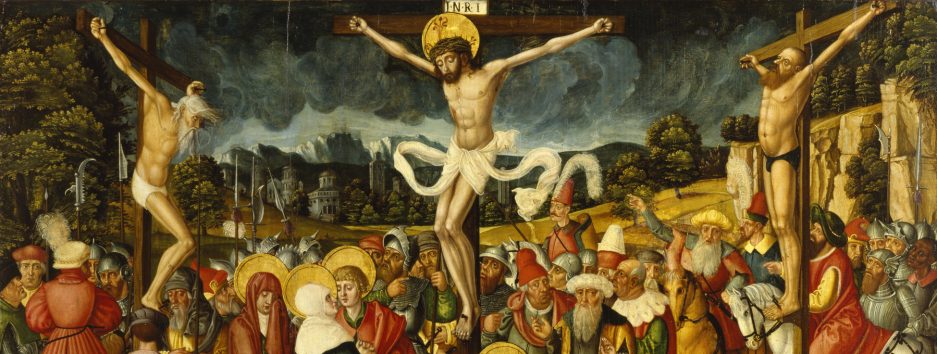
In Christian iconography, the kiss is treacherous – Judas betraying Christ with a gesture meant for intimacy. Yet here, Judee Sill reclaims it, turning it into an image of divine union. There’s no betrayal, only surrender: the self dissolving into the beloved, as mystics like St. John of the Cross or Julian of Norwich once dared to describe. This kiss is annihilation, but holy annihilation.
The solemnity of the song lies not only in its words, but in its structure. Her voice trembles like a candle-flame in a draughty chapel, rising over chords that echo like liturgy. It’s music as psalm, but a psalm not for the faithful congregation – it’s for the lonely, the addicted, the discarded. Her hymn is written not on vellum but on needle tracks and motel sheets.
I hear in The Kiss a tragic fatalism. Love here isn’t mere sweetness; it’s the gateway to oblivion. Like Keats’ Grecian urn, it suggests that beauty and death are twins. To be kissed is to be undone, to be dissolved into the eternal. Perhaps Judee, whose own life was short and brutal, felt that love was always shadowed by tragedy – that tenderness was never free of loss.
Listening today, the song strikes with the gravity of scripture and the fragility of a broken heart. It’s sad, yes, but it’s the sadness of the sublime: the knowledge that human love, however fleeting, gestures toward something infinite. Judee Sill died in 1979, aged just 35, alone and unknown, her name barely a footnote in the annals of American music. And yet The Kiss remains, solemn and eternal, as if her final offering to the world was a hymn that the angels themselves might have envied.
For in that kiss lies everything: love, betrayal, salvation, annihilation. It’s Judee Sill’s requiem and her resurrection.
The Kiss can be easily found on YouTube.

 Wording