‘Deliver me, O Lord, from eternal death.’
— Libera me, D
There’s a certain note — not the pitch itself, but the tremor beneath it — that seems to belong only to men who’ve seen too much. It’s the sound of the baritone in Fauré’s Requiem, that grave, human register which stands between the innocence of the soprano and the silence of the dead. His voice doesn’t rise in triumph; it doesn’t beg for mercy. It simply remembers.
In most requiems, death is treated as theatre. Verdi fills the sky with trumpets; Berlioz builds cathedrals of terror. But Fauré’s baritone walks among graves at dusk, bareheaded, speaking softly to the stones. His plea — Libera me, Domine — is less an act of panic than of recognition. He has lived long enough to know that deliverance isn’t always rescue, that peace may arrive only when the music stops.
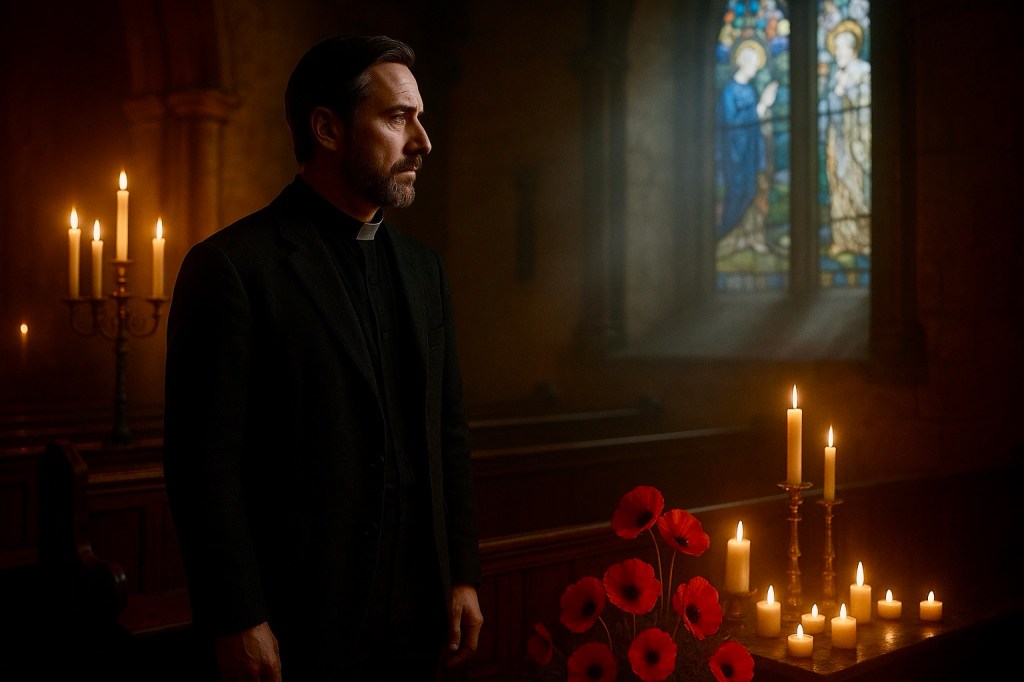
The baritone enters not as priest, nor prophet, but as witness. He has seen the world’s wars and its weariness. His tone isn’t youthful — it carries the weight of soil and smoke. In the Offertoire, he stands at the threshold of the altar, and his prayer is humble: ‘Lord, receive the offering of our praise.’
No fireworks, no theatrical terror — just the weary rhythm of faith that has outlived its own certainty.
And yet, beneath that quietness, there is steel. The baritone doesn’t flinch from the abyss; he acknowledges it. When he reaches the Libera me, he isn’t asking God to erase death, but to redeem it. His voice becomes the voice of every soldier buried without name, every father who never came home, every man whose medals now rust in drawers.
He’s the choir of the forgotten, singing not from the cathedral, but from the trench.
Fauré’s genius was to replace fear with tenderness. He wrote his Requiem not to frighten the living, but to console them. There’s no Dies Irae here — no thunder, no judgment. Only the Pie Jesu and the baritone’s gentle plea.
It’s as though Fauré believed that Heaven doesn’t need to shout; that grace descends not in lightning but in the hush after a shell has stopped falling. The baritone understands this. He sings not of apocalypse, but of endurance. His prayer is half-human, half-angelic — a confession sung through cracked lips:
‘Deliver me, O Lord, from eternal death — not because I deserve it, but because I have seen too much of it.’
For what’s remembrance if not the faith that the fallen haven’t fallen in vain? The baritone carries their memory in his throat, each note a gravestone that sings.
Every November, England turns grey again. The trees strip bare like penitents, and silence falls across the war memorials. We stand in the cold, pretending that two minutes can contain eternity. And somewhere, in a cathedral or a small parish church, the Requiem begins.
The baritone enters — soft, measured, inevitable.
He might be a veteran, or a mourner, or a man who still dreams of his father’s boots by the door. His song bridges the distance between the living and the dead. For those few moments, death isn’t the enemy; it’s the companion beside us, listening too.
When the soprano finally sings In Paradisum, she seems to lift the baritone by the hand and lead him into light. His earthly tone falls silent, but it has done its work. The mortal voice has been heard; the dust has spoken; and heaven, mercifully, hasn’t thundered back.
In that final ascending phrase — ‘May the angels lead you into paradise’ — there is no victory, no defeat, only the quiet acknowledgment that the soul has gone home. The baritone, who began in fear, ends in peace.
On this Remembrance Sunday, when the bugle fades and the murmuring begins again, I like to think that Fauré’s baritone still walks among us — not singing, but listening. He knows that peace isn’t the absence of war, but the presence of memory.
He stands in the half-light of the church, the last note trembling in his chest, and whispers not for himself but for all of us:


