I’ve been turning something over in my head these past few days, rather like a stone in my pocket. Every now and then I take it out, look at it from another angle, and find myself no less troubled by it.
Following the conviction of Steven Wild, a former president of the Methodist Conference, the Methodist Church issued a public statement on 18 November acknowledging its failings and apologising to those whose complaints had not been taken seriously. It also outlined changes to its safeguarding procedures and acknowledged that further work remains to be done.
I’m not particularly interested in discussing the details of the offences, nor is it my place to comment on the sentence that will ultimately be passed. What interests me is the much broader question of institutional Christianity and its relationship with moral accountability.
How does an institution founded upon the teachings of Christ sometimes become so reluctant to confront wrongdoing within its own walls?
It’s a question that extends well beyond Methodism, and one that ought to trouble every Christian, irrespective of denomination.
I’ve spent enough time in Methodist circles to have formed my own impressions of ecclesiastical culture. The polite voices, the endless cups of tea, the carefully rehearsed expressions of concern, and that peculiar ecclesiastical language in which everybody is apparently journeying alongside everybody else, although nobody seems terribly keen on arriving anywhere.
I’ve met some genuinely decent souls within Methodism, and I wouldn’t wish to diminish their goodness. But I’ve also come away from certain experiences feeling profoundly disappointed by the disparity between Christian profession and Christian practice.
Fidelity, honesty, integrity, responsibility towards the vulnerable—these aren’t optional extras on the Christian menu. They’re fundamental obligations. A solemn commitment made before God ought to mean considerably more than a provisional arrangement subject to personal convenience.
And yet I sometimes wonder whether we’ve become so accustomed to the language of Christianity that we’ve forgotten the demands of Christianity itself. We speak endlessly about compassion, reconciliation and forgiveness, but how readily do we speak about accountability, repentance and personal responsibility?
Forgiveness, after all, does not dispense with the necessity of justice.
C.S. Lewis understood something of this in The Screwtape Letters. The devil doesn’t necessarily need to produce a spectacular moral catastrophe. Far more effective, perhaps, is the gradual corruption of an otherwise respectable person. A little dishonesty here, a little self-justification there, a reluctance to confront wrongdoing because doing so might disturb the comfortable arrangements of one’s life.
I imagine Screwtape would be particularly enthusiastic about a religious institution becoming more concerned with the preservation of its reputation than with the principles upon which that reputation supposedly rests.
What a splendid achievement for the infernal department. Everybody continues attending church, singing the hymns and saying the prayers, whilst gradually becoming less inclined to reflect upon what any of it actually means.
You see, evil doesn’t always kick the door in. Sometimes it puts on a clerical collar, makes the tea and assures everybody that everything is perfectly fine.
Christ himself warned us about wolves in sheep’s clothing. Ezekiel condemned the shepherds of Israel who fed themselves rather than their flock. Jeremiah reminded us of the deceitfulness of the human heart. And nowhere in Scripture is there a footnote suggesting that ordination renders a person immune to any of this.
Indeed, I’d argue that those who publicly profess to speak in the name of God ought to be held to a particularly demanding moral standard. Not because they’re expected to be without sin, but because they’ve voluntarily assumed a position of extraordinary trust.
There’s an enormous difference between acknowledging one’s human frailty and using it as a convenient excuse for one’s behaviour.
Increasingly, I find myself wondering whether much of institutional Protestantism in this country has lost its moral nerve. I don’t mean every congregation or every individual Christian. There are faithful people quietly living out the Gospel in circumstances that deserve our admiration. But the institutions themselves? I’m considerably less convinced.
It seems to me that much of established Christianity has spent decades trying not to offend anybody, not to appear unfashionable, not to be regarded as too dogmatic, and certainly not to lose its place at the table of polite society. The irony is that, in trying so desperately to remain relevant, it may have rendered itself increasingly irrelevant.
A church that is embarrassed by its own convictions cannot reasonably expect the wider world to take those convictions seriously.
And what happens when a civilisation begins to abandon its spiritual and moral foundations? Something else invariably presents itself. Nature abhors a vacuum, and I suspect the spiritual world is no different. There are authoritarian ideologies quite prepared to occupy the ground that Christianity has surrendered, ideologies that harbour no embarrassment whatsoever about demanding obedience.
Meanwhile, much of our ecclesiastical establishment appears to be rearranging the furniture in a house whose foundations are crumbling.
Of course, none of this is a problem peculiar to Protestantism. The Catholic Church has had more than its share of appalling scandals and institutional failures. No denomination possesses a monopoly on either virtue or vice. And perhaps that’s precisely why Christians ought to be particularly vigilant about the conduct of their own institutions, rather than reserving their moral indignation for the world outside.
An apology from a religious institution is welcome, but the real measure of its sincerity must surely be found in what follows. Are people listened to? Are the vulnerable protected? Is the truth pursued even when it proves uncomfortable or embarrassing? Are those who have suffered afforded the dignity, compassion and justice they deserve?
These ought not to be particularly difficult questions for an institution founded upon the Gospel.
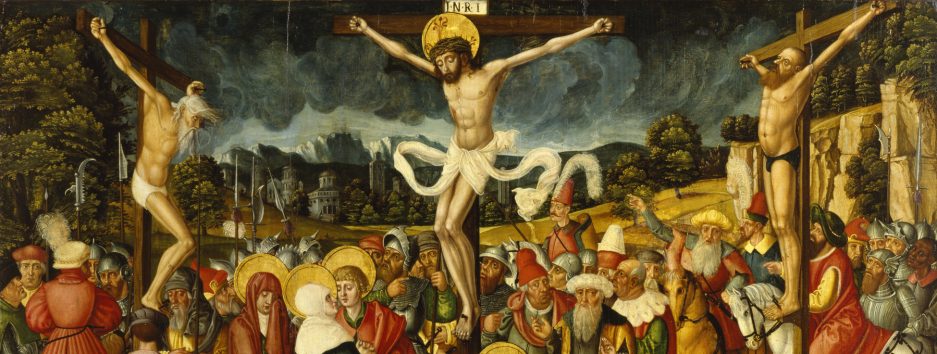
Christianity, properly understood, ought to be the very antithesis of moral cowardice. Christ was not crucified because he was agreeable, accommodating or particularly adept at managing public relations. He confronted hypocrisy, exposed corruption and reserved some of his most uncompromising words for the religious authorities of his day.
Perhaps our churches would benefit from remembering that occasionally.
I keep coming back to the sheer ordinariness of moral decline. No pitchforks, no theatrical manifestations of darkness, no great announcement that evil has arrived. Just the steady erosion of conviction, the little compromises, the comfortable excuses and the temptation to look the other way because the alternative might prove terribly inconvenient.
That’s what unsettles me most.
Because the evil we ought to guard against isn’t necessarily the evil standing outside the church doors, shouting its hostility towards Christianity. That, at least, has the virtue of being recognisable.
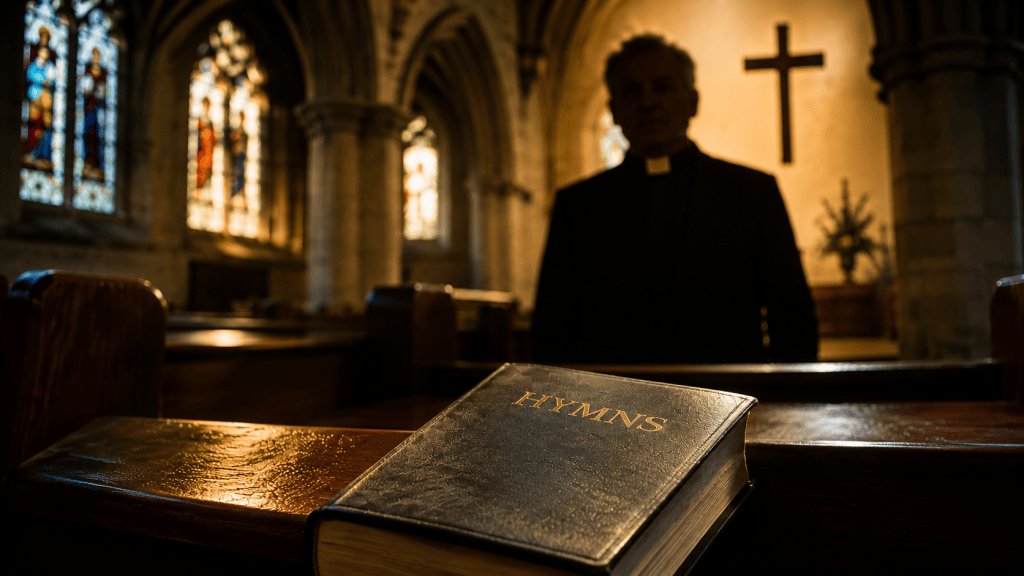
It’s the evil that can make itself comfortable inside. The evil that knows when to stand, when to sit, when to bow its head and when to say Amen.
The evil that has learned the hymns.
‘Beware of false prophets, which come to you in sheep’s clothing, but inwardly they are ravening wolves.’ — Matthew 7:15


